Tariff classification of vehicle gear components follows the specific gearing entry, displacing motor-vehicle parts classification and related liabili...
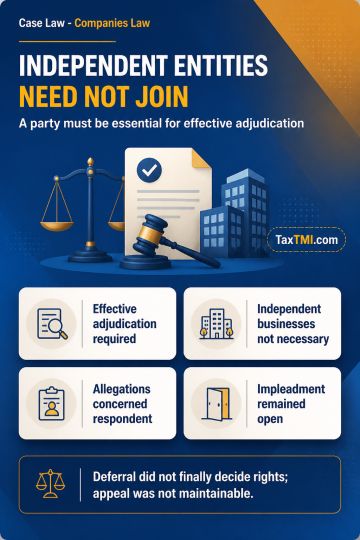
Necessary-party requirements limit impleadment of independent entities, while deferred consideration does not create an appealable adverse determinati...
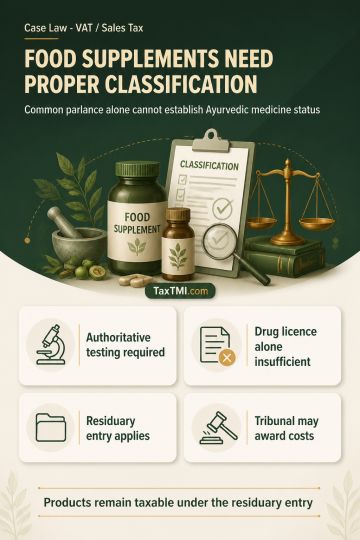
Food supplement classification requires common parlance and authoritative tests, preventing treatment as proprietary Ayurvedic medicines without suppo...
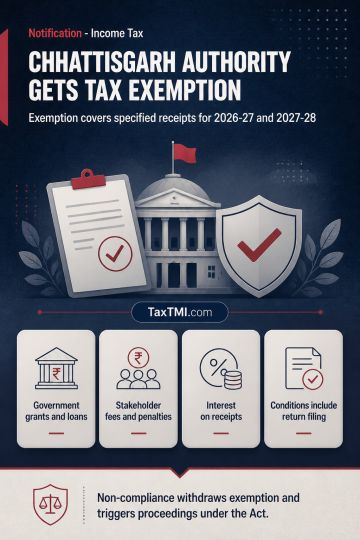
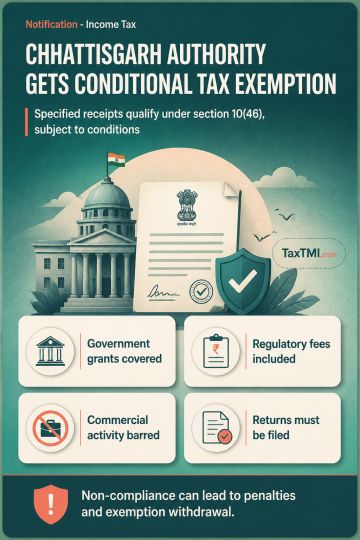
Specified regulatory authority income receives conditional tax exemption, subject to non-commercial activity, unchanged income character, and return f...
Tax exemption for regulatory authority income applies retrospectively, subject to non-commercial activity, unchanged income sources, and return-filing...
One appeal filed by the Revenue against 7 Bills of Entry is not maintainable. As per Rule 6(A) of the CESTAT Procedure Rules, 1982, when the Commissioner (Appeals) passes a common order-in-appeal disposing of appeals covering multiple Bills of Entry, the appellant is required to file separate appeals for each Bill of Entry, as each Bill of Entry is an assessment order in itself. This interpretation aligns with the Ahmedabad Bench's ruling in CMR Nikkie India Pvt Ltd case and the Jammu & Kashmir High Court's interpretation in CGST & CE, Jammu vs. M/s Narbada Industries case, which clarified that monetary thresholds apply to individual appeals, not the aggregate amount. Consequently, the Revenue is directed to file 7 separate appeals instead of one appeal if they wish to challenge the common order-in-appeal.
One appeal filed by the Revenue against 7 Bills of Entry is not maintainable. As per Rule 6(A) of the CESTAT Procedure Rules, 1982, when the Commissioner (Appeals) passes a common order-in-appeal disposing of appeals covering multiple Bills of Entry, the appellant is required to file separate appeals for each Bill of Entry, as each Bill of Entry is an assessment order in itself. This interpretation aligns with the Ahmedabad Bench's ruling in CMR Nikkie India Pvt Ltd case and the Jammu & Kashmir High Court's interpretation in CGST & CE, Jammu vs. M/s Narbada Industries case, which clarified that monetary thresholds apply to individual appeals, not the aggregate amount. Consequently, the Revenue is directed to file 7 separate appeals instead of one appeal if they wish to challenge the common order-in-appeal.
Note: It is a system-generated summary and is for quick reference only.
 TaxTMI
 of 4782







 Join Channel


 TaxTMI
