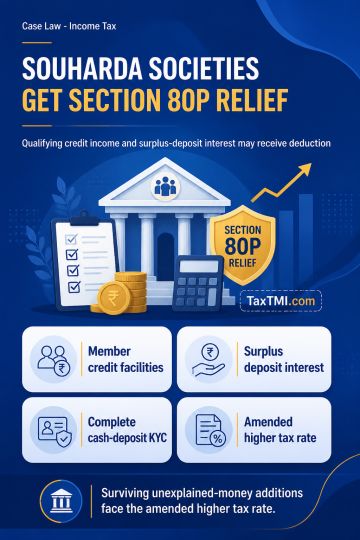
Section 80P deduction covers Souharda credit societies, including qualifying surplus-deposit interest, subject to member KYC verification for cash dep...
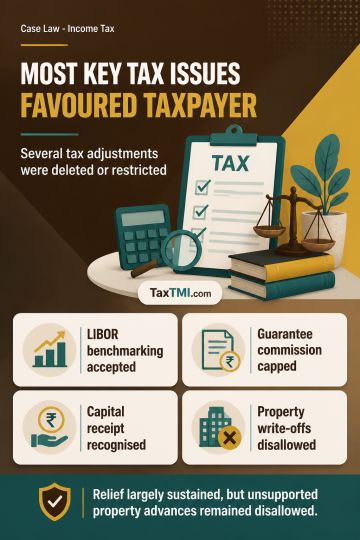
Transfer-pricing benchmarking and capital-receipt principles sustained taxpayer relief, while unsupported property-advance write-offs remained disallo...
Pre-existing operational debt disputes require genuine evidence, while undirected running-account payments may be appropriated on a first-in-first-out...
Agency in CNG distribution makes outlet operators commission agents, rendering taxable Business Auxiliary Service rather than purchasing goods for res...
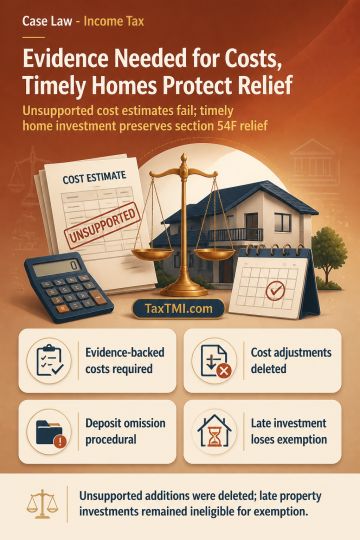
Legal interpretation of the term "original asset" for claiming exemption u/s 54F of the Income Tax Act. It discusses the ownership rights over the "original asset" by the assessee and his wife, and their entitlement to claim exemption based on the sale proceeds invested in a new property. The key points are: the "original asset" was jointly owned by the assessee and his wife, giving them equal ownership rights; the term "property" encompasses valuable rights and interests; both the assessee and his wife are beneficial owners and liable for taxation on the income from the property; the assessee invested the sale proceeds from the "original asset" in a new property co-owned with his son, fulfilling the criteria for exemption u/s 54F; the exemption is applicable based on judicial precedents, and the income should be computed considering the assessee's share of ownership and investment in the new property.
Legal interpretation of the term "original asset" for claiming exemption u/s 54F of the Income Tax Act. It discusses the ownership rights over the "original asset" by the assessee and his wife, and their entitlement to claim exemption based on the sale proceeds invested in a new property. The key points are: the "original asset" was jointly owned by the assessee and his wife, giving them equal ownership rights; the term "property" encompasses valuable rights and interests; both the assessee and his wife are beneficial owners and liable for taxation on the income from the property; the assessee invested the sale proceeds from the "original asset" in a new property co-owned with his son, fulfilling the criteria for exemption u/s 54F; the exemption is applicable based on judicial precedents, and the income should be computed considering the assessee's share of ownership and investment in the new property.
Note: It is a system-generated summary and is for quick reference only.
 TaxTMI
 of 4792














 Join Channel


 TaxTMI
