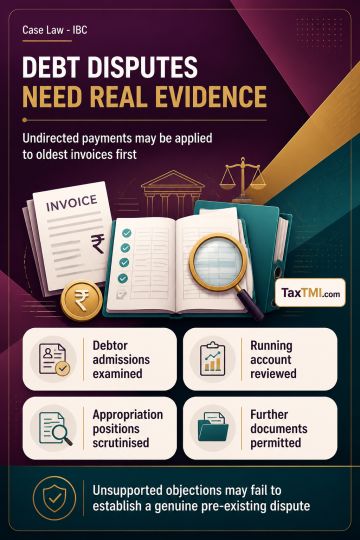
Pre-existing operational debt disputes require genuine evidence, while undirected running-account payments may be appropriated on a first-in-first-out...
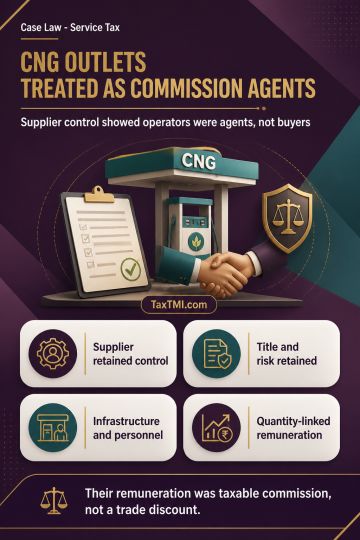
Agency in CNG distribution makes outlet operators commission agents, rendering taxable Business Auxiliary Service rather than purchasing goods for res...
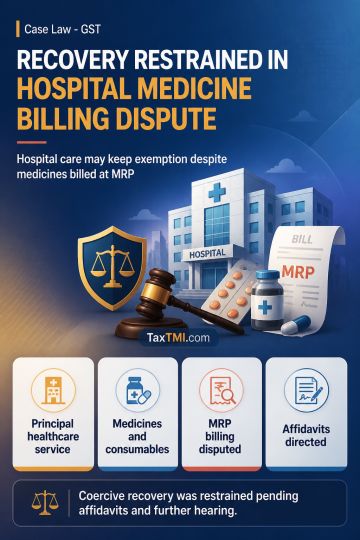
Composite inpatient healthcare supply may retain exemption despite MRP medicine billing, while separate taxable sale characterisation remains disputed...
The High Court exceeded its limited jurisdiction u/s 11 of the Arbitration and Conciliation Act, 1996 by undertaking a detailed examination of the factual matrix and assessing the auditor's report, instead of merely ascertaining the prima facie existence of an arbitration agreement. The Supreme Court clarified that the referral courts' limited jurisdiction u/s 11 must not be misused to force parties into costly arbitration, but this does not determine the merits, which the Arbitral Tribunal is rightfully equipped to decide. The Supreme Court allowed the appeal and set aside the High Court's order, reiterating the narrow scope of judicial scrutiny at the Section 11 stage after the 2015 amendment.
The High Court exceeded its limited jurisdiction u/s 11 of the Arbitration and Conciliation Act, 1996 by undertaking a detailed examination of the factual matrix and assessing the auditor's report, instead of merely ascertaining the prima facie existence of an arbitration agreement. The Supreme Court clarified that the referral courts' limited jurisdiction u/s 11 must not be misused to force parties into costly arbitration, but this does not determine the merits, which the Arbitral Tribunal is rightfully equipped to decide. The Supreme Court allowed the appeal and set aside the High Court's order, reiterating the narrow scope of judicial scrutiny at the Section 11 stage after the 2015 amendment.
Note: It is a system-generated summary and is for quick reference only.
 TaxTMI
 of 4796





 Join Channel


 TaxTMI