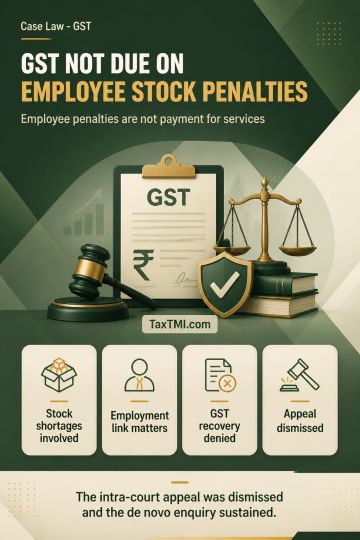
Employee stock-shortage penalties do not constitute consideration for services, preventing GST collection under Schedule II in employment relationship...
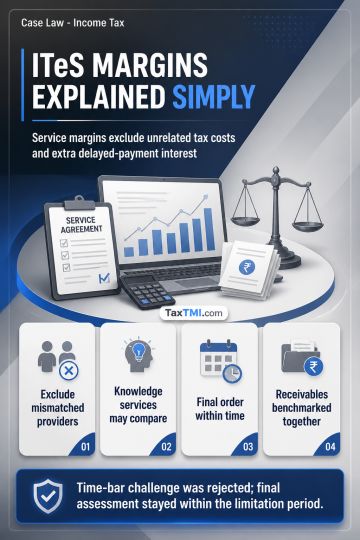
Transfer-pricing treatment of ITeS margins excludes pass-through tax recoveries and separate delayed-receivables interest after working-capital adjust...
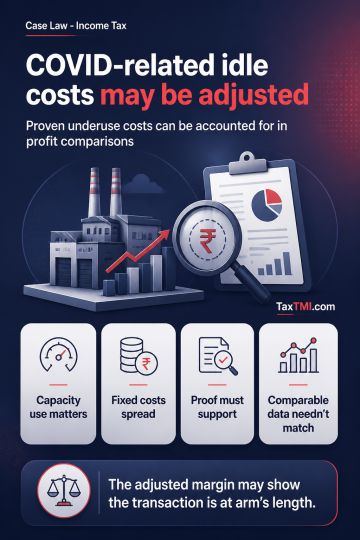
Capacity-utilisation adjustments under TNMM can neutralise substantiated COVID-related idle costs where underutilisation materially affects profitabil...
Page of 4830
Press 'Enter' after typing page number.
181 to 200 of 96587 Results
❮
❯
❯❯
0 / 200
Expand Note
Add to Folder
No Folders have been created
+
Are you sure you want to delete "My most important" ?
The Supreme Court upheld the validity of the Explanations to Rule 38 of the Mineral (Other than Atomic and Hydrocarbons Energy Minerals) Concession Rules, 2016 and Rule 45 of the Mineral Conservation and Development Rules, 2017, which provide for the computation of royalty without deducting previous royalty payments, contributions to the District Mineral Foundation, and National Mineral Exploration Trust. The Court observed that policy decisions fall within the executive's domain, and courts should refrain from interfering unless the policy is absolutely capricious or illegal. While the Explanations might have onerous monetary implications for mining leaseholders, the Court found no excess of power or statutory breach. The Explanations were deemed clarificatory and within the ambit of the main provisions. However, the Court granted the respondents two months to conclude public consultations and take a final decision on amending the cascading impact of royalty on royalty in calculating the average sale price under the Explanations.
The Supreme Court upheld the validity of the Explanations to Rule 38 of the Mineral (Other than Atomic and Hydrocarbons Energy Minerals) Concession Rules, 2016 and Rule 45 of the Mineral Conservation and Development Rules, 2017, which provide for the computation of royalty without deducting previous royalty payments, contributions to the District Mineral Foundation, and National Mineral Exploration Trust. The Court observed that policy decisions fall within the executive's domain, and courts should refrain from interfering unless the policy is absolutely capricious or illegal. While the Explanations might have onerous monetary implications for mining leaseholders, the Court found no excess of power or statutory breach. The Explanations were deemed clarificatory and within the ambit of the main provisions. However, the Court granted the respondents two months to conclude public consultations and take a final decision on amending the cascading impact of royalty on royalty in calculating the average sale price under the Explanations.
Note: It is a system-generated summary and is for quick reference only.
 TaxTMI
  TaxTMI
 of 4830






 Join Channel


