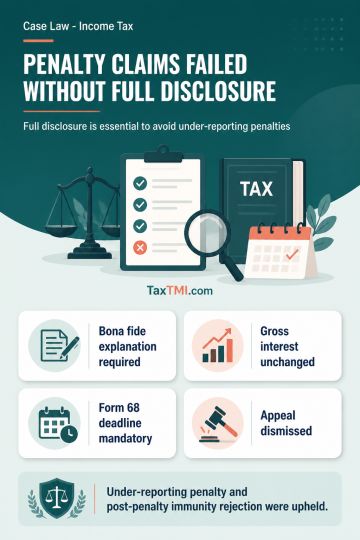
Bona fide disclosure requirements govern under-reporting penalties, and post-penalty immunity applications cannot secure available statutory protectio...
Certificate-of-origin verification procedure governs preferential customs benefits; denial without retroactive verification was set aside with consequ...
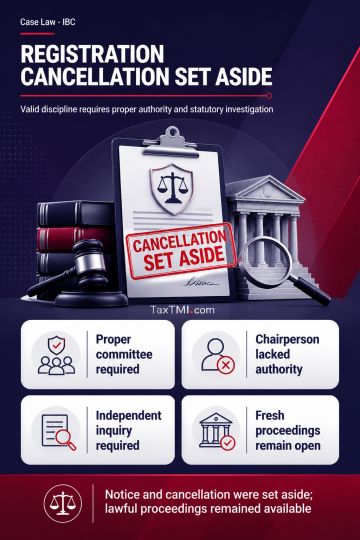
Disciplinary Committee jurisdiction and mandatory investigation requirements invalidated cancellation of an insolvency professional's registration and...
The High Court held that the denial by the respondents to apply Section 129(1)(a) of the CGST/IGST Act based on the clarification dated 31.12.2018 and previous judgments was unjustified. The finding of the authority in Para-4 of its order was essentially factual and solely based on communication from CGST, Delhi regarding initiation of cancellation proceedings, without any evidence on record. The GSTIN status produced by the petitioner indicated a different status from what was claimed by the Delhi authority. Consequently, the impugned demand of penalty order dated 27.09.2024 passed by Respondent No.2 was set aside, and the matter was remanded to the competent authority to pass a fresh order. The writ petition was allowed by way of remand.
The High Court held that the denial by the respondents to apply Section 129(1)(a) of the CGST/IGST Act based on the clarification dated 31.12.2018 and previous judgments was unjustified. The finding of the authority in Para-4 of its order was essentially factual and solely based on communication from CGST, Delhi regarding initiation of cancellation proceedings, without any evidence on record. The GSTIN status produced by the petitioner indicated a different status from what was claimed by the Delhi authority. Consequently, the impugned demand of penalty order dated 27.09.2024 passed by Respondent No.2 was set aside, and the matter was remanded to the competent authority to pass a fresh order. The writ petition was allowed by way of remand.
Note: It is a system-generated summary and is for quick reference only.
 TaxTMI
 of 4805








 Join Channel


 TaxTMI
