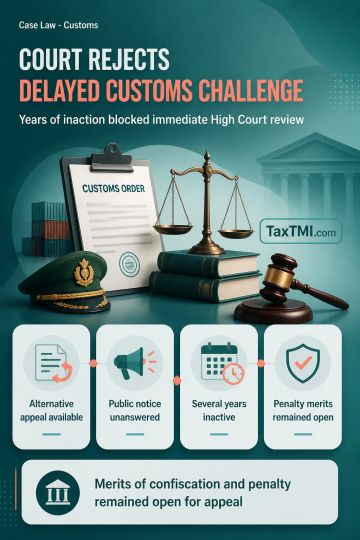
Alternative statutory remedy and unexplained delay barred writ review of customs confiscation adjudication, leaving merits for appellate consideration...
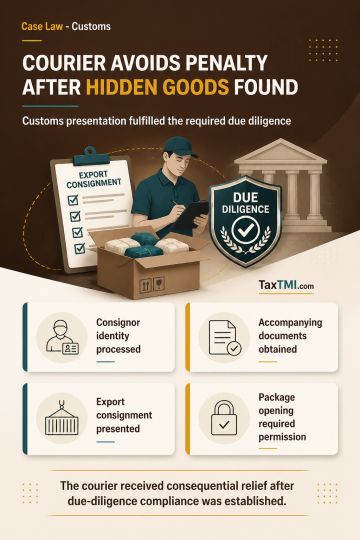
Authorised courier due diligence protects against penalties where declared exports conceal prohibited goods despite proper documentation and customs p...
Customs-controlled container movement now extends to DP World facilities, subject to segregation, inspections, reconciliation, and EXIM cargo priority...
The assessee company made payments for IT service charges to a foreign entity without deducting tax at source (TDS) u/s 195. The Assessing Officer treated these expenses as fees for technical services/royalty and disallowed them u/s 40(a)(ia) for non-deduction of TDS. However, the Coordinate Bench of the Tribunal, in the assessee's own case for the assessment year 2012-13, had already decided the issue in favor of the assessee. It held that the payments for software usage did not constitute "use of, or the right to use, any copyright of software" under Article 12(3) of the applicable tax treaty. Consequently, Article 12(4)(a) was not attracted, making the payments immune from taxation in India under the beneficial treaty provisions compared to the domestic law. Therefore, there was no requirement for the assessee to deduct TDS, and the disallowance u/s 40(a)(i) was incorrect. The Tribunal decided the issue against the Revenue.
The assessee company made payments for IT service charges to a foreign entity without deducting tax at source (TDS) u/s 195. The Assessing Officer treated these expenses as fees for technical services/royalty and disallowed them u/s 40(a)(ia) for non-deduction of TDS. However, the Coordinate Bench of the Tribunal, in the assessee's own case for the assessment year 2012-13, had already decided the issue in favor of the assessee. It held that the payments for software usage did not constitute "use of, or the right to use, any copyright of software" under Article 12(3) of the applicable tax treaty. Consequently, Article 12(4)(a) was not attracted, making the payments immune from taxation in India under the beneficial treaty provisions compared to the domestic law. Therefore, there was no requirement for the assessee to deduct TDS, and the disallowance u/s 40(a)(i) was incorrect. The Tribunal decided the issue against the Revenue.
Note: It is a system-generated summary and is for quick reference only.
 TaxTMI
  TaxTMI
 of 4828









 Join Channel


