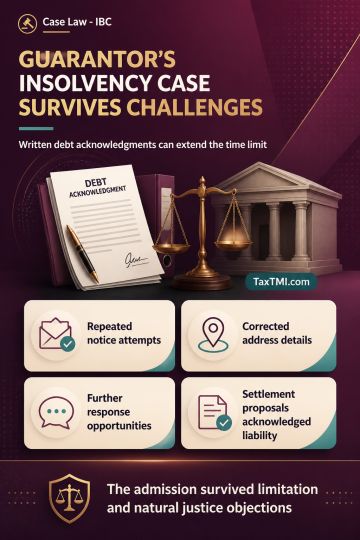
Service of notice and contractual debt acknowledgment preserved insolvency admission against a corporate guarantor despite limitation and natural just...
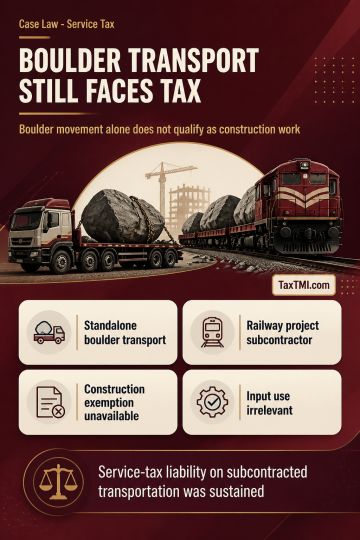
Original works exemption excludes standalone boulder transportation, leaving subcontracted railway-project transport services subject to service tax l...
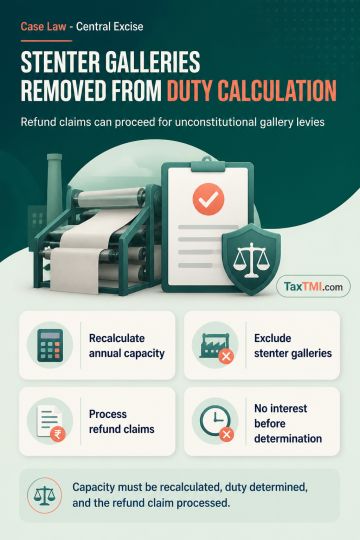
Annual production capacity determinations excluding stenter galleries support refunds for unconstitutional excise levies without an unjust-enrichment ...
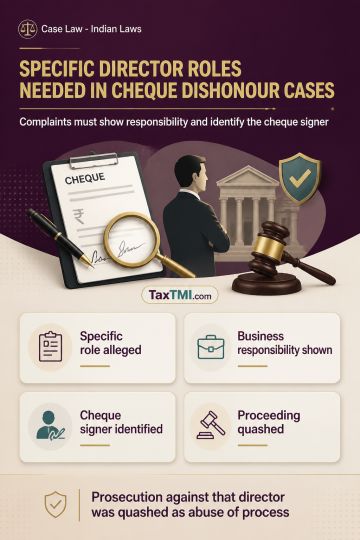
Vicarious liability for cheque dishonour requires specific allegations of responsibility and cheque signatory; generic director allegations cannot sus...
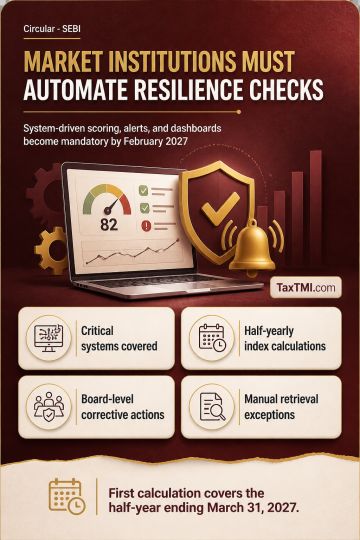
IT Resilience Index requires market infrastructure institutions to automate resilience scoring, early warnings, and continuous service-delivery monito...
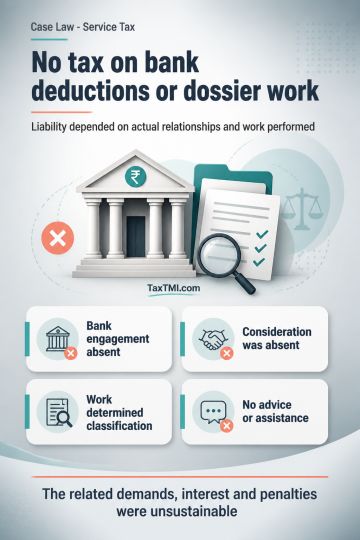
Service tax liability on foreign bank charges and finance costs paid in foreign currency. It discusses the absence of a service provider-recipient relationship between the foreign bank and the appellant, as the foreign bank provided services to the buyer who had a letter of credit facility. The appellant received services, if any, from its bank in India where the documents were negotiated. Since the service provider (foreign bank) and recipient (buyer) were both located outside India, there is no question of taxing such service in India as it was provided outside the taxable territory. Previous rulings and circulars support that no service tax is leviable when the place of provision is outside India. If the appellant is required to pay service tax under the reverse charge mechanism, it would be entitled to avail CENVAT credit. The extended period of limitation was wrongly invoked as there was no suppression of facts by the appellant, who had clearly reflected such payments in its financial statements. Relevant case laws were cited regarding the interpretation of "suppression" and the non-imposition of penalties for interpretation of law.
Service tax liability on foreign bank charges and finance costs paid in foreign currency. It discusses the absence of a service provider-recipient relationship between the foreign bank and the appellant, as the foreign bank provided services to the buyer who had a letter of credit facility. The appellant received services, if any, from its bank in India where the documents were negotiated. Since the service provider (foreign bank) and recipient (buyer) were both located outside India, there is no question of taxing such service in India as it was provided outside the taxable territory. Previous rulings and circulars support that no service tax is leviable when the place of provision is outside India. If the appellant is required to pay service tax under the reverse charge mechanism, it would be entitled to avail CENVAT credit. The extended period of limitation was wrongly invoked as there was no suppression of facts by the appellant, who had clearly reflected such payments in its financial statements. Relevant case laws were cited regarding the interpretation of "suppression" and the non-imposition of penalties for interpretation of law.
Note: It is a system-generated summary and is for quick reference only.
 TaxTMI
  TaxTMI
 of 4828




 Join Channel