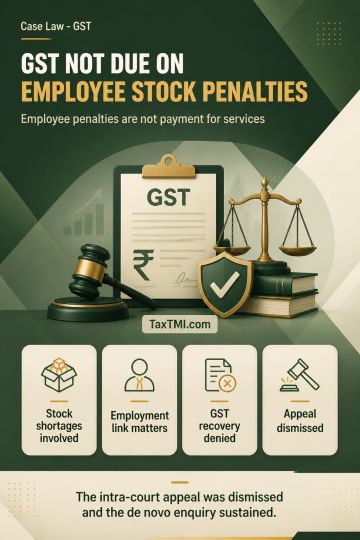
Employee stock-shortage penalties do not constitute consideration for services, preventing GST collection under Schedule II in employment relationship...
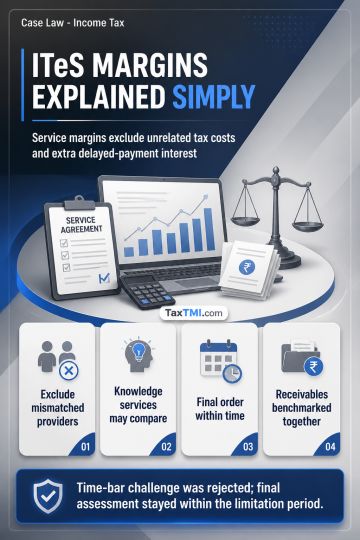
Transfer-pricing treatment of ITeS margins excludes pass-through tax recoveries and separate delayed-receivables interest after working-capital adjust...
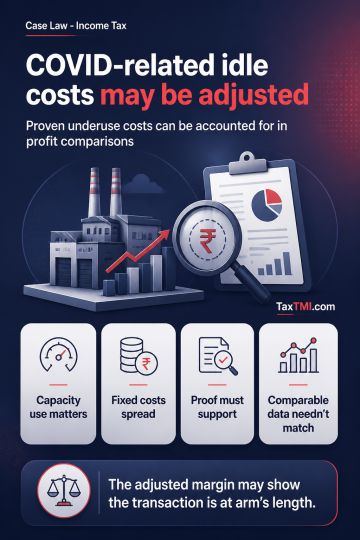
Capacity-utilisation adjustments under TNMM can neutralise substantiated COVID-related idle costs where underutilisation materially affects profitabil...
Page of 4830
Press 'Enter' after typing page number.
181 to 200 of 96587 Results
❮
❯
❯❯
0 / 200
Expand Note
Add to Folder
No Folders have been created
+
Are you sure you want to delete "My most important" ?
The High Court ruled on the maintainability of appeals under the Delhi Value Added Tax Act, 2004. It held that the obligation to approach the Appellate Tribunal for drawing up a 'statement of case' for the High Court's consideration is a prerequisite, and appeals directly instituted without this step would not be maintainable. The hierarchy of remedies under the Act requires the assessee to first appeal to the Appellate Tribunal, and then approach the High Court by establishing a 'substantial question of law.' The obligation to petition the Tribunal for a statement of case is a procedural matter and does not impair the right of appeal, as the Tribunal's refusal is subject to review. Consequently, the appeals instituted before the High Court u/s 81 of the DVAT Act were held maintainable.
The High Court ruled on the maintainability of appeals under the Delhi Value Added Tax Act, 2004. It held that the obligation to approach the Appellate Tribunal for drawing up a 'statement of case' for the High Court's consideration is a prerequisite, and appeals directly instituted without this step would not be maintainable. The hierarchy of remedies under the Act requires the assessee to first appeal to the Appellate Tribunal, and then approach the High Court by establishing a 'substantial question of law.' The obligation to petition the Tribunal for a statement of case is a procedural matter and does not impair the right of appeal, as the Tribunal's refusal is subject to review. Consequently, the appeals instituted before the High Court u/s 81 of the DVAT Act were held maintainable.
Note: It is a system-generated summary and is for quick reference only.
 TaxTMI
  TaxTMI
 of 4830



 Join Channel


