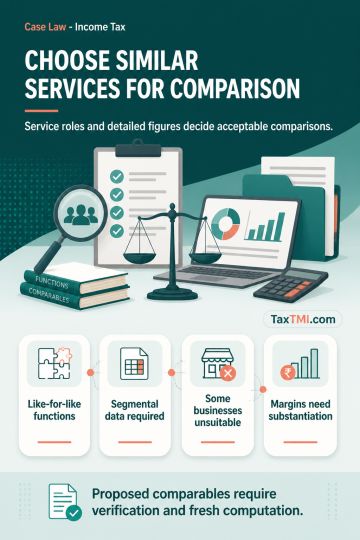
Functional comparability governs selection of support-service and IT-enabled service comparables, with verification required for unresolved data and m...
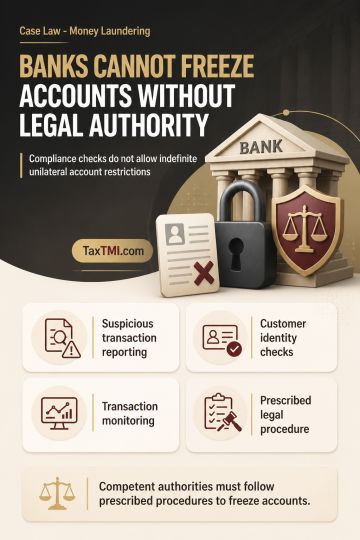
Bank account freezing requires statutory authority; anti-money-laundering compliance and KYC monitoring do not permit unilateral indefinite restrictio...
The Court held that when a company fails to register a charge as mandated u/s 77 of the Companies Act, 2013, insisting on digital signatures from the company itself while filing Form CHG-1 u/s 78 for charge registration would contradict the very purpose of Section 78, which is designed to address such lapse or refusal by the company. The instructions for Form CHG-1 do not accommodate situations where the company's cooperation cannot be presumed. Therefore, the requirement for digital signatures from the company should not be insisted upon while filing Form CHG-1 u/s 78 when the company defaults on its statutory duty u/s 77. The High Court dismissed the appeal, upholding the view that digital signatures from the company need not be mandated in such circumstances.
The Court held that when a company fails to register a charge as mandated u/s 77 of the Companies Act, 2013, insisting on digital signatures from the company itself while filing Form CHG-1 u/s 78 for charge registration would contradict the very purpose of Section 78, which is designed to address such lapse or refusal by the company. The instructions for Form CHG-1 do not accommodate situations where the company's cooperation cannot be presumed. Therefore, the requirement for digital signatures from the company should not be insisted upon while filing Form CHG-1 u/s 78 when the company defaults on its statutory duty u/s 77. The High Court dismissed the appeal, upholding the view that digital signatures from the company need not be mandated in such circumstances.
Note: It is a system-generated summary and is for quick reference only.
 TaxTMI
  TaxTMI
 of 4828







 Join Channel