Arrest safeguards require disclosed grounds, relative intimation and transit remand, while duplicate prosecution under the CGST framework is unsustain...
Document Identification Number defects can invalidate GST assessments, with delayed challenges entertained conditionally where patent irregularities e...
Windmill commissioning evidence supported higher depreciation where grid connection and electricity generation proved operational use before the relev...
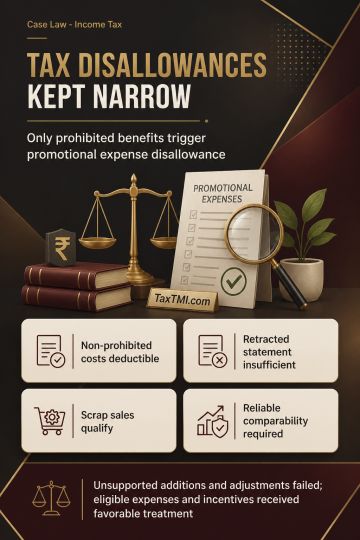
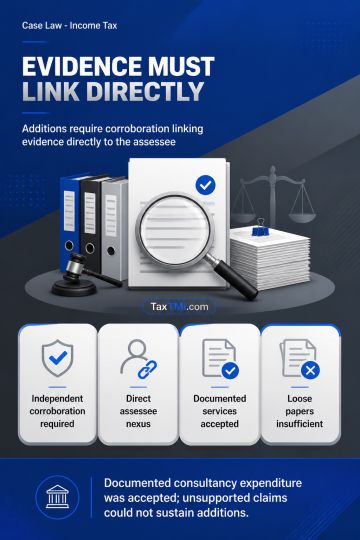
Pharmaceutical promotion and transfer-pricing comparability principles limited disallowances, while uncorroborated search allegations and unsupported ...
Business expenditure substantiation supports scrap credits, statutory payments and expense claims, while depreciation requires proof of actual busines...
This is a judgment by the High Court granting regular bail to the petitioner accused of offenses u/ss 420, 467, 468, 471 of the Indian Penal Code and Section 132(1)(b) and (c) of the HGST Act, 2017, related to wrongful availment and utilization of Input Tax Credit (ITC). The court considered that the petitioner has already undergone substantial incarceration, co-accused have been granted bail, and the trial is likely to take considerable time. The court relied on the principles of criminal jurisprudence, the right to a speedy trial under Article 21 of the Constitution, and the need to minimize pre-conviction detention. The court also cited precedents emphasizing that bail is the general rule, and denial of bail should not be based solely on pending cases or convictions. Consequently, the petitioner was directed to be released on regular bail upon furnishing bail and surety bonds to the satisfaction of the trial court or duty magistrate.
This is a judgment by the High Court granting regular bail to the petitioner accused of offenses u/ss 420, 467, 468, 471 of the Indian Penal Code and Section 132(1)(b) and (c) of the HGST Act, 2017, related to wrongful availment and utilization of Input Tax Credit (ITC). The court considered that the petitioner has already undergone substantial incarceration, co-accused have been granted bail, and the trial is likely to take considerable time. The court relied on the principles of criminal jurisprudence, the right to a speedy trial under Article 21 of the Constitution, and the need to minimize pre-conviction detention. The court also cited precedents emphasizing that bail is the general rule, and denial of bail should not be based solely on pending cases or convictions. Consequently, the petitioner was directed to be released on regular bail upon furnishing bail and surety bonds to the satisfaction of the trial court or duty magistrate.
Note: It is a system-generated summary and is for quick reference only.
 TaxTMI
 of 4805


















 Join Channel


 TaxTMI