Necessary-party requirements limit impleadment of independent entities, while deferred consideration does not create an appealable adverse determinati...
Food supplement classification requires common parlance and authoritative tests, preventing treatment as proprietary Ayurvedic medicines without suppo...
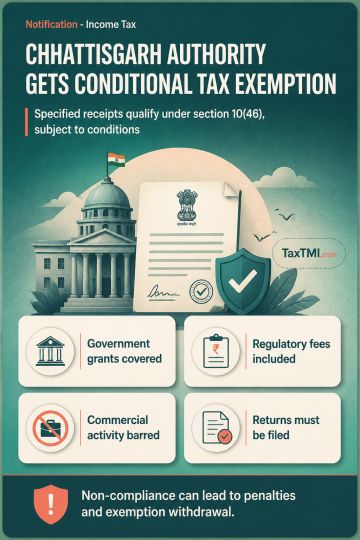
Specified regulatory authority income receives conditional tax exemption, subject to non-commercial activity, unchanged income character, and return f...
Tax exemption for regulatory authority income applies retrospectively, subject to non-commercial activity, unchanged income sources, and return-filing...
Input tax credit conditions remain constitutionally valid, with eligible recipient claims considered under GST circulars and retrospective filing dead...
This is a judgment by the High Court granting regular bail to the petitioner accused of offenses u/ss 420, 467, 468, 471 of the Indian Penal Code and Section 132(1)(b) and (c) of the HGST Act, 2017, related to wrongful availment and utilization of Input Tax Credit (ITC). The court considered that the petitioner has already undergone substantial incarceration, co-accused have been granted bail, and the trial is likely to take considerable time. The court relied on the principles of criminal jurisprudence, the right to a speedy trial under Article 21 of the Constitution, and the need to minimize pre-conviction detention. The court also cited precedents emphasizing that bail is the general rule, and denial of bail should not be based solely on pending cases or convictions. Consequently, the petitioner was directed to be released on regular bail upon furnishing bail and surety bonds to the satisfaction of the trial court or duty magistrate.
This is a judgment by the High Court granting regular bail to the petitioner accused of offenses u/ss 420, 467, 468, 471 of the Indian Penal Code and Section 132(1)(b) and (c) of the HGST Act, 2017, related to wrongful availment and utilization of Input Tax Credit (ITC). The court considered that the petitioner has already undergone substantial incarceration, co-accused have been granted bail, and the trial is likely to take considerable time. The court relied on the principles of criminal jurisprudence, the right to a speedy trial under Article 21 of the Constitution, and the need to minimize pre-conviction detention. The court also cited precedents emphasizing that bail is the general rule, and denial of bail should not be based solely on pending cases or convictions. Consequently, the petitioner was directed to be released on regular bail upon furnishing bail and surety bonds to the satisfaction of the trial court or duty magistrate.
Note: It is a system-generated summary and is for quick reference only.
 TaxTMI
 of 4805



















 Join Channel


 TaxTMI