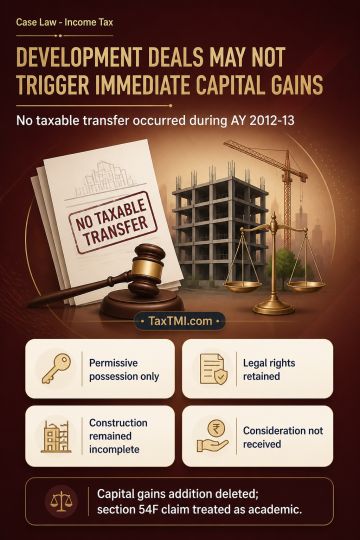
Development agreements require legal possession or effective enjoyment for capital gains transfer; permissive possession and deferred consideration de...
Prolonged sterilisation of development rights supports capital-gains treatment, while business-income disallowances cannot govern capital-gains comput...
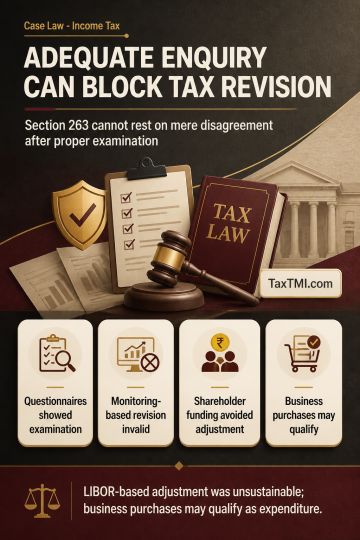
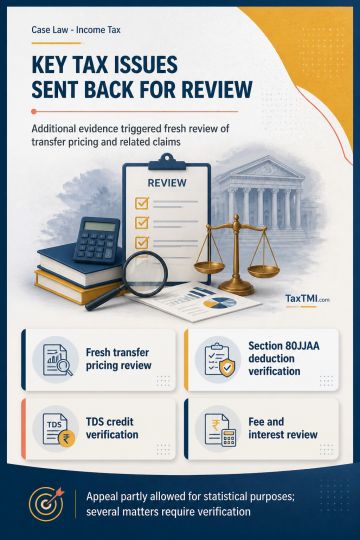
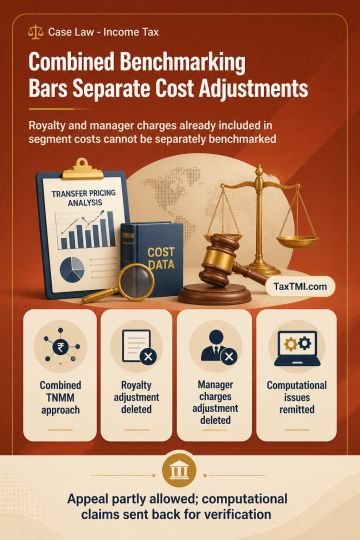
Additional evidence in transfer pricing dispute leads to fresh examination, while tax deductions, TDS credit, fee and refund interest require verifica...
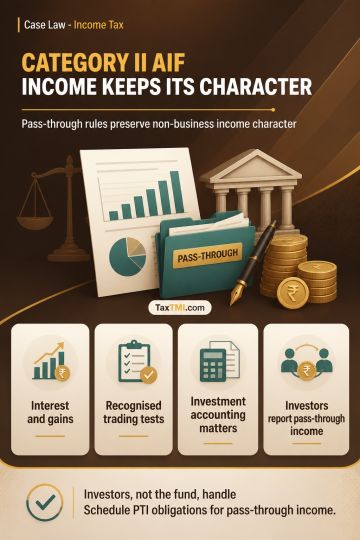
Category II AIF pass-through taxation preserves non-business income character; investment receipts cannot be reclassified without applying recognised ...
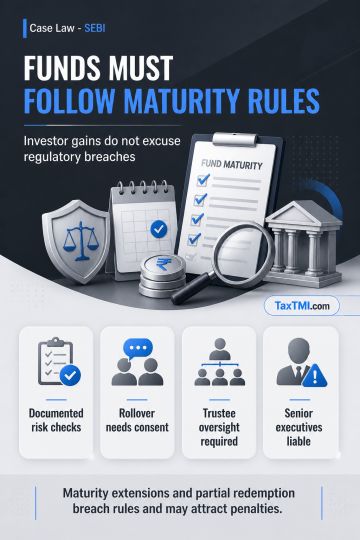
Mutual fund maturity rules require proper rollover, redemption, disclosure, and due diligence; investor gains cannot excuse regulatory breaches or pen...
Page of 4809
Press 'Enter' after typing page number.
1381 to 1400 of 96177 Results
❮
❯
❯❯
0 / 200
Expand Note
Add to Folder
No Folders have been created
+
Are you sure you want to delete "My most important" ?
The High Court examined the issue of whether the Appellate Authority was legally correct in rejecting appeals filed beyond the time limit prescribed under the Haryana Goods and Services Tax Act, 2017. It was found that while the petitioners had paid the pre-deposit for hearing the appeal, the appeals were admittedly filed beyond the limitation period, even exceeding the additional period of 30 days for condonation u/ss 107 and 35(1) of the Act. The provisions u/s 107 are not amenable to the Limitation Act, and the delay cannot be further condoned as the condonation is provided within the Act itself. Consequently, the Appellate Authority's action in rejecting the appeals cannot be deemed illegal or unjustified. The Supreme Court's decision in M/s Tecnimont Pvt. Ltd. Vs. State of Punjab, regarding non-deposit of pre-deposit and rejection of appeals, was considered, wherein the High Court retains jurisdiction under Article 226 to condone the pre-deposit requirement based on case facts. The cancellation of GST registration has a cascading effect on other businesses, necessitating finality in the decision and an efficacious remedy for the aggrieved person. The powers to hear appeals u/s 107 would not be subject to filing within the prescribed time, as it would not deprive a person.
The High Court examined the issue of whether the Appellate Authority was legally correct in rejecting appeals filed beyond the time limit prescribed under the Haryana Goods and Services Tax Act, 2017. It was found that while the petitioners had paid the pre-deposit for hearing the appeal, the appeals were admittedly filed beyond the limitation period, even exceeding the additional period of 30 days for condonation u/ss 107 and 35(1) of the Act. The provisions u/s 107 are not amenable to the Limitation Act, and the delay cannot be further condoned as the condonation is provided within the Act itself. Consequently, the Appellate Authority's action in rejecting the appeals cannot be deemed illegal or unjustified. The Supreme Court's decision in M/s Tecnimont Pvt. Ltd. Vs. State of Punjab, regarding non-deposit of pre-deposit and rejection of appeals, was considered, wherein the High Court retains jurisdiction under Article 226 to condone the pre-deposit requirement based on case facts. The cancellation of GST registration has a cascading effect on other businesses, necessitating finality in the decision and an efficacious remedy for the aggrieved person. The powers to hear appeals u/s 107 would not be subject to filing within the prescribed time, as it would not deprive a person.
Note: It is a system-generated summary and is for quick reference only.
 TaxTMI
  TaxTMI
 of 4809






 Join Channel