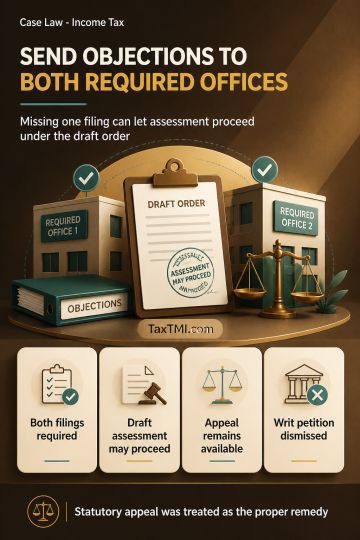
Dispute Resolution Panel objections must reach both prescribed forums; otherwise assessment may proceed and statutory appeal remains the proper remedy...
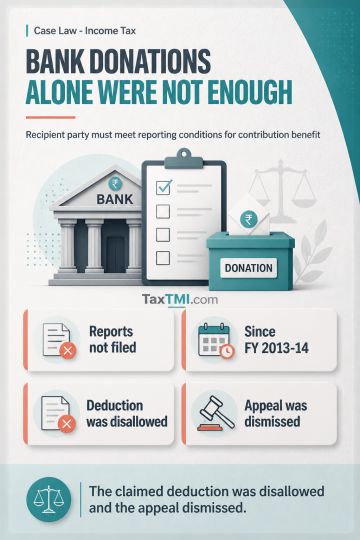
Political contribution deductions require recipient party compliance with contribution-reporting conditions; banking-channel donations alone do not qu...
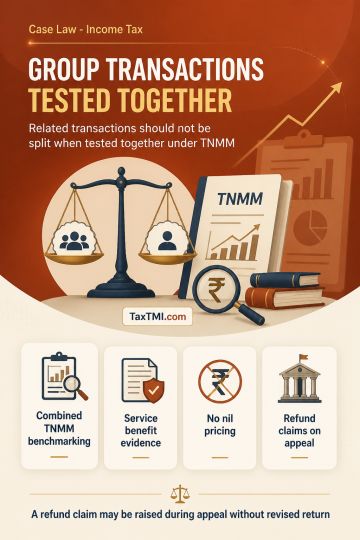
Aggregation under TNMM prevents selective testing of intra-group services without comparable uncontrolled transactions, while appellate additional cla...
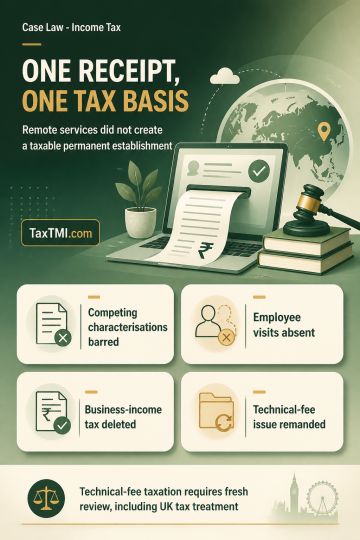
Protective assessment cannot duplicate identical receipts under competing characterisations; remote services did not establish a taxable permanent est...
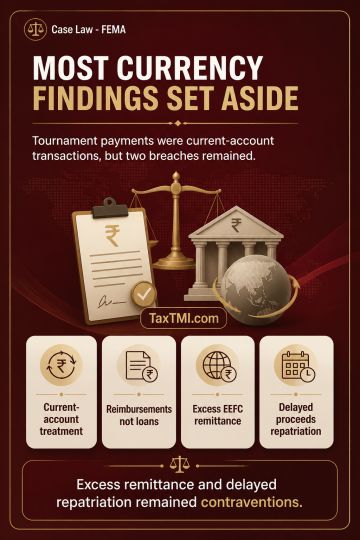
Current account treatment of overseas tournament services removed most FEMA findings, but excess EEFC remittance and delayed repatriation remained bre...
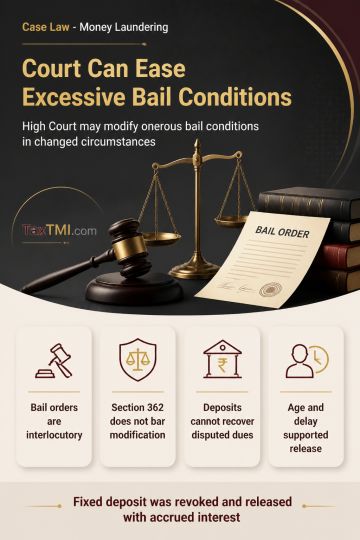
Modification of bail conditions remains available through inherent jurisdiction where onerous deposits undermine justice and cannot recover disputed d...
The High Court examined the issue of whether the Appellate Authority was legally correct in rejecting appeals filed beyond the time limit prescribed under the Haryana Goods and Services Tax Act, 2017. It was found that while the petitioners had paid the pre-deposit for hearing the appeal, the appeals were admittedly filed beyond the limitation period, even exceeding the additional period of 30 days for condonation u/ss 107 and 35(1) of the Act. The provisions u/s 107 are not amenable to the Limitation Act, and the delay cannot be further condoned as the condonation is provided within the Act itself. Consequently, the Appellate Authority's action in rejecting the appeals cannot be deemed illegal or unjustified. The Supreme Court's decision in M/s Tecnimont Pvt. Ltd. Vs. State of Punjab, regarding non-deposit of pre-deposit and rejection of appeals, was considered, wherein the High Court retains jurisdiction under Article 226 to condone the pre-deposit requirement based on case facts. The cancellation of GST registration has a cascading effect on other businesses, necessitating finality in the decision and an efficacious remedy for the aggrieved person. The powers to hear appeals u/s 107 would not be subject to filing within the prescribed time, as it would not deprive a person.
The High Court examined the issue of whether the Appellate Authority was legally correct in rejecting appeals filed beyond the time limit prescribed under the Haryana Goods and Services Tax Act, 2017. It was found that while the petitioners had paid the pre-deposit for hearing the appeal, the appeals were admittedly filed beyond the limitation period, even exceeding the additional period of 30 days for condonation u/ss 107 and 35(1) of the Act. The provisions u/s 107 are not amenable to the Limitation Act, and the delay cannot be further condoned as the condonation is provided within the Act itself. Consequently, the Appellate Authority's action in rejecting the appeals cannot be deemed illegal or unjustified. The Supreme Court's decision in M/s Tecnimont Pvt. Ltd. Vs. State of Punjab, regarding non-deposit of pre-deposit and rejection of appeals, was considered, wherein the High Court retains jurisdiction under Article 226 to condone the pre-deposit requirement based on case facts. The cancellation of GST registration has a cascading effect on other businesses, necessitating finality in the decision and an efficacious remedy for the aggrieved person. The powers to hear appeals u/s 107 would not be subject to filing within the prescribed time, as it would not deprive a person.
Note: It is a system-generated summary and is for quick reference only.
 TaxTMI
 of 4805





 Join Channel


 TaxTMI
