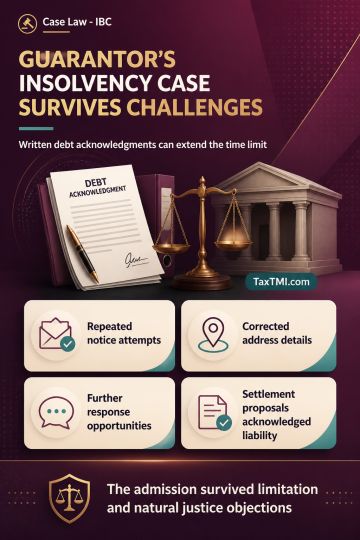
Service of notice and contractual debt acknowledgment preserved insolvency admission against a corporate guarantor despite limitation and natural just...
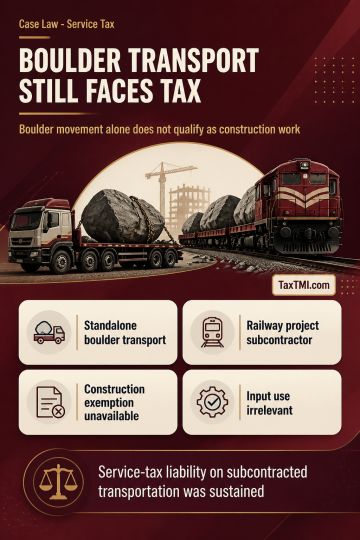
Original works exemption excludes standalone boulder transportation, leaving subcontracted railway-project transport services subject to service tax l...
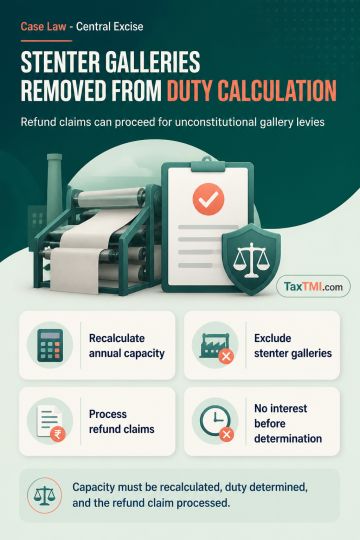
Annual production capacity determinations excluding stenter galleries support refunds for unconstitutional excise levies without an unjust-enrichment ...
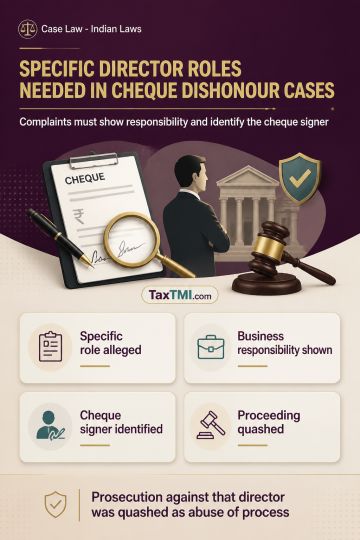
Vicarious liability for cheque dishonour requires specific allegations of responsibility and cheque signatory; generic director allegations cannot sus...
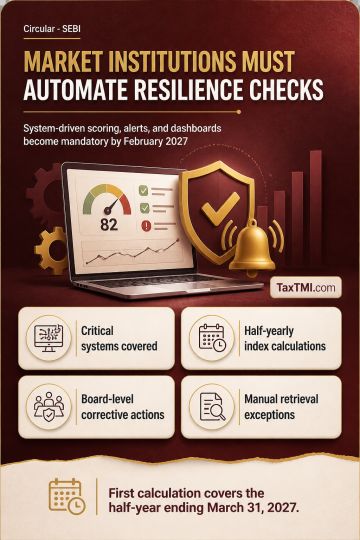
IT Resilience Index requires market infrastructure institutions to automate resilience scoring, early warnings, and continuous service-delivery monito...
Qualification criteria for being an 'informant' under the Income Tax Informants Reward Scheme, 2018. The key points are: the information provided by the petitioner regarding cash deposits and repayment of deposits in violation of Sections 269SS and 269T was already known to the Assessing Officer during the assessment proceedings. Therefore, it cannot be considered as 'undisclosed income and wealth' eligible for reward under the Scheme. Additionally, the information did not lead to the detection of 'substantial tax evasion', which is a prerequisite for receiving the reward. The High Court held that since the transactions were reflected in the books and examined during assessment, the information provided by the petitioner was not new or undisclosed. The Tribunal's findings also did not support allegations of undisclosed income and tax evasion. Consequently, the petitioner's claim for a reward was rejected.
Qualification criteria for being an 'informant' under the Income Tax Informants Reward Scheme, 2018. The key points are: the information provided by the petitioner regarding cash deposits and repayment of deposits in violation of Sections 269SS and 269T was already known to the Assessing Officer during the assessment proceedings. Therefore, it cannot be considered as 'undisclosed income and wealth' eligible for reward under the Scheme. Additionally, the information did not lead to the detection of 'substantial tax evasion', which is a prerequisite for receiving the reward. The High Court held that since the transactions were reflected in the books and examined during assessment, the information provided by the petitioner was not new or undisclosed. The Tribunal's findings also did not support allegations of undisclosed income and tax evasion. Consequently, the petitioner's claim for a reward was rejected.
Note: It is a system-generated summary and is for quick reference only.
 TaxTMI
  TaxTMI
 of 4828






 Join Channel