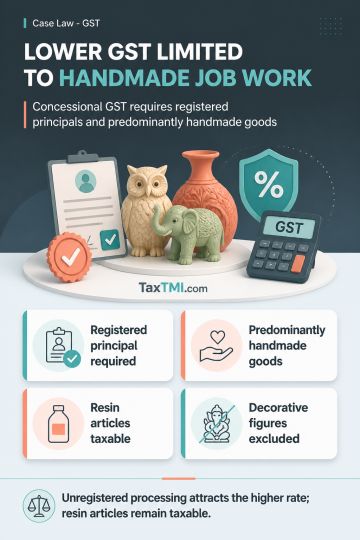
Handicraft job work receives concessional GST only for registered principals and predominantly handmade goods; commercial resin articles remain taxabl...
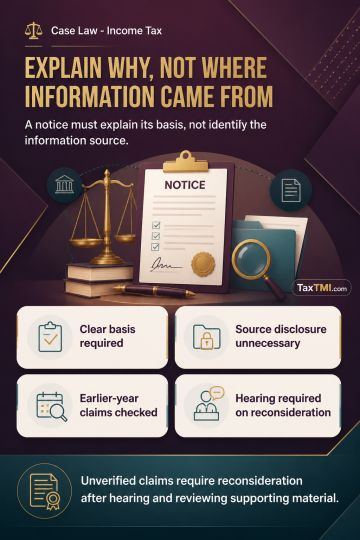
Reassessment disclosure requirements permit stated reasons without revealing information sources, but prior-taxation claims require full examination b...
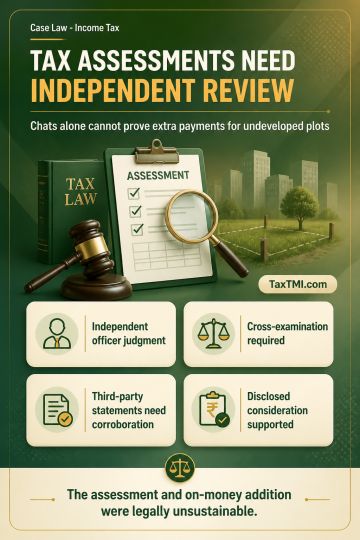
Independent assessment discretion and corroborated electronic evidence determine validity of on-money additions and undisclosed-consideration assessme...
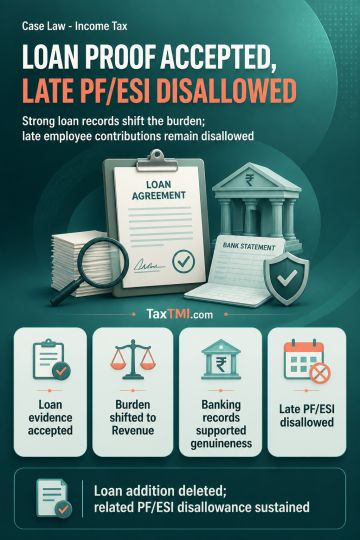
The delayed deposit of employees' share of contributions towards ESIC and EPF by the assessee beyond the due dates prescribed under the respective Acts would constitute income of the assessee by virtue of Section 36(1)(va) read with Section 2(24)(x) of the Income Tax Act. The Apex Court in Checkmate Services Pvt. Ltd. case observed this position. The non-obstante clause in Section 43B does not dilute or override the employer's obligation to deposit the amounts deducted from employees' income on or before the due date. The deduction is allowed only if the deposits are made before filing the return, but this cannot apply to amounts held in trust, such as employees' contributions, which are not part of the assessee employer's income. These amounts have to be deposited as per the welfare enactments on or before the due dates mandated by the concerned law for claiming deduction. The Assessing Officer/CPC was justified in rejecting the assessee's claim for deduction of delayed deposit of employees' share through an intimation u/s 143(1)(a) prior to the Checkmate Services judgment.
The delayed deposit of employees' share of contributions towards ESIC and EPF by the assessee beyond the due dates prescribed under the respective Acts would constitute income of the assessee by virtue of Section 36(1)(va) read with Section 2(24)(x) of the Income Tax Act. The Apex Court in Checkmate Services Pvt. Ltd. case observed this position. The non-obstante clause in Section 43B does not dilute or override the employer's obligation to deposit the amounts deducted from employees' income on or before the due date. The deduction is allowed only if the deposits are made before filing the return, but this cannot apply to amounts held in trust, such as employees' contributions, which are not part of the assessee employer's income. These amounts have to be deposited as per the welfare enactments on or before the due dates mandated by the concerned law for claiming deduction. The Assessing Officer/CPC was justified in rejecting the assessee's claim for deduction of delayed deposit of employees' share through an intimation u/s 143(1)(a) prior to the Checkmate Services judgment.
Note: It is a system-generated summary and is for quick reference only.
 TaxTMI
  TaxTMI
 of 4828






 Join Channel


