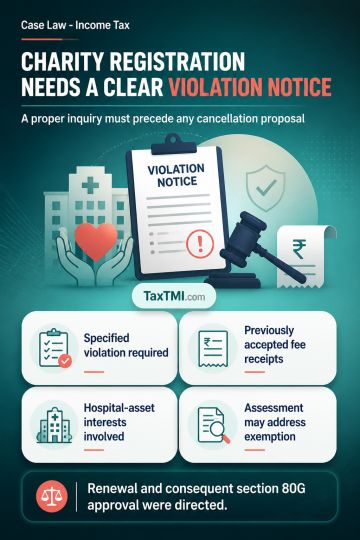
Charitable trust registration requires a specified-violation notice; settled cash deposits and related-party payments did not justify cancellation or ...
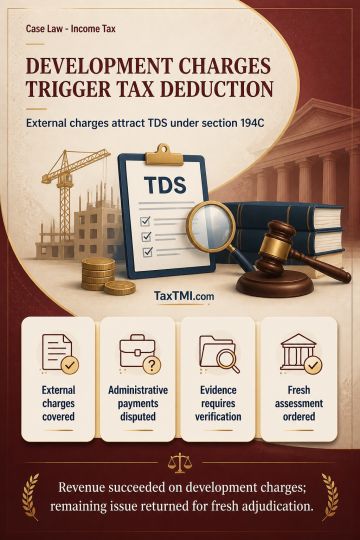
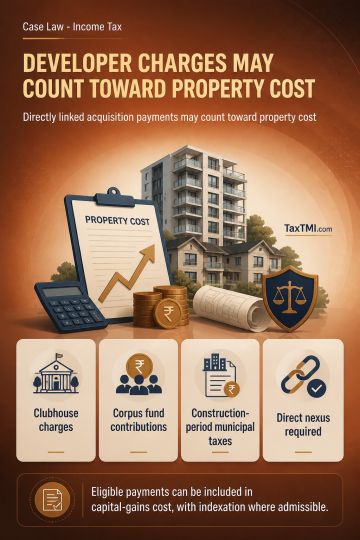
External development charges trigger TDS under section 194C, while disputed administrative payments require factual verification and fresh adjudicatio...
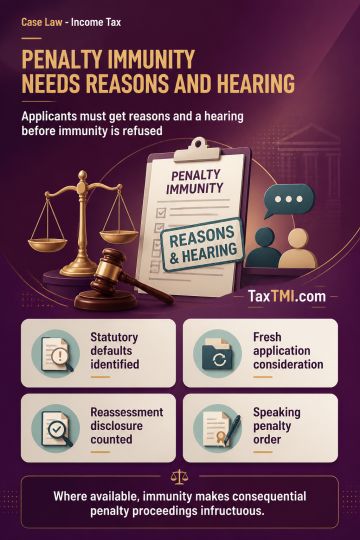
Section 270AA penalty immunity requires identified statutory defaults and a hearing before rejection; reassessment disclosure may constitute under-rep...
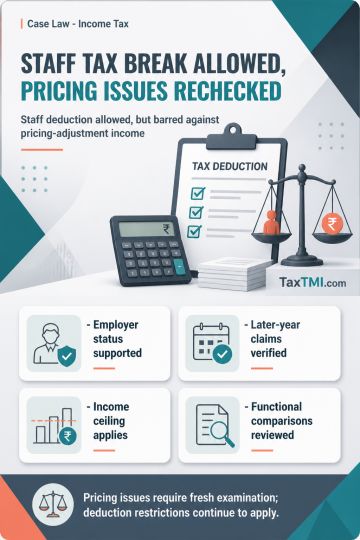
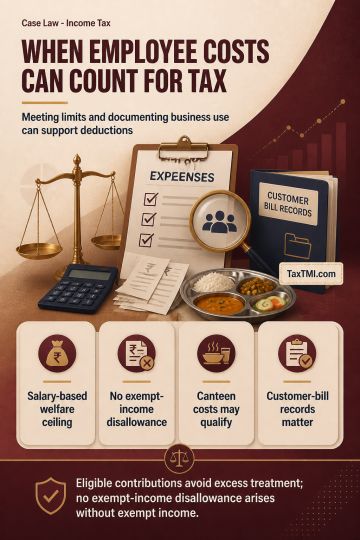
Section 80JJAA employee-cost deduction allowed for deployed staff but barred against transfer-pricing income enhancement, with pricing issues remanded...
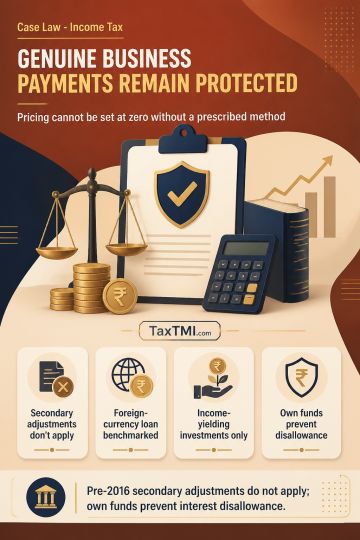
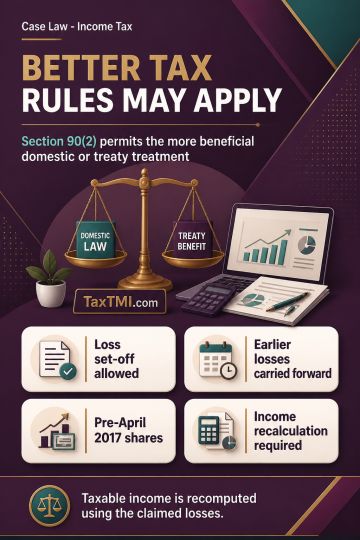
Transfer-pricing methodology protects commercially genuine associated-enterprise payments, while pre-2016 secondary adjustments and related notional i...
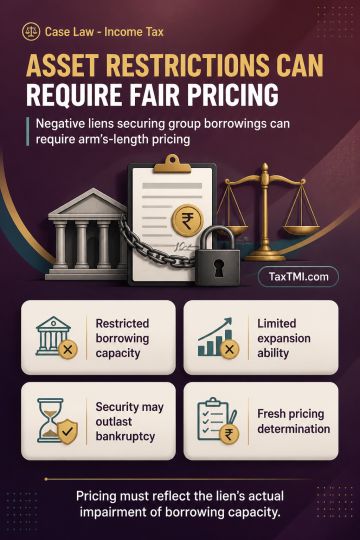
Negative liens over operating assets can constitute international transactions requiring arm's-length pricing reflecting restricted borrowing and expa...
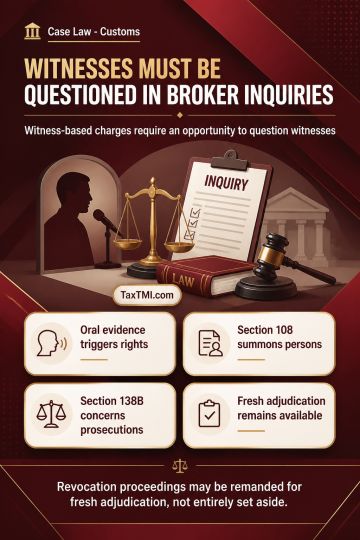
Cross-examination rights in Customs Broker revocation inquiries require witness examination; procedural denial may be cured through fresh adjudication...
Issue of invoking an extended period of limitation for service tax assessment in cases involving interpretation of legal provisions. It establishes that mere interpretation differences or omissions without intent cannot justify invoking the extended period. The key points are: Interpretation issues regarding taxability do not constitute willful suppression of facts justifying extended limitation. The responsibility lies with the tax officer to scrutinize returns and make assessments within the normal period. Any revenue loss due to non-scrutiny is a policy risk taken by the department. Extended limitation requires evidence of fraud, collusion, willful misstatement or violation with intent, which cannot be presumed from differing interpretations or non-scrutiny. The tribunal ruled in favor of the assessee on the limitation issue, deeming it unnecessary to examine the merits.
Issue of invoking an extended period of limitation for service tax assessment in cases involving interpretation of legal provisions. It establishes that mere interpretation differences or omissions without intent cannot justify invoking the extended period. The key points are: Interpretation issues regarding taxability do not constitute willful suppression of facts justifying extended limitation. The responsibility lies with the tax officer to scrutinize returns and make assessments within the normal period. Any revenue loss due to non-scrutiny is a policy risk taken by the department. Extended limitation requires evidence of fraud, collusion, willful misstatement or violation with intent, which cannot be presumed from differing interpretations or non-scrutiny. The tribunal ruled in favor of the assessee on the limitation issue, deeming it unnecessary to examine the merits.
Note: It is a system-generated summary and is for quick reference only.
 TaxTMI
  TaxTMI
 of 4828







 Join Channel


