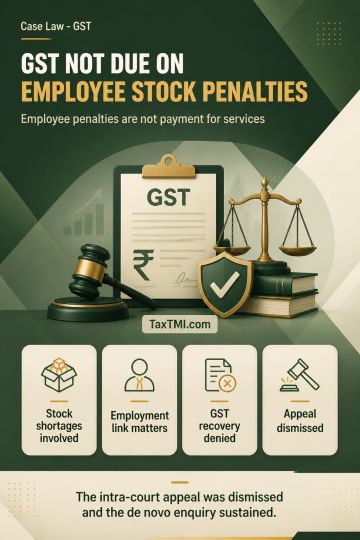
Employee stock-shortage penalties do not constitute consideration for services, preventing GST collection under Schedule II in employment relationship...
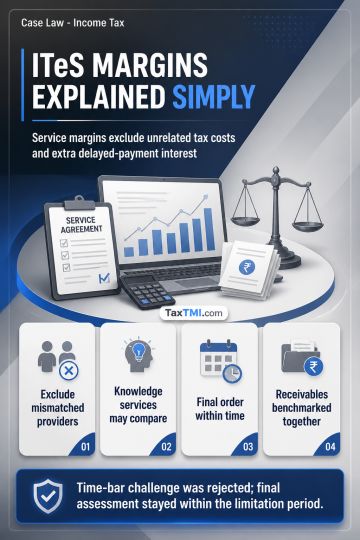
Transfer-pricing treatment of ITeS margins excludes pass-through tax recoveries and separate delayed-receivables interest after working-capital adjust...
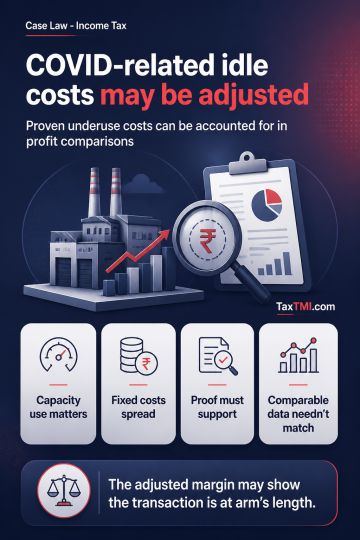
Capacity-utilisation adjustments under TNMM can neutralise substantiated COVID-related idle costs where underutilisation materially affects profitabil...
Page of 4830
Press 'Enter' after typing page number.
181 to 200 of 96587 Results
❮
❯
❯❯
0 / 200
Expand Note
Add to Folder
No Folders have been created
+
Are you sure you want to delete "My most important" ?
Dishonor of cheque due to insufficient funds, the legal requirements for issuing notice and filing a complaint within the prescribed time limit, and the court's analysis of whether the complaint was filed within the limitation period. It discusses the applicability of Section 4 of the Limitation Act when the limitation period expires on a court holiday. The court found that the Magistrate and Additional Sessions Judge did not err in issuing the summoning order against the petitioner, as the complainant provided pre-summoning evidence through an affidavit as per Section 145. The High Court dismissed the petition, holding that the lower courts did not commit any illegality warranting interference u/s 482 of the Code of Criminal Procedure.
Dishonor of cheque due to insufficient funds, the legal requirements for issuing notice and filing a complaint within the prescribed time limit, and the court's analysis of whether the complaint was filed within the limitation period. It discusses the applicability of Section 4 of the Limitation Act when the limitation period expires on a court holiday. The court found that the Magistrate and Additional Sessions Judge did not err in issuing the summoning order against the petitioner, as the complainant provided pre-summoning evidence through an affidavit as per Section 145. The High Court dismissed the petition, holding that the lower courts did not commit any illegality warranting interference u/s 482 of the Code of Criminal Procedure.
Note: It is a system-generated summary and is for quick reference only.
 TaxTMI
  TaxTMI
 of 4830



 Join Channel


