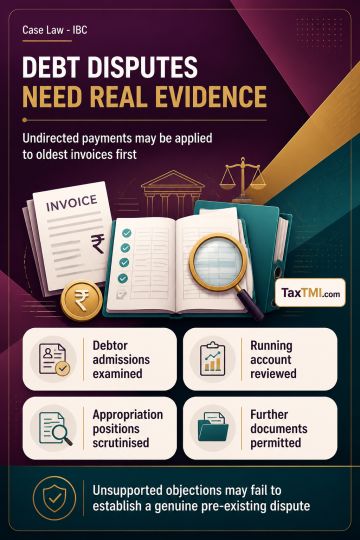
Pre-existing operational debt disputes require genuine evidence, while undirected running-account payments may be appropriated on a first-in-first-out...
Agency in CNG distribution makes outlet operators commission agents, rendering taxable Business Auxiliary Service rather than purchasing goods for res...
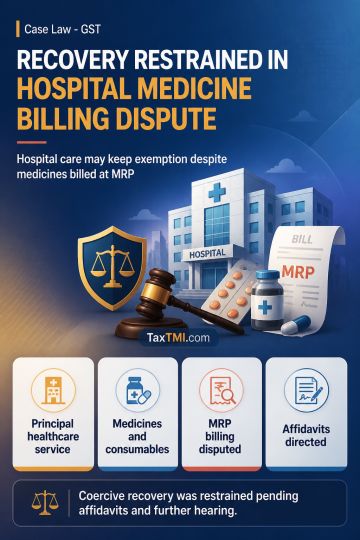
Composite inpatient healthcare supply may retain exemption despite MRP medicine billing, while separate taxable sale characterisation remains disputed...
The High Court addressed the challenge to notifications extending the time limit for issuance of orders u/s 73 of the CGST/AGST Act, 2017, due to the "force majeure" condition of Covid-19. The Court noted that amendments introduced by the Finance (No. 2) Act, 2024, retrospectively effective from 01.07.2017, allowed registered persons to claim input tax credit for financial years 2017-18 to 2020-21, subject to conditions prescribed in the newly inserted Sections 16(5) and 16(6) of the CGST Act, 2017. Consequently, the show-cause notice issued against the petitioners became redundant. The Court set aside the impugned order and remanded the matter to the competent jurisdictional officer for passing an appropriate order, disposing of the petition.
The High Court addressed the challenge to notifications extending the time limit for issuance of orders u/s 73 of the CGST/AGST Act, 2017, due to the "force majeure" condition of Covid-19. The Court noted that amendments introduced by the Finance (No. 2) Act, 2024, retrospectively effective from 01.07.2017, allowed registered persons to claim input tax credit for financial years 2017-18 to 2020-21, subject to conditions prescribed in the newly inserted Sections 16(5) and 16(6) of the CGST Act, 2017. Consequently, the show-cause notice issued against the petitioners became redundant. The Court set aside the impugned order and remanded the matter to the competent jurisdictional officer for passing an appropriate order, disposing of the petition.
Note: It is a system-generated summary and is for quick reference only.
 TaxTMI
 of 4805







 Join Channel


 TaxTMI
