Transaction value cannot be rejected solely on non-statutory valuation guidelines without corroborative evidence supporting reassessment of final cust...
Cross-examination rights and corroborated evidence limit customs penalties for misdeclaration in genuine import transactions involving documented clea...
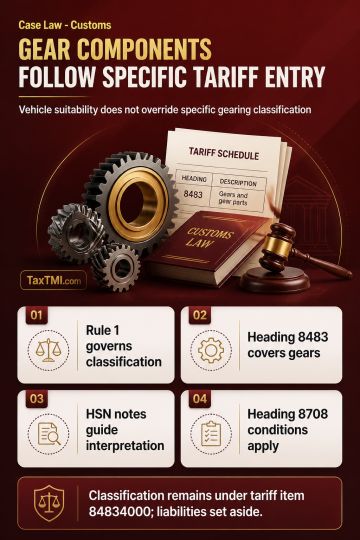
Tariff classification of vehicle gear components follows the specific gearing entry, displacing motor-vehicle parts classification and related liabili...
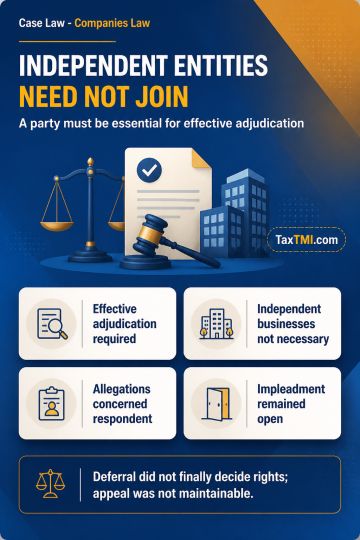
Necessary-party requirements limit impleadment of independent entities, while deferred consideration does not create an appealable adverse determinati...
Food supplement classification requires common parlance and authoritative tests, preventing treatment as proprietary Ayurvedic medicines without suppo...
The High Court addressed the challenge to notifications extending the time limit for issuance of orders u/s 73 of the CGST/AGST Act, 2017, due to the "force majeure" condition of Covid-19. The Court noted that amendments introduced by the Finance (No. 2) Act, 2024, retrospectively effective from 01.07.2017, allowed registered persons to claim input tax credit for financial years 2017-18 to 2020-21, subject to conditions prescribed in the newly inserted Sections 16(5) and 16(6) of the CGST Act, 2017. Consequently, the show-cause notice issued against the petitioners became redundant. The Court set aside the impugned order and remanded the matter to the competent jurisdictional officer for passing an appropriate order, disposing of the petition.
The High Court addressed the challenge to notifications extending the time limit for issuance of orders u/s 73 of the CGST/AGST Act, 2017, due to the "force majeure" condition of Covid-19. The Court noted that amendments introduced by the Finance (No. 2) Act, 2024, retrospectively effective from 01.07.2017, allowed registered persons to claim input tax credit for financial years 2017-18 to 2020-21, subject to conditions prescribed in the newly inserted Sections 16(5) and 16(6) of the CGST Act, 2017. Consequently, the show-cause notice issued against the petitioners became redundant. The Court set aside the impugned order and remanded the matter to the competent jurisdictional officer for passing an appropriate order, disposing of the petition.
Note: It is a system-generated summary and is for quick reference only.
 TaxTMI
 of 4805


















 Join Channel


 TaxTMI
