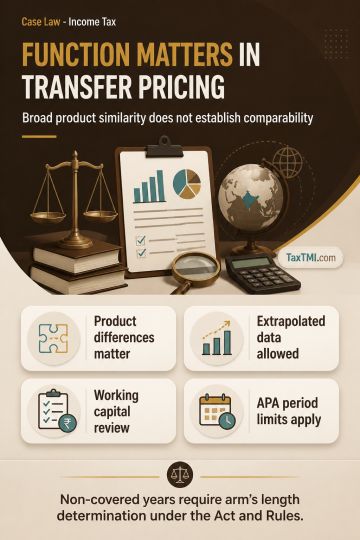
Transfer pricing comparability requires functional alignment and permits working capital adjustment, while APA margins cannot govern non-covered years...
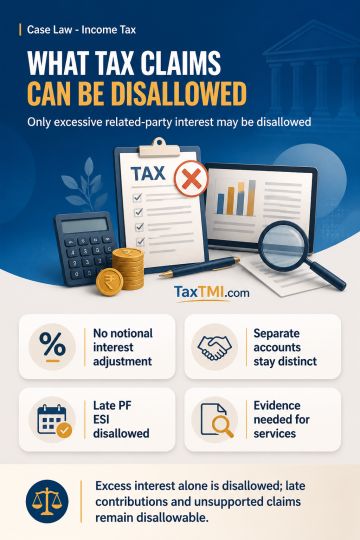
Treaty benefit, goodwill depreciation and hedging costs: export commission disallowed, while key business deductions and depreciation claims succeeded...
Undisclosed foreign asset classification requires an unexplained source; unrebutted affidavits and corroborative evidence defeated the Black Money Act...
The High Court addressed the extension of due dates u/s 73 of the CGST/AGST Act, 2017 due to the Covid-19 pandemic. It examined the provisions related to the time limit prescribed u/s 73 and the invocation of Section 168A, considering the "force majeure" condition. The Court observed that, notwithstanding Section 16(4), for financial years 2017-18 to 2020-21, the registered person shall be entitled to take input tax credit in any return filed u/s 39 up to November 30, 2021. The amendments brought by the Finance (No. 2) Act, 2024, rendered the challenge in the writ petition redundant. The petitioner is entitled to avail the input tax credit benefit for the relevant period, subject to the conditions prescribed in the newly inserted Sections 16(5) and 16(6). Consequently, the impugned order was set aside, and the matter was remanded to the competent jurisdictional officer for appropriate orders.
The High Court addressed the extension of due dates u/s 73 of the CGST/AGST Act, 2017 due to the Covid-19 pandemic. It examined the provisions related to the time limit prescribed u/s 73 and the invocation of Section 168A, considering the "force majeure" condition. The Court observed that, notwithstanding Section 16(4), for financial years 2017-18 to 2020-21, the registered person shall be entitled to take input tax credit in any return filed u/s 39 up to November 30, 2021. The amendments brought by the Finance (No. 2) Act, 2024, rendered the challenge in the writ petition redundant. The petitioner is entitled to avail the input tax credit benefit for the relevant period, subject to the conditions prescribed in the newly inserted Sections 16(5) and 16(6). Consequently, the impugned order was set aside, and the matter was remanded to the competent jurisdictional officer for appropriate orders.
Note: It is a system-generated summary and is for quick reference only.
 TaxTMI
 of 4805
















 Join Channel


 TaxTMI
