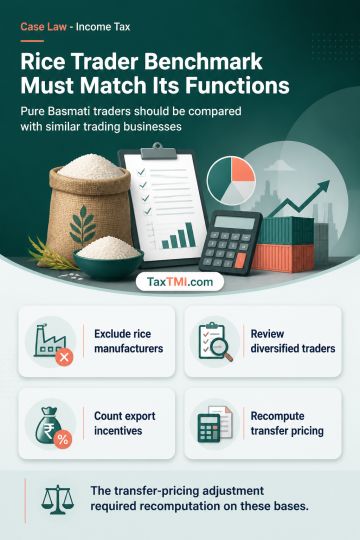
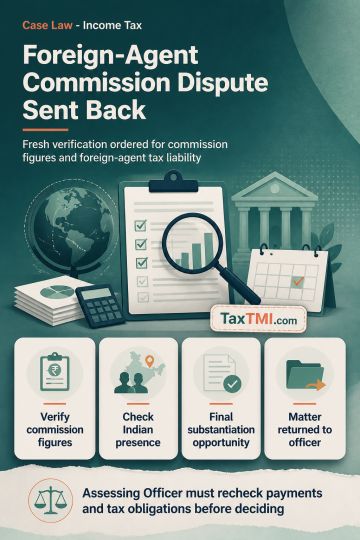
TNMM functional comparability requires excluding rice manufacturers from a pure Basmati rice trader's benchmark and recognising operating export recei...
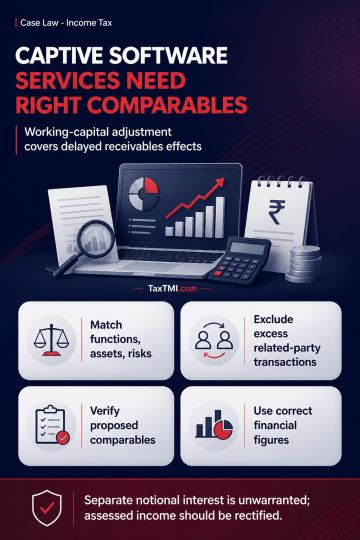
Working-capital adjustment subsumes delayed-receivable effects in TNMM benchmarking of captive software-development services, avoiding separate notion...
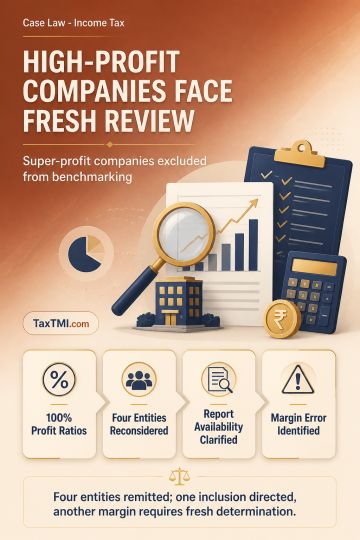
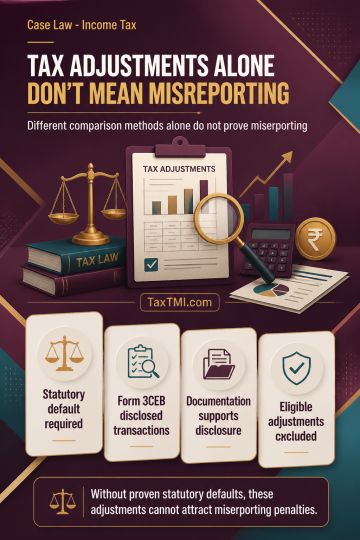
Transfer-pricing comparability requires exclusion of financially illogical super-profit comparables and correction of unsupported annual-report and ma...
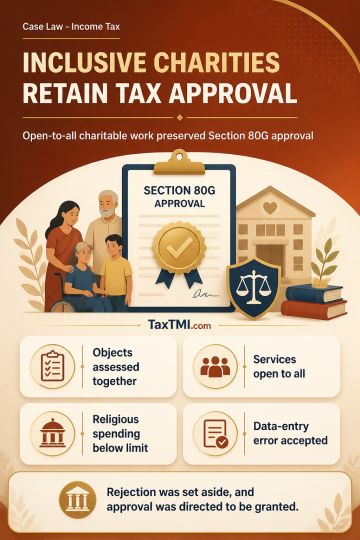
Charitable character assessment preserves Section 80G approval despite inclusive spiritual teachings and incidental religious expenditure within the s...
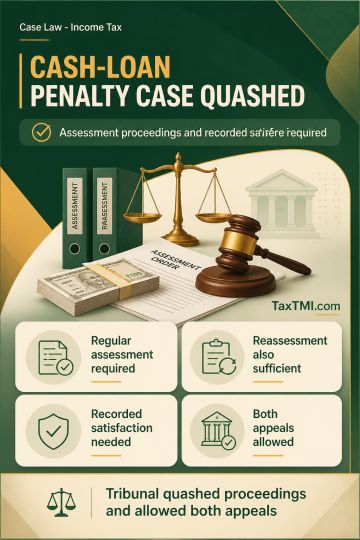
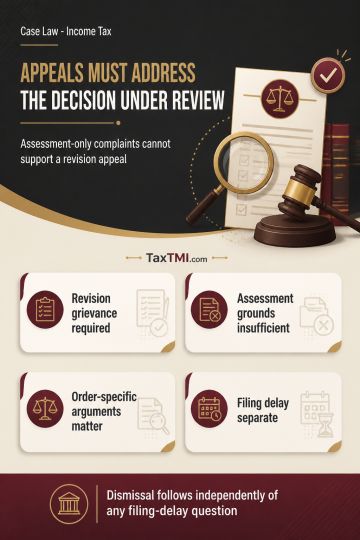
Penalty proceedings for cash-loan acceptance require assessment proceedings and recorded Assessing Officer satisfaction; absent these, the proceedings...
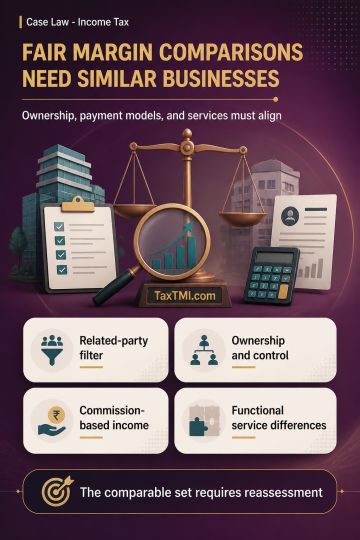
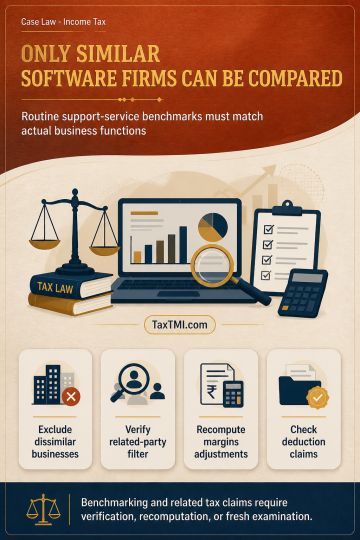
Functional comparability governs software-service benchmarking: dissimilar companies are excluded, while related-party filters, margins and working-ca...
The assessee had been following the mercantile system of accounting, wherein book profits are taken for tax assessment, though credit or debit amounts may not be realized or disbursed. The Income Tax Officer treated certain amounts as income, which the assessee claimed were not actually accrued. It is settled law that income tax cannot be levied on hypothetical income, and only real income can be taxed. Recording entries in books of accounts is not conclusive for determining income under tax laws. Whether an amount is income or not is determined based on Income Tax Law, not book entries. No tax can be charged on an amount not actually earned. The Tribunal rightly deleted the addition as hypothetical income not actually accrued, which was 64% of the excise duty recognized in the assessee's books. While subsidies, grants, and reimbursements are considered income u/s 2(24)(xviii), exemptions are not explicitly mentioned. Exemption means freedom from a general burden or tax, while subsidy means government aid for a public benefit enterprise. The assessee was exempted from paying 36% of the excise duty, not subsidized, making it a capital receipt not taxable under the Income Tax Act.
The assessee had been following the mercantile system of accounting, wherein book profits are taken for tax assessment, though credit or debit amounts may not be realized or disbursed. The Income Tax Officer treated certain amounts as income, which the assessee claimed were not actually accrued. It is settled law that income tax cannot be levied on hypothetical income, and only real income can be taxed. Recording entries in books of accounts is not conclusive for determining income under tax laws. Whether an amount is income or not is determined based on Income Tax Law, not book entries. No tax can be charged on an amount not actually earned. The Tribunal rightly deleted the addition as hypothetical income not actually accrued, which was 64% of the excise duty recognized in the assessee's books. While subsidies, grants, and reimbursements are considered income u/s 2(24)(xviii), exemptions are not explicitly mentioned. Exemption means freedom from a general burden or tax, while subsidy means government aid for a public benefit enterprise. The assessee was exempted from paying 36% of the excise duty, not subsidized, making it a capital receipt not taxable under the Income Tax Act.
Note: It is a system-generated summary and is for quick reference only.
 TaxTMI
  TaxTMI
 of 4830



 Join Channel


