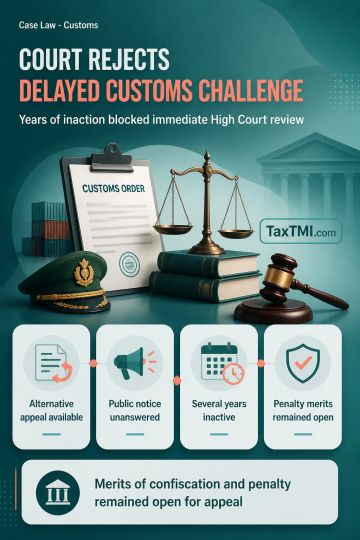
Alternative statutory remedy and unexplained delay barred writ review of customs confiscation adjudication, leaving merits for appellate consideration...
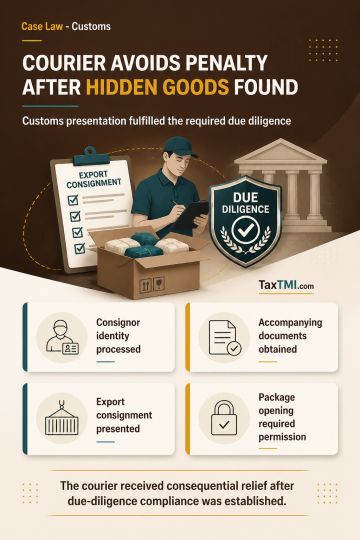
Authorised courier due diligence protects against penalties where declared exports conceal prohibited goods despite proper documentation and customs p...
Customs-controlled container movement now extends to DP World facilities, subject to segregation, inspections, reconciliation, and EXIM cargo priority...
The assessee, following the mercantile system of accounting, had treated Annual Maintenance Charges (AMC) collected in advance from customers for lift maintenance as a "current liability" or "Income Received in Advance" in its books. The Tribunal had deleted the addition made by the Assessing Officer (AO) on account of AMC received in advance, shown as a liability in the balance sheet, especially when the AMC period was only one year. However, the High Court held that due to the assessee's monopoly over software, spares, and services, customers had no choice but to renew the AMC. Even if terminated, the assessee was not bound to refund the amount, and customers would be at the mercy of the assessee for maintenance. The assessee's business model left no uncertainties regarding income from AMC services. The amount received in advance was taxable in the year of collection, as there was no uncertainty in the consideration derived for rendering services, and the amount was non-refundable. The Court answered the substantial questions of law in favor of the Revenue and against the assessee.
The assessee, following the mercantile system of accounting, had treated Annual Maintenance Charges (AMC) collected in advance from customers for lift maintenance as a "current liability" or "Income Received in Advance" in its books. The Tribunal had deleted the addition made by the Assessing Officer (AO) on account of AMC received in advance, shown as a liability in the balance sheet, especially when the AMC period was only one year. However, the High Court held that due to the assessee's monopoly over software, spares, and services, customers had no choice but to renew the AMC. Even if terminated, the assessee was not bound to refund the amount, and customers would be at the mercy of the assessee for maintenance. The assessee's business model left no uncertainties regarding income from AMC services. The amount received in advance was taxable in the year of collection, as there was no uncertainty in the consideration derived for rendering services, and the amount was non-refundable. The Court answered the substantial questions of law in favor of the Revenue and against the assessee.
Note: It is a system-generated summary and is for quick reference only.
 TaxTMI
  TaxTMI
 of 4828







 Join Channel


