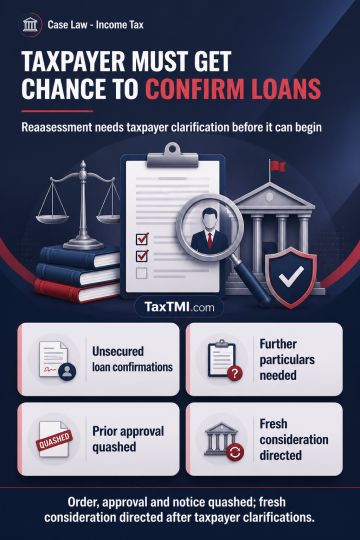
Opportunity to furnish unsecured-loan confirmations is required before reassessment initiation; proceedings require fresh consideration after taxpayer...
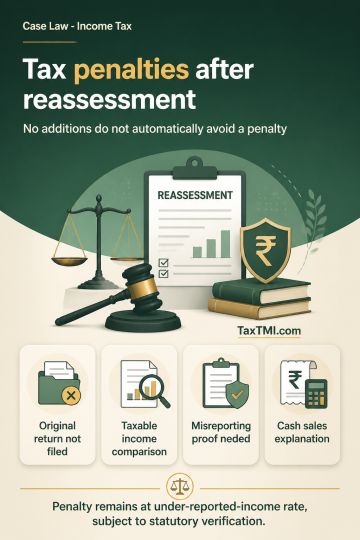
Under-reporting on a first reassessment return attracts penalty, while enhanced misreporting penalty requires proof of a statutory misreporting catego...
The High Court held that the provisions of Section 41(1) read with Section 28(iv) of the Income Tax Act would not be applicable in this case. The assessee had received advances against a project that was never implemented, and the amount was not returned due to financial constraints. The Assessing Officer treated it as a cessation of liability, but the CIT(Appeals) and Tribunal found that the assessee did not derive any benefit or enjoy the money received as an advance. The assessee had reinvested the amount in shares of group companies, which were later sold at a loss, and the capital loss was not claimed as a set-off. The concurrent findings of fact by the lower authorities were accepted, and it was held that no benefit was derived from the transactions, thus negating the applicability of the relevant provisions.
The High Court held that the provisions of Section 41(1) read with Section 28(iv) of the Income Tax Act would not be applicable in this case. The assessee had received advances against a project that was never implemented, and the amount was not returned due to financial constraints. The Assessing Officer treated it as a cessation of liability, but the CIT(Appeals) and Tribunal found that the assessee did not derive any benefit or enjoy the money received as an advance. The assessee had reinvested the amount in shares of group companies, which were later sold at a loss, and the capital loss was not claimed as a set-off. The concurrent findings of fact by the lower authorities were accepted, and it was held that no benefit was derived from the transactions, thus negating the applicability of the relevant provisions.
Note: It is a system-generated summary and is for quick reference only.
 TaxTMI
  TaxTMI
 of 4916