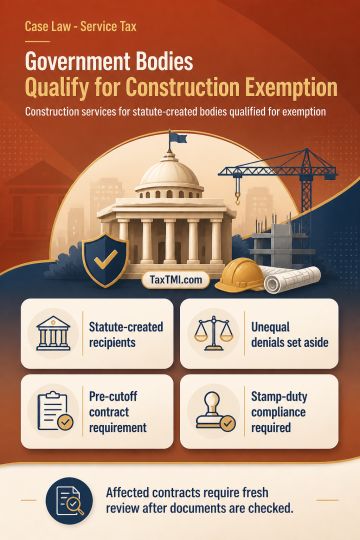
Governmental authority status supports construction-service exemption, while pre-cutoff contract and stamp-duty compliance requires verification on re...
Automated Free Sale and Commerce Certificates enable paperless processing while retaining risk-based manual verification for selected exporter applica...
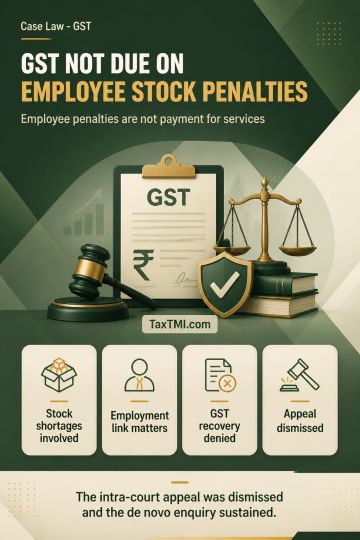
Employee stock-shortage penalties do not constitute consideration for services, preventing GST collection under Schedule II in employment relationship...
Section 154 allows the Income Tax Authorities to amend, correct, and pass orders notwithstanding anything in law, except matters already considered on appeal or revision. The Assessing Officer's powers are wide-ranging, allowing amendment of earlier orders suo motu or on rectification application. In this scrutiny case, the Assessing Officer could have examined the law and waived deductions from book profits for MAT liability calculation. The ITAT found the inadvertent mistake occurred due to misinterpretation and can be corrected u/s 154, as no new facts or accounts were introduced. The High Court held that the mistake arising from misinterpretation of law while filing the ITR can be rectified u/s 154, dismissing the Revenue's appeal.
Section 154 allows the Income Tax Authorities to amend, correct, and pass orders notwithstanding anything in law, except matters already considered on appeal or revision. The Assessing Officer's powers are wide-ranging, allowing amendment of earlier orders suo motu or on rectification application. In this scrutiny case, the Assessing Officer could have examined the law and waived deductions from book profits for MAT liability calculation. The ITAT found the inadvertent mistake occurred due to misinterpretation and can be corrected u/s 154, as no new facts or accounts were introduced. The High Court held that the mistake arising from misinterpretation of law while filing the ITR can be rectified u/s 154, dismissing the Revenue's appeal.
Note: It is a system-generated summary and is for quick reference only.
 TaxTMI
  TaxTMI
 of 4828












 Join Channel


