Defined public benefit can retain charitable character; registration renewal requires examining genuine activities and legal compliance, not surplus a...
Capital reduction is distinct from share buy-back, preventing buy-back tax; restructuring interest and related business deductions also survive scruti...
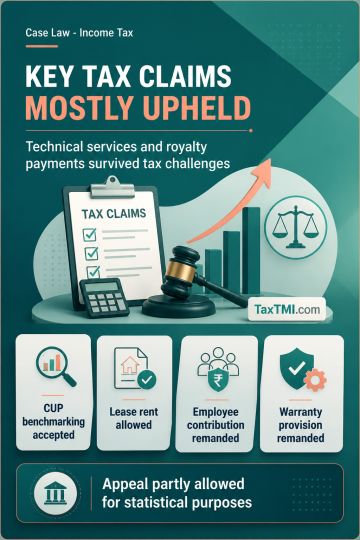
Transfer pricing and tax deductions upheld on established principles, while employee contributions and warranty provisions returned for fresh examinat...
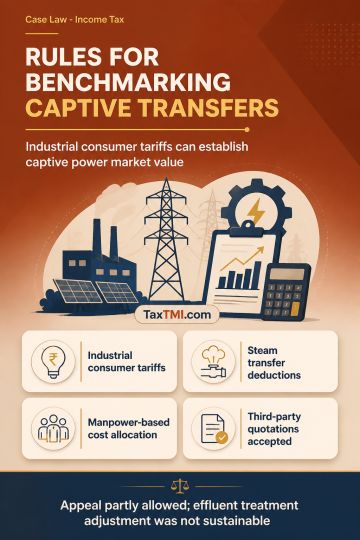
Captive transfer pricing relies on industrial consumer tariffs, while genuine quotations can benchmark effluent treatment transfers under the Other Me...
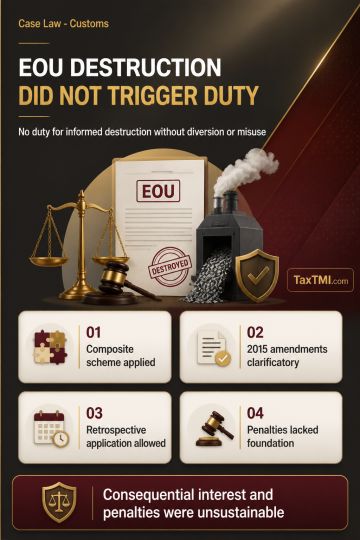
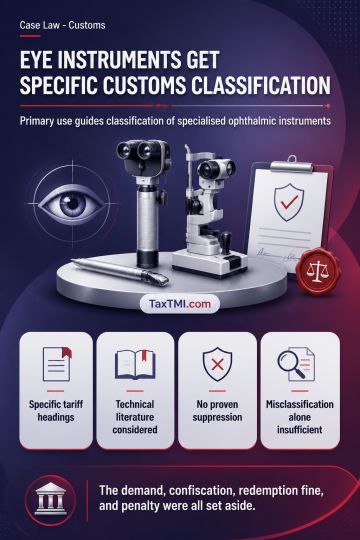
Specific tariff classification for ophthalmic instruments and extended limitation principles determine the treatment of duty demands, confiscation, an...
The High Court held that the Assessing Officer (AO) lacked sufficient material or evidence to reopen the assessment u/s 147 for the Assessment Year 2013-14 in respect of transactions involving shares of Cubical. The notice u/s 148A(b) and order u/s 148A(d) failed to demonstrate that the AO possessed books of account, documents, or evidence revealing that the assessee's income from Cubical transactions, treated as capital gains, had escaped assessment. The mere allegation of bogus profits from Cubical shares and the tabular statement reflecting figures did not substantiate that the income was undisclosed or a camouflage. Without concrete evidence suggesting the Cubical transactions were bogus, the amount of Rs. 30,71,263/- could not be included as income escaping assessment. Excluding this amount, the remaining income from Gemstone share transactions fell short of the Rs. 50,00,000/- threshold for reopening assessments beyond three years. Consequently, the court decided in favor of the assessee.
The High Court held that the Assessing Officer (AO) lacked sufficient material or evidence to reopen the assessment u/s 147 for the Assessment Year 2013-14 in respect of transactions involving shares of Cubical. The notice u/s 148A(b) and order u/s 148A(d) failed to demonstrate that the AO possessed books of account, documents, or evidence revealing that the assessee's income from Cubical transactions, treated as capital gains, had escaped assessment. The mere allegation of bogus profits from Cubical shares and the tabular statement reflecting figures did not substantiate that the income was undisclosed or a camouflage. Without concrete evidence suggesting the Cubical transactions were bogus, the amount of Rs. 30,71,263/- could not be included as income escaping assessment. Excluding this amount, the remaining income from Gemstone share transactions fell short of the Rs. 50,00,000/- threshold for reopening assessments beyond three years. Consequently, the court decided in favor of the assessee.
Note: It is a system-generated summary and is for quick reference only.
 TaxTMI
 of 4805
















 Join Channel


 TaxTMI