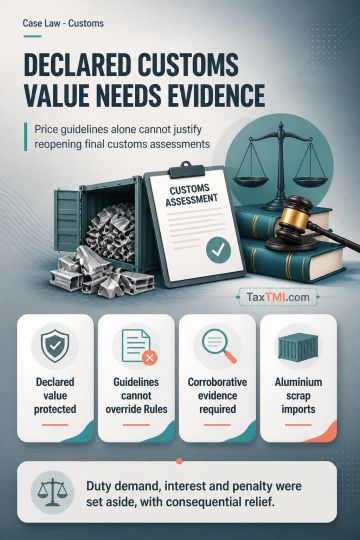
Transaction value cannot be rejected solely on non-statutory valuation guidelines without corroborative evidence supporting reassessment of final cust...
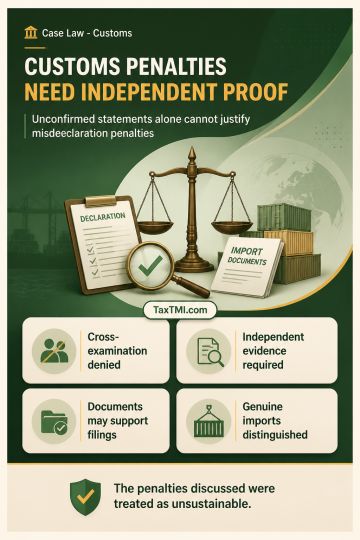
Cross-examination rights and corroborated evidence limit customs penalties for misdeclaration in genuine import transactions involving documented clea...
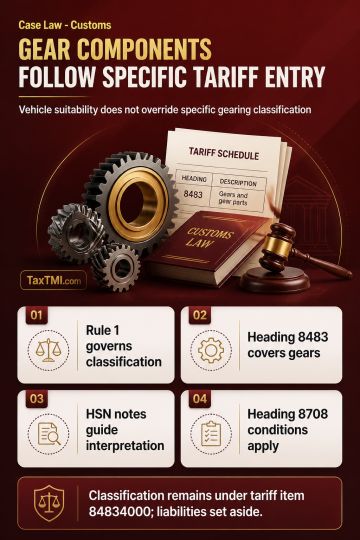
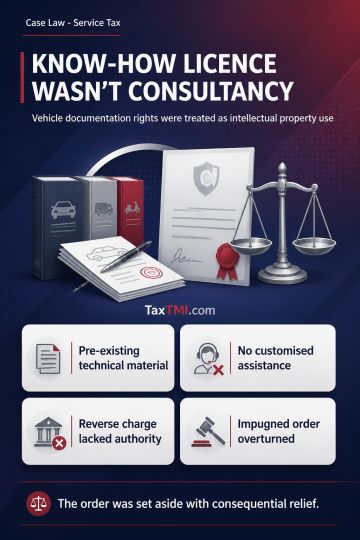
Tariff classification of vehicle gear components follows the specific gearing entry, displacing motor-vehicle parts classification and related liabili...
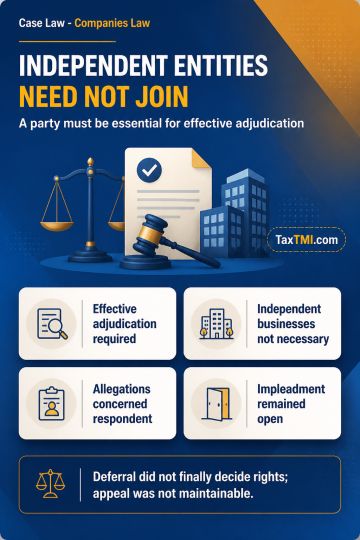
Necessary-party requirements limit impleadment of independent entities, while deferred consideration does not create an appealable adverse determinati...
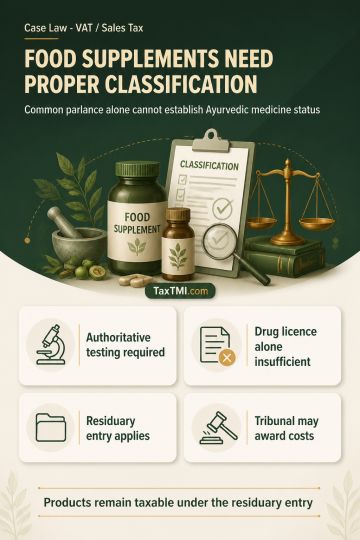
Food supplement classification requires common parlance and authoritative tests, preventing treatment as proprietary Ayurvedic medicines without suppo...
The High Court held that the Assessing Officer (AO) lacked sufficient material or evidence to reopen the assessment u/s 147 for the Assessment Year 2013-14 in respect of transactions involving shares of Cubical. The notice u/s 148A(b) and order u/s 148A(d) failed to demonstrate that the AO possessed books of account, documents, or evidence revealing that the assessee's income from Cubical transactions, treated as capital gains, had escaped assessment. The mere allegation of bogus profits from Cubical shares and the tabular statement reflecting figures did not substantiate that the income was undisclosed or a camouflage. Without concrete evidence suggesting the Cubical transactions were bogus, the amount of Rs. 30,71,263/- could not be included as income escaping assessment. Excluding this amount, the remaining income from Gemstone share transactions fell short of the Rs. 50,00,000/- threshold for reopening assessments beyond three years. Consequently, the court decided in favor of the assessee.
The High Court held that the Assessing Officer (AO) lacked sufficient material or evidence to reopen the assessment u/s 147 for the Assessment Year 2013-14 in respect of transactions involving shares of Cubical. The notice u/s 148A(b) and order u/s 148A(d) failed to demonstrate that the AO possessed books of account, documents, or evidence revealing that the assessee's income from Cubical transactions, treated as capital gains, had escaped assessment. The mere allegation of bogus profits from Cubical shares and the tabular statement reflecting figures did not substantiate that the income was undisclosed or a camouflage. Without concrete evidence suggesting the Cubical transactions were bogus, the amount of Rs. 30,71,263/- could not be included as income escaping assessment. Excluding this amount, the remaining income from Gemstone share transactions fell short of the Rs. 50,00,000/- threshold for reopening assessments beyond three years. Consequently, the court decided in favor of the assessee.
Note: It is a system-generated summary and is for quick reference only.
 TaxTMI
 of 4801



 Join Channel


 TaxTMI
