Cooperative society deposits, member-interest TDS exemption and credit-facility deduction claims require verification through records and supporting e...
Customs jurisdiction over EPCG condition breaches survives export-obligation discharge certificates, requiring alleged fraud and misdeclaration to be ...
Contractual tolerance requires consideration; breach recoveries, qualifying public infrastructure services and road works escape service tax liability...
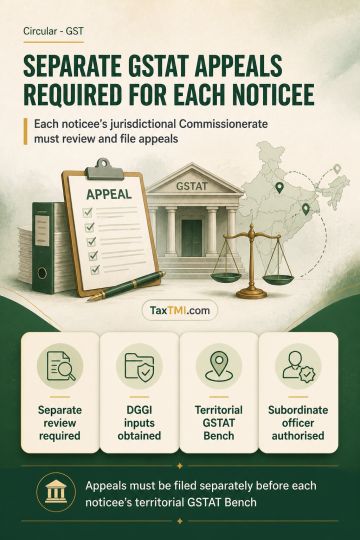
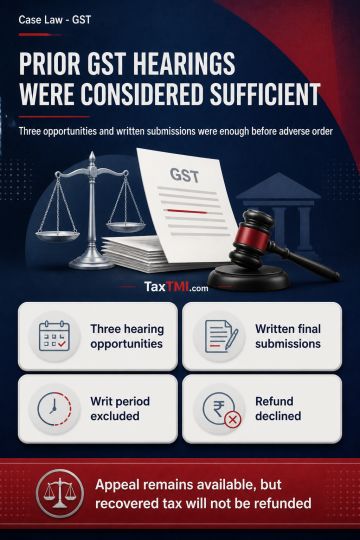
Personal hearing requirements in GST adjudication were satisfied by prior opportunities and written submissions; appellate limitation received writ-pe...
The assessee was penalized u/s 271(1)(c) for addition of sale consideration due to lack of vouchers. The CIT(A) partly confirmed the addition for want of vouchers. The assessee argued that no penalty is maintainable as the transaction was truly disclosed, and long-term capital gains were reported. The ITAT held that the CIT(A) restricted the addition after examining the evidence, indicating the assessee succeeded partially. The AO imposed the penalty solely for non-submission of supporting vouchers. Relying on the CAFCO SYNDICATE SHIPPING CO. case, the ITAT ruled that penalty cannot be imposed for non-furnishing evidence as it does not amount to concealment of income. Consequently, the penalty levied by the AO was deleted, and the assessee's grounds were allowed.
The assessee was penalized u/s 271(1)(c) for addition of sale consideration due to lack of vouchers. The CIT(A) partly confirmed the addition for want of vouchers. The assessee argued that no penalty is maintainable as the transaction was truly disclosed, and long-term capital gains were reported. The ITAT held that the CIT(A) restricted the addition after examining the evidence, indicating the assessee succeeded partially. The AO imposed the penalty solely for non-submission of supporting vouchers. Relying on the CAFCO SYNDICATE SHIPPING CO. case, the ITAT ruled that penalty cannot be imposed for non-furnishing evidence as it does not amount to concealment of income. Consequently, the penalty levied by the AO was deleted, and the assessee's grounds were allowed.
Note: It is a system-generated summary and is for quick reference only.
 TaxTMI
 of 4805















 Join Channel


 TaxTMI