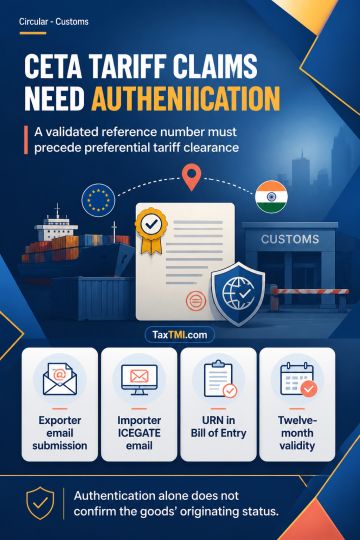
Origin Declaration authentication governs preferential tariff claims under India-UK CETA, requiring a validated reference number before import clearan...
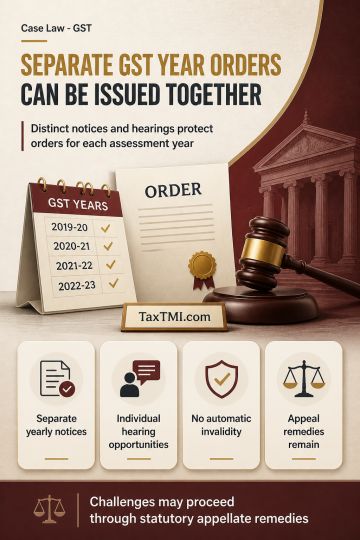
Separate assessment orders for different years remain valid when distinct notices and hearing opportunities prevent prejudice from combined proceeding...
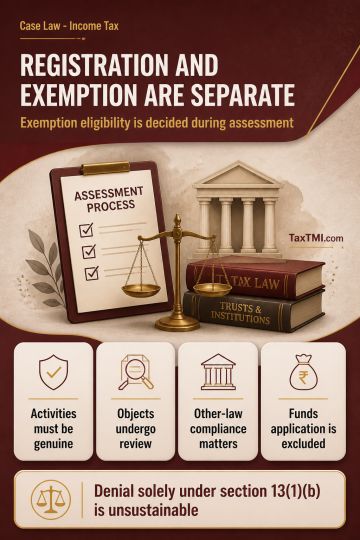
Defined public benefit can retain charitable character; registration renewal requires examining genuine activities and legal compliance, not surplus a...
Capital reduction is distinct from share buy-back, preventing buy-back tax; restructuring interest and related business deductions also survive scruti...
The case pertains to the classification of imported goods declared as "Spare Parts of E-rickshaw" by the respondent. The lower authority classified the goods under CTH 8703.80, covering vehicles propelled through a motor powered by a battery. However, the Tribunal held that the imported goods, if assembled, would not provide the basic function of propulsion required for classification under CTH 8703.80. Referring to the Twinkle Tradecom case, the Tribunal stated that for a machine or vehicle's essential characteristics, the parts involved in manufacturing should fulfill the basic principle of that vehicle or machine. Since the mis-declaration of description, classification, and value alleged by the Department was not established, the Tribunal ruled that the imported goods were not liable for confiscation. The Revenue's appeal was dismissed, and the enhancement of value without following due process, the Customs Valuation Rules, 2007, and principles of natural justice was deemed unsustainable.
The case pertains to the classification of imported goods declared as "Spare Parts of E-rickshaw" by the respondent. The lower authority classified the goods under CTH 8703.80, covering vehicles propelled through a motor powered by a battery. However, the Tribunal held that the imported goods, if assembled, would not provide the basic function of propulsion required for classification under CTH 8703.80. Referring to the Twinkle Tradecom case, the Tribunal stated that for a machine or vehicle's essential characteristics, the parts involved in manufacturing should fulfill the basic principle of that vehicle or machine. Since the mis-declaration of description, classification, and value alleged by the Department was not established, the Tribunal ruled that the imported goods were not liable for confiscation. The Revenue's appeal was dismissed, and the enhancement of value without following due process, the Customs Valuation Rules, 2007, and principles of natural justice was deemed unsustainable.
Note: It is a system-generated summary and is for quick reference only.
 TaxTMI
 of 4803













 Join Channel


 TaxTMI
