Mutual fund maturity rules require proper rollover, redemption, disclosure, and due diligence; investor gains cannot excuse regulatory breaches or pen...
Threshold exemption excludes exempt services, while stamp-paper purchases avoid reverse charge; consequential service tax penalties were also set asid...
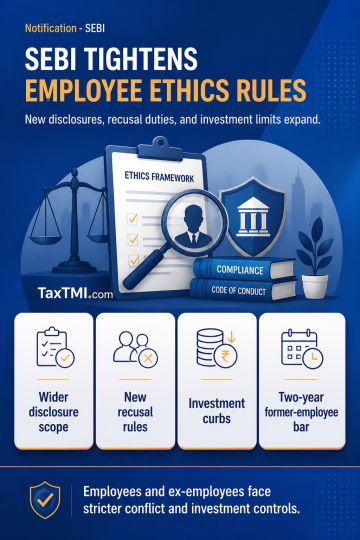
Employee conflict disclosures and investment restrictions expand with new recusal duties, post-employment limits, and compliance reporting requirement...
The Income Tax Settlement Commission (ITSC) has wide powers under Chapter XIX-A to examine and evaluate all aspects of an application for settlement, including calling for reports, directing further inquiries, and holistically examining matters beyond the disclosures made by the applicant. The essential ingredients for granting immunity u/s 245H are cooperation by the applicant in computing total income and full and true disclosure of income, which are the same prerequisites for computation u/s 245D(4). Once the ITSC finds these conditions satisfied, its order granting immunity cannot be questioned separately, as both provisions are premised on identical considerations. The ITSC's order has finality u/s 245I, and can only be reviewed on grounds provided in Chapter XIX-A. Interfering with the grant of immunity would amount to questioning the acceptance of the application itself, which cannot be done if the statutory conditions were found satisfied. The principle of severability cannot be invoked as the considerations for computation and immunity are not distinct.
The Income Tax Settlement Commission (ITSC) has wide powers under Chapter XIX-A to examine and evaluate all aspects of an application for settlement, including calling for reports, directing further inquiries, and holistically examining matters beyond the disclosures made by the applicant. The essential ingredients for granting immunity u/s 245H are cooperation by the applicant in computing total income and full and true disclosure of income, which are the same prerequisites for computation u/s 245D(4). Once the ITSC finds these conditions satisfied, its order granting immunity cannot be questioned separately, as both provisions are premised on identical considerations. The ITSC's order has finality u/s 245I, and can only be reviewed on grounds provided in Chapter XIX-A. Interfering with the grant of immunity would amount to questioning the acceptance of the application itself, which cannot be done if the statutory conditions were found satisfied. The principle of severability cannot be invoked as the considerations for computation and immunity are not distinct.
Note: It is a system-generated summary and is for quick reference only.
 TaxTMI
 of 4805















 Join Channel


 TaxTMI