Retention of seized property survives where recorded reasons support proceeds of crime, while stayed investigation periods are excluded from limitatio...
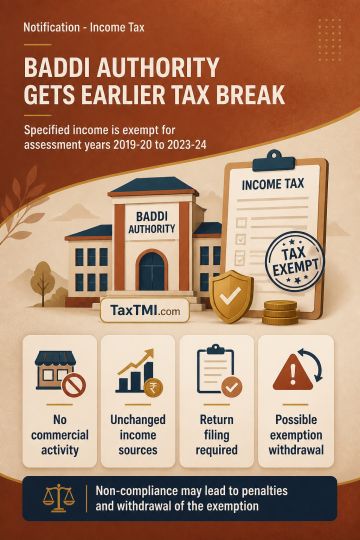
Specified income of Baddi Barotiwala Nalagarh Development Authority receives conditional tax exemption, retrospectively covering its designated assess...
Specified development authority income receives retrospective tax exemption, subject to non-commercial activity, unchanged income sources, and return-...
Unified Brand India framework introduces voluntary Trust Mark certification and funding support for export branding, packaging and global promotional ...
Origin Declaration authentication governs preferential tariff claims under India-UK CETA, requiring a validated reference number before import clearan...
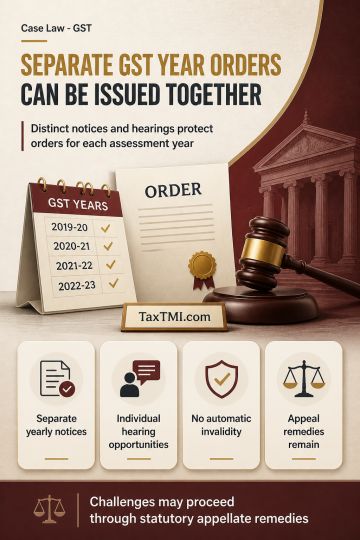
Separate assessment orders for different years remain valid when distinct notices and hearing opportunities prevent prejudice from combined proceeding...
The Income Tax Settlement Commission (ITSC) has wide powers under Chapter XIX-A to examine and evaluate all aspects of an application for settlement, including calling for reports, directing further inquiries, and holistically examining matters beyond the disclosures made by the applicant. The essential ingredients for granting immunity u/s 245H are cooperation by the applicant in computing total income and full and true disclosure of income, which are the same prerequisites for computation u/s 245D(4). Once the ITSC finds these conditions satisfied, its order granting immunity cannot be questioned separately, as both provisions are premised on identical considerations. The ITSC's order has finality u/s 245I, and can only be reviewed on grounds provided in Chapter XIX-A. Interfering with the grant of immunity would amount to questioning the acceptance of the application itself, which cannot be done if the statutory conditions were found satisfied. The principle of severability cannot be invoked as the considerations for computation and immunity are not distinct.
The Income Tax Settlement Commission (ITSC) has wide powers under Chapter XIX-A to examine and evaluate all aspects of an application for settlement, including calling for reports, directing further inquiries, and holistically examining matters beyond the disclosures made by the applicant. The essential ingredients for granting immunity u/s 245H are cooperation by the applicant in computing total income and full and true disclosure of income, which are the same prerequisites for computation u/s 245D(4). Once the ITSC finds these conditions satisfied, its order granting immunity cannot be questioned separately, as both provisions are premised on identical considerations. The ITSC's order has finality u/s 245I, and can only be reviewed on grounds provided in Chapter XIX-A. Interfering with the grant of immunity would amount to questioning the acceptance of the application itself, which cannot be done if the statutory conditions were found satisfied. The principle of severability cannot be invoked as the considerations for computation and immunity are not distinct.
Note: It is a system-generated summary and is for quick reference only.
 TaxTMI
 of 4805


















 Join Channel


 TaxTMI
