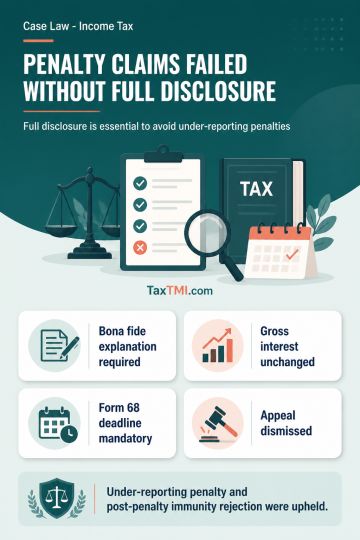
Bona fide disclosure requirements govern under-reporting penalties, and post-penalty immunity applications cannot secure available statutory protectio...
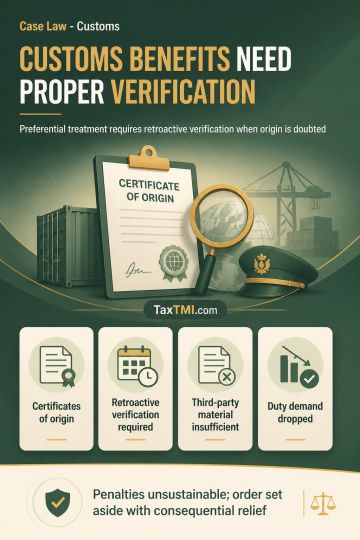
Certificate-of-origin verification procedure governs preferential customs benefits; denial without retroactive verification was set aside with consequ...
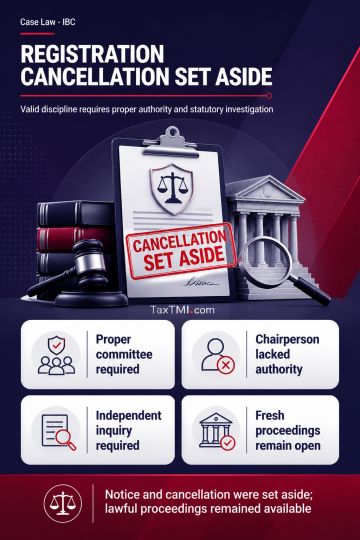
Disciplinary Committee jurisdiction and mandatory investigation requirements invalidated cancellation of an insolvency professional's registration and...
Disallowance of contingency expenses claimed by the assessee. The Assessing Officer (AO) disallowed the contingency expenses despite acknowledging that the total cost figure in the Cost to Completion (CTC) report matched the total cost figure in the books of accounts. The Tribunal held that the contingency expenditure, though initially budgeted, is eventually recorded in the books of accounts as actual expenditure. The Tribunal observed that the AO himself admitted that the total cost figure in the CTC report matched the total cost figure in the books of accounts. Since the contingency figures were recorded against the total expenditure, it is illogical to assume that the assessee booked bogus expenditure and generated cash outflow. The Tribunal emphasized that in survey operations, the onus is on the revenue authorities to provide cogent evidence that the assessee incurred expenses not recorded in the books of accounts. As the impugned expenditure was found recorded in the regular books of accounts, the allegation of non-compliance with Standard Operating Procedure (SOP) is irrelevant. The Tribunal directed the AO to delete the additions from the captioned appeals.
Disallowance of contingency expenses claimed by the assessee. The Assessing Officer (AO) disallowed the contingency expenses despite acknowledging that the total cost figure in the Cost to Completion (CTC) report matched the total cost figure in the books of accounts. The Tribunal held that the contingency expenditure, though initially budgeted, is eventually recorded in the books of accounts as actual expenditure. The Tribunal observed that the AO himself admitted that the total cost figure in the CTC report matched the total cost figure in the books of accounts. Since the contingency figures were recorded against the total expenditure, it is illogical to assume that the assessee booked bogus expenditure and generated cash outflow. The Tribunal emphasized that in survey operations, the onus is on the revenue authorities to provide cogent evidence that the assessee incurred expenses not recorded in the books of accounts. As the impugned expenditure was found recorded in the regular books of accounts, the allegation of non-compliance with Standard Operating Procedure (SOP) is irrelevant. The Tribunal directed the AO to delete the additions from the captioned appeals.
Note: It is a system-generated summary and is for quick reference only.
 TaxTMI
 of 4805




 Join Channel


 TaxTMI
