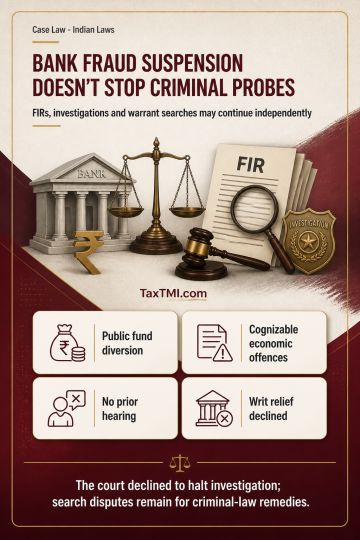
Administrative fraud classification suspension does not halt independent criminal investigation or warrant-based searches into alleged economic offenc...
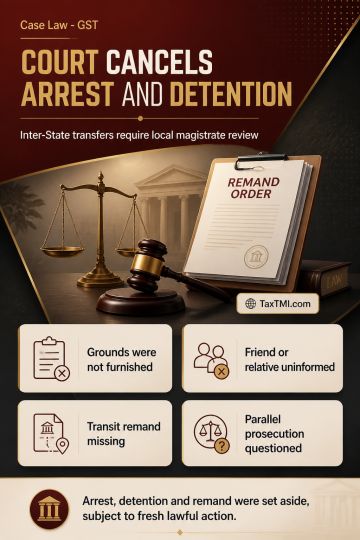
Arrest safeguards and transit remand requirements invalidated detention following inter-State transfer without communicated grounds or magistrate auth...
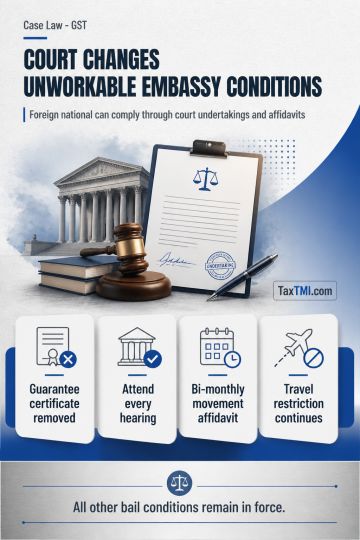
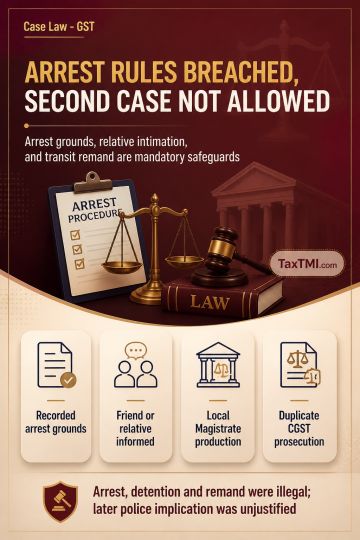
Arrest safeguards require disclosed grounds, relative intimation and transit remand, while duplicate prosecution under the CGST framework is unsustain...
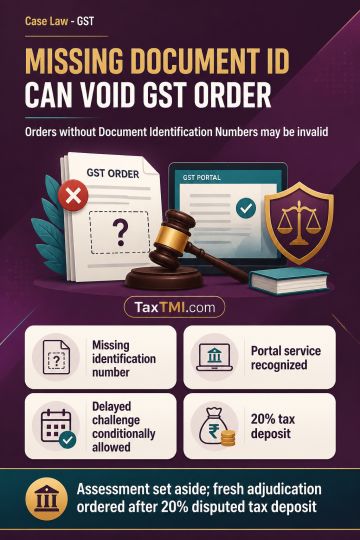
Document Identification Number defects can invalidate GST assessments, with delayed challenges entertained conditionally where patent irregularities e...
Disallowance of contingency expenses claimed by the assessee. The Assessing Officer (AO) disallowed the contingency expenses despite acknowledging that the total cost figure in the Cost to Completion (CTC) report matched the total cost figure in the books of accounts. The Tribunal held that the contingency expenditure, though initially budgeted, is eventually recorded in the books of accounts as actual expenditure. The Tribunal observed that the AO himself admitted that the total cost figure in the CTC report matched the total cost figure in the books of accounts. Since the contingency figures were recorded against the total expenditure, it is illogical to assume that the assessee booked bogus expenditure and generated cash outflow. The Tribunal emphasized that in survey operations, the onus is on the revenue authorities to provide cogent evidence that the assessee incurred expenses not recorded in the books of accounts. As the impugned expenditure was found recorded in the regular books of accounts, the allegation of non-compliance with Standard Operating Procedure (SOP) is irrelevant. The Tribunal directed the AO to delete the additions from the captioned appeals.
Disallowance of contingency expenses claimed by the assessee. The Assessing Officer (AO) disallowed the contingency expenses despite acknowledging that the total cost figure in the Cost to Completion (CTC) report matched the total cost figure in the books of accounts. The Tribunal held that the contingency expenditure, though initially budgeted, is eventually recorded in the books of accounts as actual expenditure. The Tribunal observed that the AO himself admitted that the total cost figure in the CTC report matched the total cost figure in the books of accounts. Since the contingency figures were recorded against the total expenditure, it is illogical to assume that the assessee booked bogus expenditure and generated cash outflow. The Tribunal emphasized that in survey operations, the onus is on the revenue authorities to provide cogent evidence that the assessee incurred expenses not recorded in the books of accounts. As the impugned expenditure was found recorded in the regular books of accounts, the allegation of non-compliance with Standard Operating Procedure (SOP) is irrelevant. The Tribunal directed the AO to delete the additions from the captioned appeals.
Note: It is a system-generated summary and is for quick reference only.
 TaxTMI
 of 4803



 Join Channel


 TaxTMI
