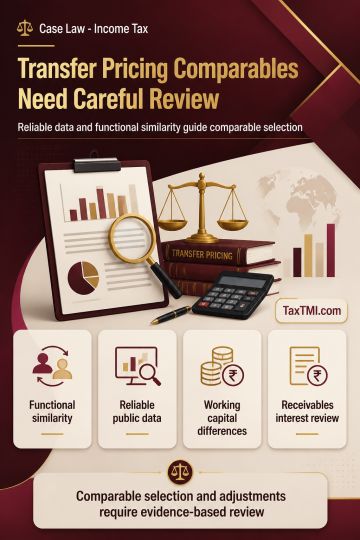
Transfer pricing comparability requires functional alignment, reliable financial data, and careful review of working capital and receivables adjustmen...
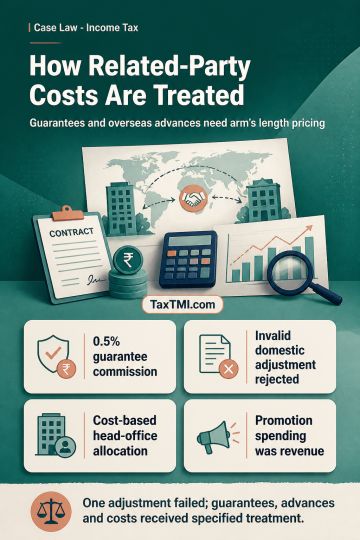
Transfer pricing rules require benchmarking corporate guarantees and associated-enterprise advances, while invalid domestic-transaction adjustments ca...
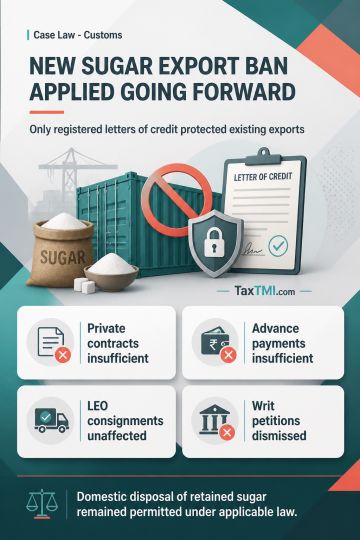
Prospective sugar export prohibition required registered letters of credit; private contracts and export quotas created no enforceable continuation ri...
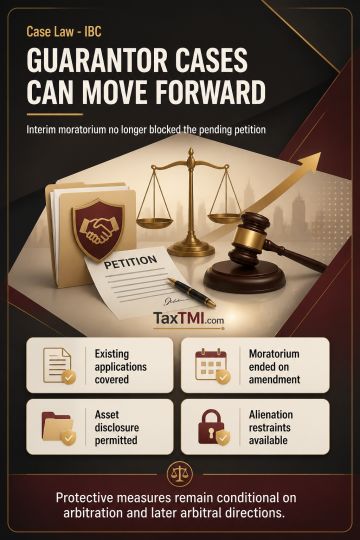
Retroactive interim-moratorium exclusion permits protective asset disclosure and preservation measures against personal guarantors pending arbitration...
Page of 4798
Press 'Enter' after typing page number.
461 to 480 of 95957 Results
❮
❯
❯❯
0 / 200
Expand Note
Add to Folder
No Folders have been created
+
Are you sure you want to delete "My most important" ?
Disallowance of contingency expenses claimed by the assessee. The Assessing Officer (AO) disallowed the contingency expenses despite acknowledging that the total cost figure in the Cost to Completion (CTC) report matched the total cost figure in the books of accounts. The Tribunal held that the contingency expenditure, though initially budgeted, is eventually recorded in the books of accounts as actual expenditure. The Tribunal observed that the AO himself admitted that the total cost figure in the CTC report matched the total cost figure in the books of accounts. Since the contingency figures were recorded against the total expenditure, it is illogical to assume that the assessee booked bogus expenditure and generated cash outflow. The Tribunal emphasized that in survey operations, the onus is on the revenue authorities to provide cogent evidence that the assessee incurred expenses not recorded in the books of accounts. As the impugned expenditure was found recorded in the regular books of accounts, the allegation of non-compliance with Standard Operating Procedure (SOP) is irrelevant. The Tribunal directed the AO to delete the additions from the captioned appeals.
Disallowance of contingency expenses claimed by the assessee. The Assessing Officer (AO) disallowed the contingency expenses despite acknowledging that the total cost figure in the Cost to Completion (CTC) report matched the total cost figure in the books of accounts. The Tribunal held that the contingency expenditure, though initially budgeted, is eventually recorded in the books of accounts as actual expenditure. The Tribunal observed that the AO himself admitted that the total cost figure in the CTC report matched the total cost figure in the books of accounts. Since the contingency figures were recorded against the total expenditure, it is illogical to assume that the assessee booked bogus expenditure and generated cash outflow. The Tribunal emphasized that in survey operations, the onus is on the revenue authorities to provide cogent evidence that the assessee incurred expenses not recorded in the books of accounts. As the impugned expenditure was found recorded in the regular books of accounts, the allegation of non-compliance with Standard Operating Procedure (SOP) is irrelevant. The Tribunal directed the AO to delete the additions from the captioned appeals.
Note: It is a system-generated summary and is for quick reference only.
 TaxTMI
 of 4798



 Join Channel


 TaxTMI