Prolonged sterilisation of development rights supports capital-gains treatment, while business-income disallowances cannot govern capital-gains comput...
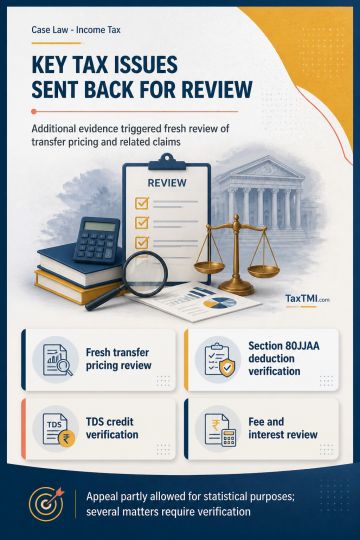
Additional evidence in transfer pricing dispute leads to fresh examination, while tax deductions, TDS credit, fee and refund interest require verifica...
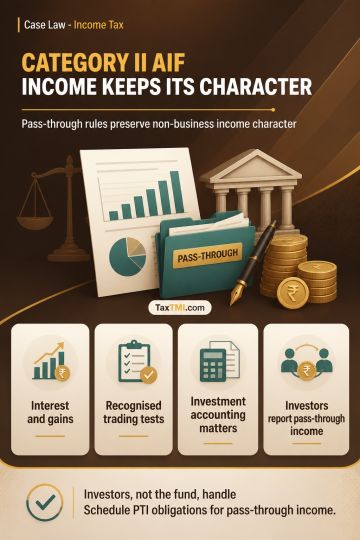
Category II AIF pass-through taxation preserves non-business income character; investment receipts cannot be reclassified without applying recognised ...
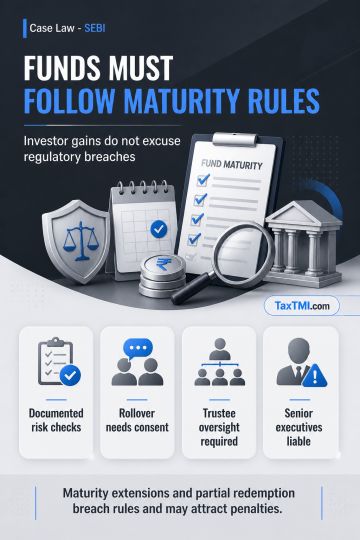
Mutual fund maturity rules require proper rollover, redemption, disclosure, and due diligence; investor gains cannot excuse regulatory breaches or pen...
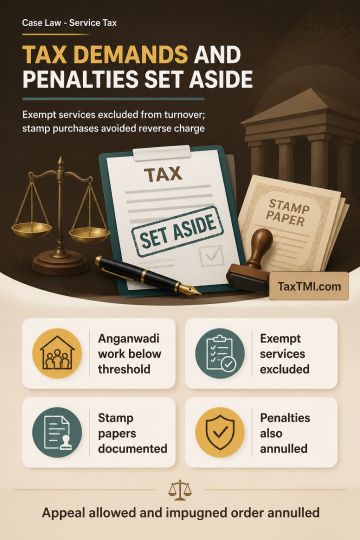
Threshold exemption excludes exempt services, while stamp-paper purchases avoid reverse charge; consequential service tax penalties were also set asid...
The appellant filed bills of entry claiming exemption under Notification No. 46/2011-Cus, which was denied during re-assessment. The Commissioner (Appeals) rectified this mistake u/s 154 of the Customs Act, 1962, allowing the exemption. The department's stay application against this order was rejected. Consequently, a refund of Rs. 4,87,208/- was sanctioned and paid to the appellant. A show cause notice was issued to reject the refund claim, but it did not raise the unjust enrichment issue. The Commissioner (Appeals) brought in the unjust enrichment angle and remanded the matter to re-examine the issue. However, the unjust enrichment issue was never raised in the show cause notice. The Assistant Commissioner had already examined and found no unjust enrichment, which the Commissioner (Appeals) did not contradict. Hence, the Tribunal held that there was no need to re-examine the unjust enrichment issue and set aside the Commissioner (Appeals)' order as legally untenable, finding no infirmity in sanctioning the refund.
The appellant filed bills of entry claiming exemption under Notification No. 46/2011-Cus, which was denied during re-assessment. The Commissioner (Appeals) rectified this mistake u/s 154 of the Customs Act, 1962, allowing the exemption. The department's stay application against this order was rejected. Consequently, a refund of Rs. 4,87,208/- was sanctioned and paid to the appellant. A show cause notice was issued to reject the refund claim, but it did not raise the unjust enrichment issue. The Commissioner (Appeals) brought in the unjust enrichment angle and remanded the matter to re-examine the issue. However, the unjust enrichment issue was never raised in the show cause notice. The Assistant Commissioner had already examined and found no unjust enrichment, which the Commissioner (Appeals) did not contradict. Hence, the Tribunal held that there was no need to re-examine the unjust enrichment issue and set aside the Commissioner (Appeals)' order as legally untenable, finding no infirmity in sanctioning the refund.
Note: It is a system-generated summary and is for quick reference only.
 TaxTMI
 of 4805










 Join Channel


 TaxTMI
