Transfer pricing and tax deductions upheld on established principles, while employee contributions and warranty provisions returned for fresh examinat...
Captive transfer pricing relies on industrial consumer tariffs, while genuine quotations can benchmark effluent treatment transfers under the Other Me...
Specific tariff classification for ophthalmic instruments and extended limitation principles determine the treatment of duty demands, confiscation, an...
Integrated golf function determines classification, placing launch monitors and simulators under other golf equipment rather than measuring instrument...
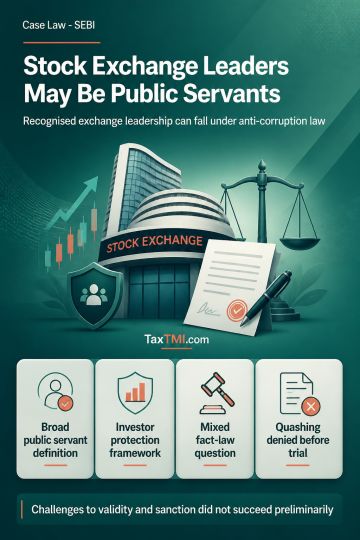
Public servant status under anti-corruption law extends to recognised stock exchange leadership; constitutional and sanction challenges do not succeed...
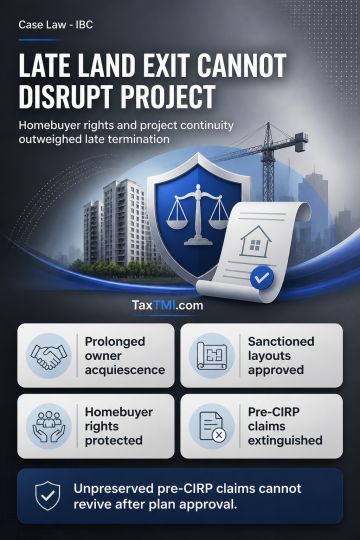
Acquiescence, homebuyer protection and clean-slate resolution principles prevent landowners from disrupting an integrated project through late termina...
The appellant filed bills of entry claiming exemption under Notification No. 46/2011-Cus, which was denied during re-assessment. The Commissioner (Appeals) rectified this mistake u/s 154 of the Customs Act, 1962, allowing the exemption. The department's stay application against this order was rejected. Consequently, a refund of Rs. 4,87,208/- was sanctioned and paid to the appellant. A show cause notice was issued to reject the refund claim, but it did not raise the unjust enrichment issue. The Commissioner (Appeals) brought in the unjust enrichment angle and remanded the matter to re-examine the issue. However, the unjust enrichment issue was never raised in the show cause notice. The Assistant Commissioner had already examined and found no unjust enrichment, which the Commissioner (Appeals) did not contradict. Hence, the Tribunal held that there was no need to re-examine the unjust enrichment issue and set aside the Commissioner (Appeals)' order as legally untenable, finding no infirmity in sanctioning the refund.
The appellant filed bills of entry claiming exemption under Notification No. 46/2011-Cus, which was denied during re-assessment. The Commissioner (Appeals) rectified this mistake u/s 154 of the Customs Act, 1962, allowing the exemption. The department's stay application against this order was rejected. Consequently, a refund of Rs. 4,87,208/- was sanctioned and paid to the appellant. A show cause notice was issued to reject the refund claim, but it did not raise the unjust enrichment issue. The Commissioner (Appeals) brought in the unjust enrichment angle and remanded the matter to re-examine the issue. However, the unjust enrichment issue was never raised in the show cause notice. The Assistant Commissioner had already examined and found no unjust enrichment, which the Commissioner (Appeals) did not contradict. Hence, the Tribunal held that there was no need to re-examine the unjust enrichment issue and set aside the Commissioner (Appeals)' order as legally untenable, finding no infirmity in sanctioning the refund.
Note: It is a system-generated summary and is for quick reference only.
 TaxTMI
 of 4805


















 Join Channel


 TaxTMI