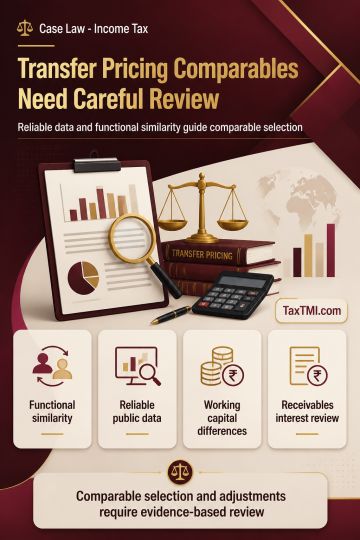
Transfer pricing comparability requires functional alignment, reliable financial data, and careful review of working capital and receivables adjustmen...
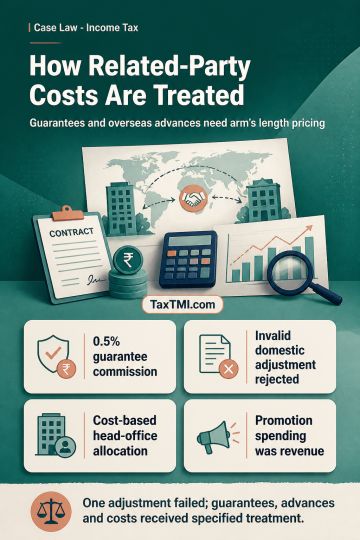
Transfer pricing rules require benchmarking corporate guarantees and associated-enterprise advances, while invalid domestic-transaction adjustments ca...
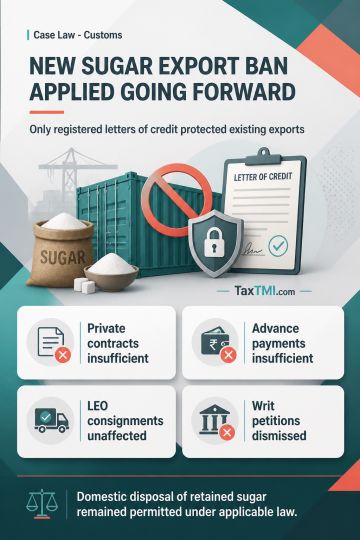
Prospective sugar export prohibition required registered letters of credit; private contracts and export quotas created no enforceable continuation ri...
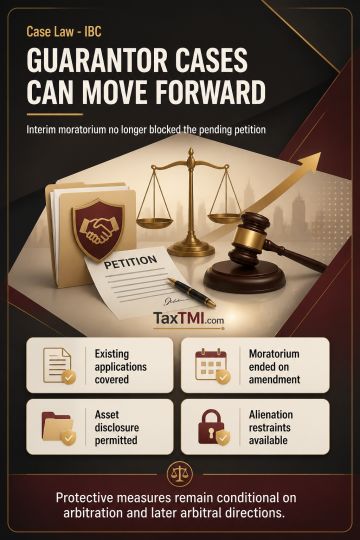
Retroactive interim-moratorium exclusion permits protective asset disclosure and preservation measures against personal guarantors pending arbitration...
The appellant filed bills of entry claiming exemption under Notification No. 46/2011-Cus, which was denied during re-assessment. The Commissioner (Appeals) rectified this mistake u/s 154 of the Customs Act, 1962, allowing the exemption. The department's stay application against this order was rejected. Consequently, a refund of Rs. 4,87,208/- was sanctioned and paid to the appellant. A show cause notice was issued to reject the refund claim, but it did not raise the unjust enrichment issue. The Commissioner (Appeals) brought in the unjust enrichment angle and remanded the matter to re-examine the issue. However, the unjust enrichment issue was never raised in the show cause notice. The Assistant Commissioner had already examined and found no unjust enrichment, which the Commissioner (Appeals) did not contradict. Hence, the Tribunal held that there was no need to re-examine the unjust enrichment issue and set aside the Commissioner (Appeals)' order as legally untenable, finding no infirmity in sanctioning the refund.
The appellant filed bills of entry claiming exemption under Notification No. 46/2011-Cus, which was denied during re-assessment. The Commissioner (Appeals) rectified this mistake u/s 154 of the Customs Act, 1962, allowing the exemption. The department's stay application against this order was rejected. Consequently, a refund of Rs. 4,87,208/- was sanctioned and paid to the appellant. A show cause notice was issued to reject the refund claim, but it did not raise the unjust enrichment issue. The Commissioner (Appeals) brought in the unjust enrichment angle and remanded the matter to re-examine the issue. However, the unjust enrichment issue was never raised in the show cause notice. The Assistant Commissioner had already examined and found no unjust enrichment, which the Commissioner (Appeals) did not contradict. Hence, the Tribunal held that there was no need to re-examine the unjust enrichment issue and set aside the Commissioner (Appeals)' order as legally untenable, finding no infirmity in sanctioning the refund.
Note: It is a system-generated summary and is for quick reference only.
 TaxTMI
 of 4792





 Join Channel


 TaxTMI