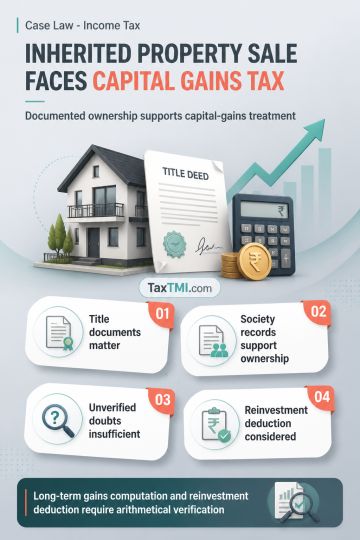
Inherited property sale proceeds require capital-gains treatment where ownership is supported by evidence, not suspicion or unverified signature doubt...
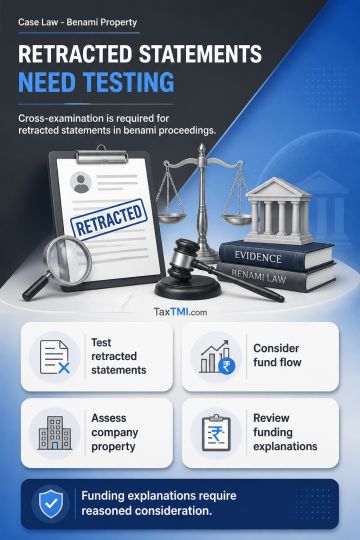
Cross-examination of retracted statements is essential where foundational evidence supports a benami allegation and documented funding explanations re...
Capital-goods exemption covers plant-modernisation accessories, while the import restriction applies only to earlier capital-goods components and spar...
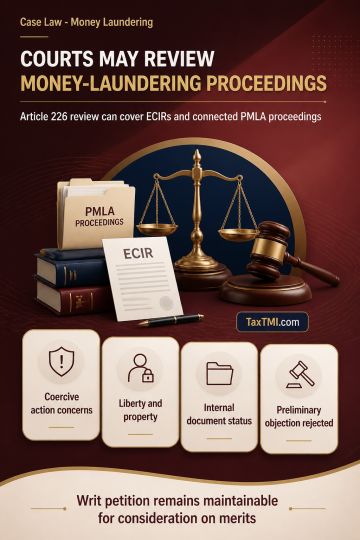
Constitutional judicial review permits challenges to ECIRs and connected money-laundering proceedings where coercive action affects fundamental intere...
The appellant filed bills of entry claiming exemption under Notification No. 46/2011-Cus, which was denied during re-assessment. The Commissioner (Appeals) rectified this mistake u/s 154 of the Customs Act, 1962, allowing the exemption. The department's stay application against this order was rejected. Consequently, a refund of Rs. 4,87,208/- was sanctioned and paid to the appellant. A show cause notice was issued to reject the refund claim, but it did not raise the unjust enrichment issue. The Commissioner (Appeals) brought in the unjust enrichment angle and remanded the matter to re-examine the issue. However, the unjust enrichment issue was never raised in the show cause notice. The Assistant Commissioner had already examined and found no unjust enrichment, which the Commissioner (Appeals) did not contradict. Hence, the Tribunal held that there was no need to re-examine the unjust enrichment issue and set aside the Commissioner (Appeals)' order as legally untenable, finding no infirmity in sanctioning the refund.
The appellant filed bills of entry claiming exemption under Notification No. 46/2011-Cus, which was denied during re-assessment. The Commissioner (Appeals) rectified this mistake u/s 154 of the Customs Act, 1962, allowing the exemption. The department's stay application against this order was rejected. Consequently, a refund of Rs. 4,87,208/- was sanctioned and paid to the appellant. A show cause notice was issued to reject the refund claim, but it did not raise the unjust enrichment issue. The Commissioner (Appeals) brought in the unjust enrichment angle and remanded the matter to re-examine the issue. However, the unjust enrichment issue was never raised in the show cause notice. The Assistant Commissioner had already examined and found no unjust enrichment, which the Commissioner (Appeals) did not contradict. Hence, the Tribunal held that there was no need to re-examine the unjust enrichment issue and set aside the Commissioner (Appeals)' order as legally untenable, finding no infirmity in sanctioning the refund.
Note: It is a system-generated summary and is for quick reference only.
 TaxTMI
 of 4792








 Join Channel


 TaxTMI