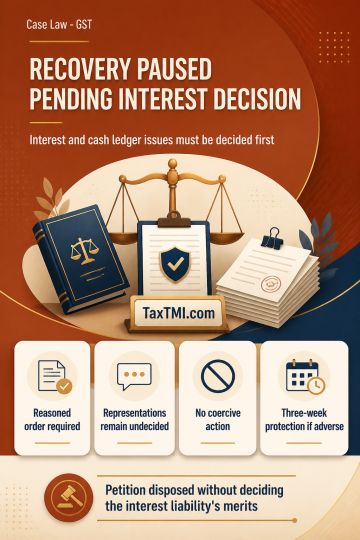
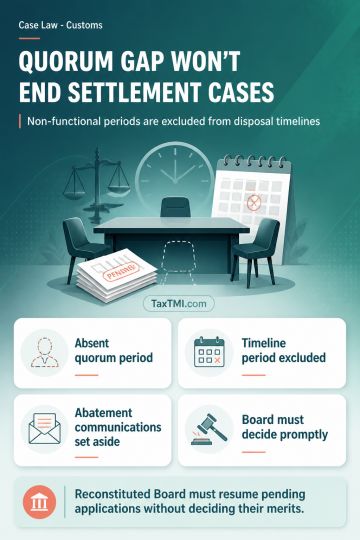
Institutional incapacity in customs settlement proceedings excludes non-functional quorum periods from statutory disposal timelines, preventing automa...
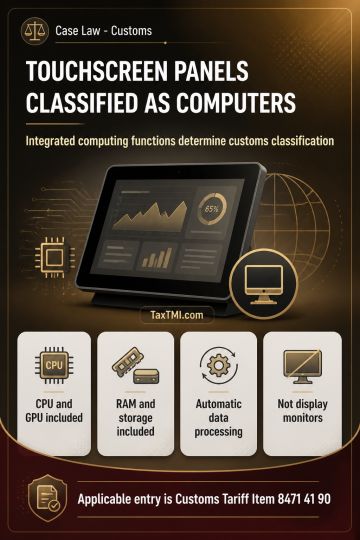
Interactive touchscreen panels with integrated computing functions fall under automatic data-processing machines rather than display monitors for cust...
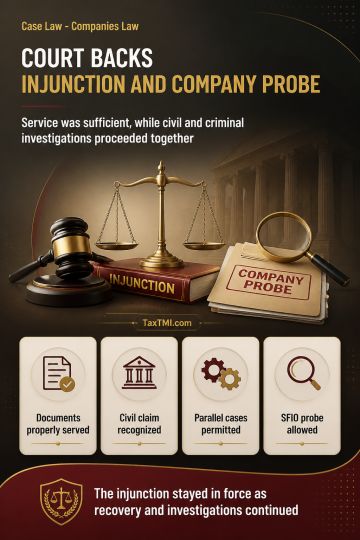
Ex parte injunction service requirements were substantially met, while civil recovery and SFIO investigation into provident fund defalcation continued...
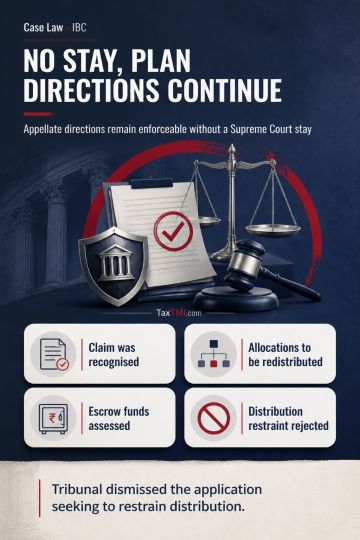
Enforcement of resolution-plan directions continues without a Supreme Court stay, preventing suspension of redistribution and escrowed-fund distributi...
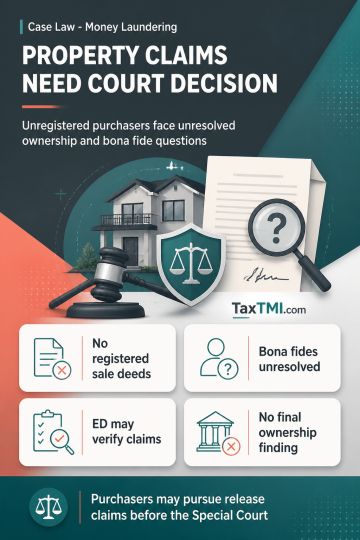
Third-party ownership claims over attached property require Special Court adjudication where purchasers lack registered sale deeds and bona fides rema...
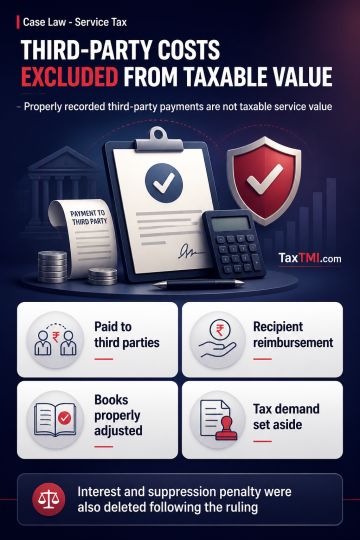
Pure-agent reimbursements in clearing and forwarding services are excluded from taxable value when qualifying third-party payments are properly record...
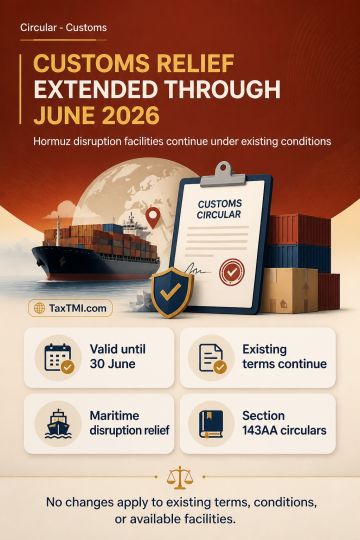
Customs relief for Strait of Hormuz maritime disruptions remains available, with existing conditions continuing unchanged through the extended validit...
The Appellate Tribunal set aside the Adjudicating Authority's order directing a transaction audit and allowing the application for dissolution u/s 54 of the IBC and Regulation 14 of the Liquidation Regulations. The scheme of the IBC mandates that dissolution is a subsequent step after complete liquidation, which was not undertaken in this case. The CIRP was completed without a resolution plan, despite publication of Form-G twice. No liquidation order was passed u/s 33(1). Since the CoC, consisting of the sole Financial Creditor who initiated CIRP, decided not to contribute towards liquidation costs and the CIRP period ended, the RP should have intimated the Registrar of Companies for striking off the company's name instead of resorting to Section 54. The Appellate Tribunal's judgment in Shyson Thomas was distinguished as a case where the Adjudicating Authority exercised its jurisdiction to direct dissolution.
The Appellate Tribunal set aside the Adjudicating Authority's order directing a transaction audit and allowing the application for dissolution u/s 54 of the IBC and Regulation 14 of the Liquidation Regulations. The scheme of the IBC mandates that dissolution is a subsequent step after complete liquidation, which was not undertaken in this case. The CIRP was completed without a resolution plan, despite publication of Form-G twice. No liquidation order was passed u/s 33(1). Since the CoC, consisting of the sole Financial Creditor who initiated CIRP, decided not to contribute towards liquidation costs and the CIRP period ended, the RP should have intimated the Registrar of Companies for striking off the company's name instead of resorting to Section 54. The Appellate Tribunal's judgment in Shyson Thomas was distinguished as a case where the Adjudicating Authority exercised its jurisdiction to direct dissolution.
Note: It is a system-generated summary and is for quick reference only.
 TaxTMI
 of 4788




 Join Channel


 TaxTMI