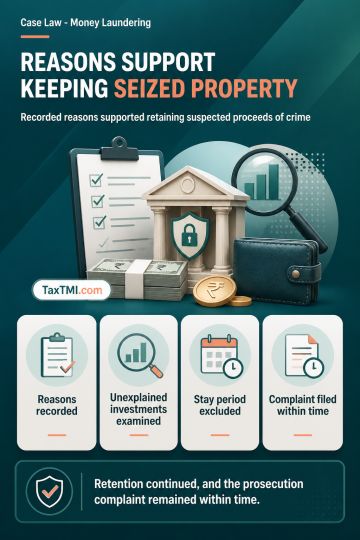
Retention of seized property survives where recorded reasons support proceeds of crime, while stayed investigation periods are excluded from limitatio...
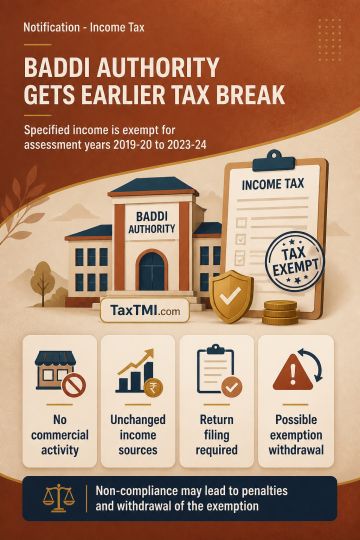
Specified income of Baddi Barotiwala Nalagarh Development Authority receives conditional tax exemption, retrospectively covering its designated assess...
Specified development authority income receives retrospective tax exemption, subject to non-commercial activity, unchanged income sources, and return-...
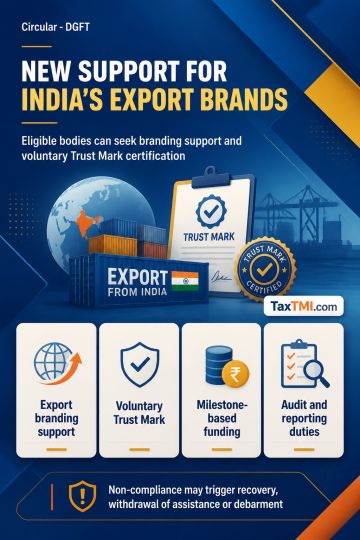
Unified Brand India framework introduces voluntary Trust Mark certification and funding support for export branding, packaging and global promotional ...
Origin Declaration authentication governs preferential tariff claims under India-UK CETA, requiring a validated reference number before import clearan...
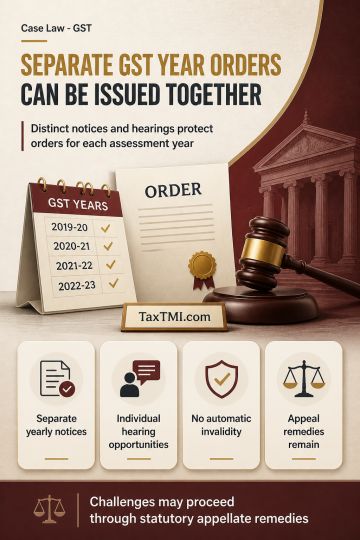
Separate assessment orders for different years remain valid when distinct notices and hearing opportunities prevent prejudice from combined proceeding...
The Appellate Tribunal set aside the Adjudicating Authority's order directing a transaction audit and allowing the application for dissolution u/s 54 of the IBC and Regulation 14 of the Liquidation Regulations. The scheme of the IBC mandates that dissolution is a subsequent step after complete liquidation, which was not undertaken in this case. The CIRP was completed without a resolution plan, despite publication of Form-G twice. No liquidation order was passed u/s 33(1). Since the CoC, consisting of the sole Financial Creditor who initiated CIRP, decided not to contribute towards liquidation costs and the CIRP period ended, the RP should have intimated the Registrar of Companies for striking off the company's name instead of resorting to Section 54. The Appellate Tribunal's judgment in Shyson Thomas was distinguished as a case where the Adjudicating Authority exercised its jurisdiction to direct dissolution.
The Appellate Tribunal set aside the Adjudicating Authority's order directing a transaction audit and allowing the application for dissolution u/s 54 of the IBC and Regulation 14 of the Liquidation Regulations. The scheme of the IBC mandates that dissolution is a subsequent step after complete liquidation, which was not undertaken in this case. The CIRP was completed without a resolution plan, despite publication of Form-G twice. No liquidation order was passed u/s 33(1). Since the CoC, consisting of the sole Financial Creditor who initiated CIRP, decided not to contribute towards liquidation costs and the CIRP period ended, the RP should have intimated the Registrar of Companies for striking off the company's name instead of resorting to Section 54. The Appellate Tribunal's judgment in Shyson Thomas was distinguished as a case where the Adjudicating Authority exercised its jurisdiction to direct dissolution.
Note: It is a system-generated summary and is for quick reference only.
 TaxTMI
 of 4800









 Join Channel


 TaxTMI
