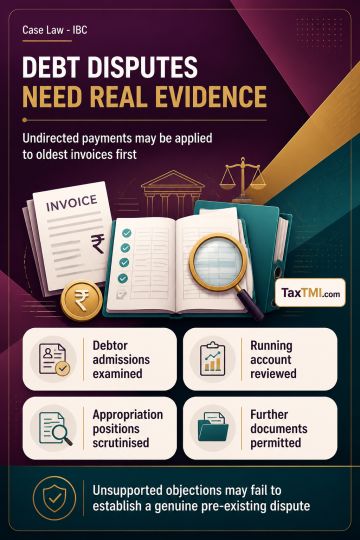
Pre-existing operational debt disputes require genuine evidence, while undirected running-account payments may be appropriated on a first-in-first-out...
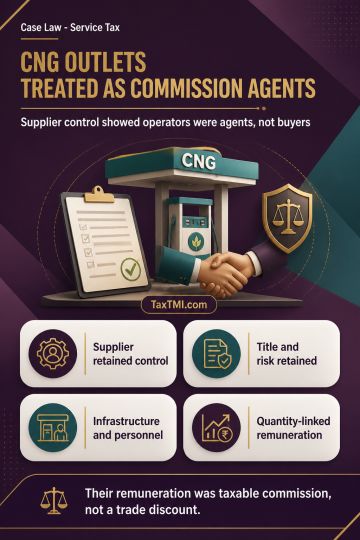
Agency in CNG distribution makes outlet operators commission agents, rendering taxable Business Auxiliary Service rather than purchasing goods for res...
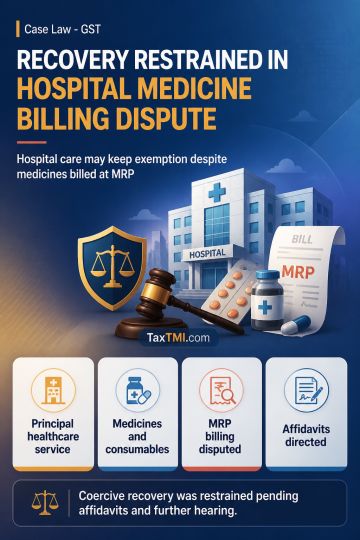
Composite inpatient healthcare supply may retain exemption despite MRP medicine billing, while separate taxable sale characterisation remains disputed...
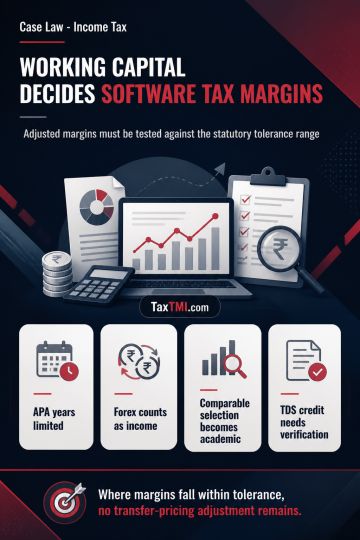
Working-capital adjustment determines whether software-services transfer-pricing margins fall within the statutory tolerance range, eliminating any ad...
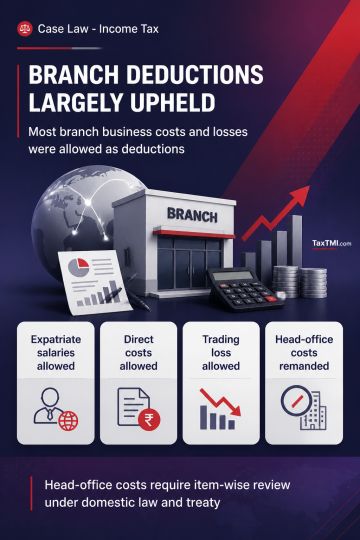
Permanent establishment deductions upheld for expatriate salaries, direct costs and trading losses, while head-office costs require fresh classificati...
Page of 4796
Press 'Enter' after typing page number.
881 to 900 of 95916 Results
❮
❯
❯❯
0 / 200
Expand Note
Add to Folder
No Folders have been created
+
Are you sure you want to delete "My most important" ?
The Appellate Tribunal set aside the Adjudicating Authority's order directing a transaction audit and allowing the application for dissolution u/s 54 of the IBC and Regulation 14 of the Liquidation Regulations. The scheme of the IBC mandates that dissolution is a subsequent step after complete liquidation, which was not undertaken in this case. The CIRP was completed without a resolution plan, despite publication of Form-G twice. No liquidation order was passed u/s 33(1). Since the CoC, consisting of the sole Financial Creditor who initiated CIRP, decided not to contribute towards liquidation costs and the CIRP period ended, the RP should have intimated the Registrar of Companies for striking off the company's name instead of resorting to Section 54. The Appellate Tribunal's judgment in Shyson Thomas was distinguished as a case where the Adjudicating Authority exercised its jurisdiction to direct dissolution.
The Appellate Tribunal set aside the Adjudicating Authority's order directing a transaction audit and allowing the application for dissolution u/s 54 of the IBC and Regulation 14 of the Liquidation Regulations. The scheme of the IBC mandates that dissolution is a subsequent step after complete liquidation, which was not undertaken in this case. The CIRP was completed without a resolution plan, despite publication of Form-G twice. No liquidation order was passed u/s 33(1). Since the CoC, consisting of the sole Financial Creditor who initiated CIRP, decided not to contribute towards liquidation costs and the CIRP period ended, the RP should have intimated the Registrar of Companies for striking off the company's name instead of resorting to Section 54. The Appellate Tribunal's judgment in Shyson Thomas was distinguished as a case where the Adjudicating Authority exercised its jurisdiction to direct dissolution.
Note: It is a system-generated summary and is for quick reference only.
 TaxTMI
 of 4796




 Join Channel


 TaxTMI