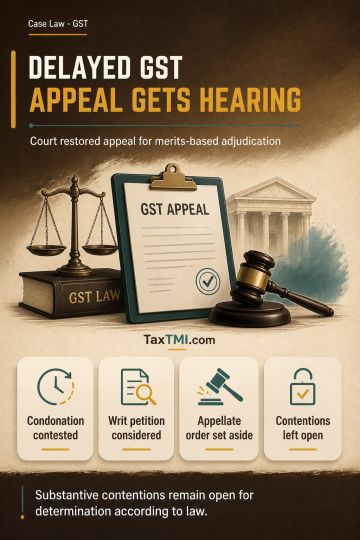
Necessary-party requirements limit impleadment of independent entities, while deferred consideration does not create an appealable adverse determinati...
Food supplement classification requires common parlance and authoritative tests, preventing treatment as proprietary Ayurvedic medicines without suppo...
Specified regulatory authority income receives conditional tax exemption, subject to non-commercial activity, unchanged income character, and return f...
Tax exemption for regulatory authority income applies retrospectively, subject to non-commercial activity, unchanged income sources, and return-filing...
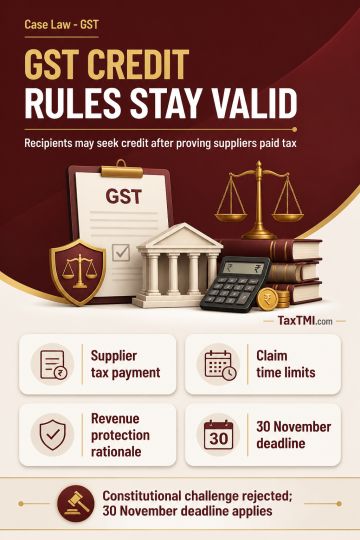
Input tax credit conditions remain constitutionally valid, with eligible recipient claims considered under GST circulars and retrospective filing dead...
The Appellate Tribunal set aside the Adjudicating Authority's order directing a transaction audit and allowing the application for dissolution u/s 54 of the IBC and Regulation 14 of the Liquidation Regulations. The scheme of the IBC mandates that dissolution is a subsequent step after complete liquidation, which was not undertaken in this case. The CIRP was completed without a resolution plan, despite publication of Form-G twice. No liquidation order was passed u/s 33(1). Since the CoC, consisting of the sole Financial Creditor who initiated CIRP, decided not to contribute towards liquidation costs and the CIRP period ended, the RP should have intimated the Registrar of Companies for striking off the company's name instead of resorting to Section 54. The Appellate Tribunal's judgment in Shyson Thomas was distinguished as a case where the Adjudicating Authority exercised its jurisdiction to direct dissolution.
The Appellate Tribunal set aside the Adjudicating Authority's order directing a transaction audit and allowing the application for dissolution u/s 54 of the IBC and Regulation 14 of the Liquidation Regulations. The scheme of the IBC mandates that dissolution is a subsequent step after complete liquidation, which was not undertaken in this case. The CIRP was completed without a resolution plan, despite publication of Form-G twice. No liquidation order was passed u/s 33(1). Since the CoC, consisting of the sole Financial Creditor who initiated CIRP, decided not to contribute towards liquidation costs and the CIRP period ended, the RP should have intimated the Registrar of Companies for striking off the company's name instead of resorting to Section 54. The Appellate Tribunal's judgment in Shyson Thomas was distinguished as a case where the Adjudicating Authority exercised its jurisdiction to direct dissolution.
Note: It is a system-generated summary and is for quick reference only.
 TaxTMI
 of 4792



















 Join Channel


 TaxTMI