Necessary-party requirements limit impleadment of independent entities, while deferred consideration does not create an appealable adverse determinati...
Food supplement classification requires common parlance and authoritative tests, preventing treatment as proprietary Ayurvedic medicines without suppo...
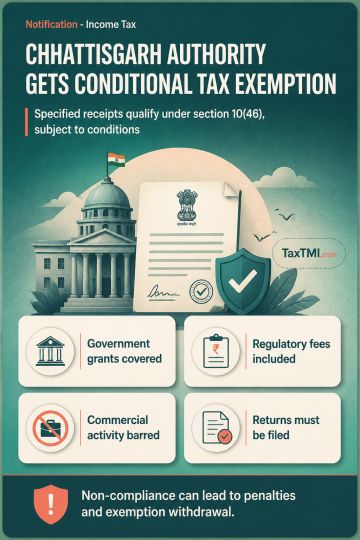
Specified regulatory authority income receives conditional tax exemption, subject to non-commercial activity, unchanged income character, and return f...
Tax exemption for regulatory authority income applies retrospectively, subject to non-commercial activity, unchanged income sources, and return-filing...
The Appellate Tribunal ruled that the Resolution Professional (RP) was entitled to possess the land admeasuring 10.81 acres, where the corporate debtor had constructed the Canary Greens project. The development agreement envisaged 50% shares to the owners and 50% shares (10.81 acres) to the developer. The corporate debtor, having obtained development rights through agreements, was in possession of the project land. The definition of 'property' under the IBC includes development rights, as clarified by the Supreme Court. The Adjudicating Authority erred in observing that the RP could not prove physical possession, as sufficient evidence established the corporate debtor's possession. The Appellate Tribunal held that the Adjudicating Authority was competent to decide the possession issue without relegating it to a civil court. Excluding the 10.81 acres from the corporate insolvency resolution process, as sought by the owners, was not warranted.
The Appellate Tribunal ruled that the Resolution Professional (RP) was entitled to possess the land admeasuring 10.81 acres, where the corporate debtor had constructed the Canary Greens project. The development agreement envisaged 50% shares to the owners and 50% shares (10.81 acres) to the developer. The corporate debtor, having obtained development rights through agreements, was in possession of the project land. The definition of 'property' under the IBC includes development rights, as clarified by the Supreme Court. The Adjudicating Authority erred in observing that the RP could not prove physical possession, as sufficient evidence established the corporate debtor's possession. The Appellate Tribunal held that the Adjudicating Authority was competent to decide the possession issue without relegating it to a civil court. Excluding the 10.81 acres from the corporate insolvency resolution process, as sought by the owners, was not warranted.
Note: It is a system-generated summary and is for quick reference only.
 TaxTMI
 of 4794
















 Join Channel


 TaxTMI