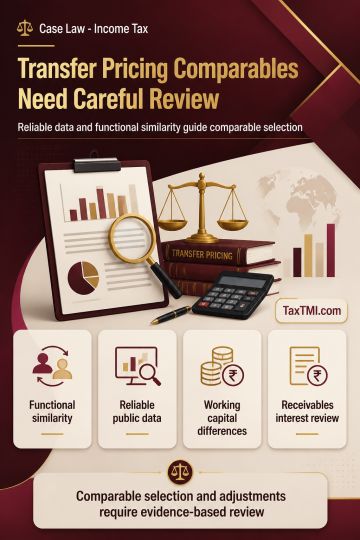
Transfer pricing comparability requires functional alignment, reliable financial data, and careful review of working capital and receivables adjustmen...
Transfer pricing rules require benchmarking corporate guarantees and associated-enterprise advances, while invalid domestic-transaction adjustments ca...
Prospective sugar export prohibition required registered letters of credit; private contracts and export quotas created no enforceable continuation ri...
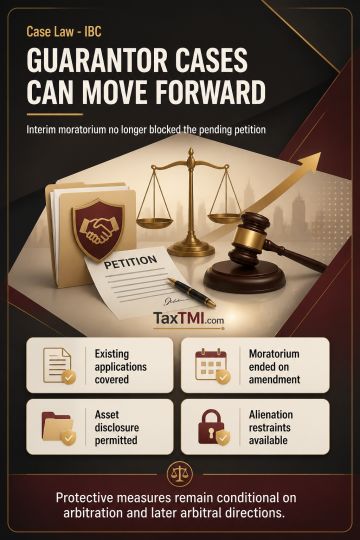
Retroactive interim-moratorium exclusion permits protective asset disclosure and preservation measures against personal guarantors pending arbitration...
The Appellate Tribunal ruled that the Resolution Professional (RP) was entitled to possess the land admeasuring 10.81 acres, where the corporate debtor had constructed the Canary Greens project. The development agreement envisaged 50% shares to the owners and 50% shares (10.81 acres) to the developer. The corporate debtor, having obtained development rights through agreements, was in possession of the project land. The definition of 'property' under the IBC includes development rights, as clarified by the Supreme Court. The Adjudicating Authority erred in observing that the RP could not prove physical possession, as sufficient evidence established the corporate debtor's possession. The Appellate Tribunal held that the Adjudicating Authority was competent to decide the possession issue without relegating it to a civil court. Excluding the 10.81 acres from the corporate insolvency resolution process, as sought by the owners, was not warranted.
The Appellate Tribunal ruled that the Resolution Professional (RP) was entitled to possess the land admeasuring 10.81 acres, where the corporate debtor had constructed the Canary Greens project. The development agreement envisaged 50% shares to the owners and 50% shares (10.81 acres) to the developer. The corporate debtor, having obtained development rights through agreements, was in possession of the project land. The definition of 'property' under the IBC includes development rights, as clarified by the Supreme Court. The Adjudicating Authority erred in observing that the RP could not prove physical possession, as sufficient evidence established the corporate debtor's possession. The Appellate Tribunal held that the Adjudicating Authority was competent to decide the possession issue without relegating it to a civil court. Excluding the 10.81 acres from the corporate insolvency resolution process, as sought by the owners, was not warranted.
Note: It is a system-generated summary and is for quick reference only.
 TaxTMI
 of 4792













 Join Channel


 TaxTMI