Commercial vehicle depreciation, scientifically determined warranty provisions and exempt-income disallowances were resolved in favour of the taxpayer...
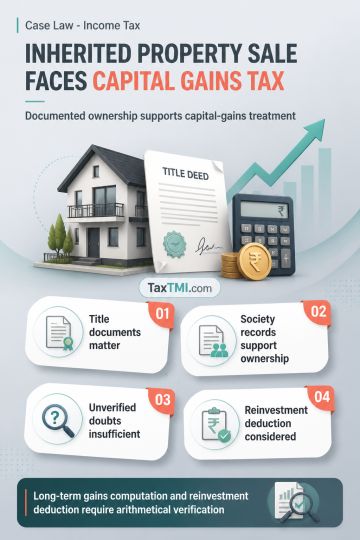
Inherited property sale proceeds require capital-gains treatment where ownership is supported by evidence, not suspicion or unverified signature doubt...
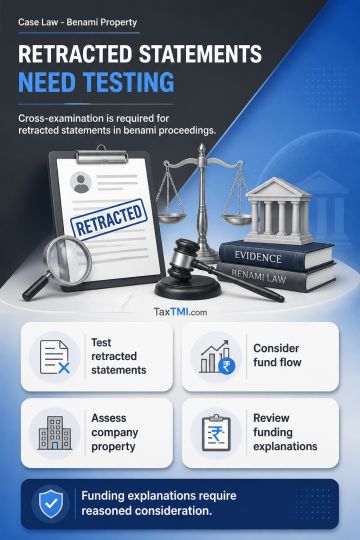
Cross-examination of retracted statements is essential where foundational evidence supports a benami allegation and documented funding explanations re...
Capital-goods exemption covers plant-modernisation accessories, while the import restriction applies only to earlier capital-goods components and spar...
The Appellate Tribunal ruled that the Resolution Professional (RP) was entitled to possess the land admeasuring 10.81 acres, where the corporate debtor had constructed the Canary Greens project. The development agreement envisaged 50% shares to the owners and 50% shares (10.81 acres) to the developer. The corporate debtor, having obtained development rights through agreements, was in possession of the project land. The definition of 'property' under the IBC includes development rights, as clarified by the Supreme Court. The Adjudicating Authority erred in observing that the RP could not prove physical possession, as sufficient evidence established the corporate debtor's possession. The Appellate Tribunal held that the Adjudicating Authority was competent to decide the possession issue without relegating it to a civil court. Excluding the 10.81 acres from the corporate insolvency resolution process, as sought by the owners, was not warranted.
The Appellate Tribunal ruled that the Resolution Professional (RP) was entitled to possess the land admeasuring 10.81 acres, where the corporate debtor had constructed the Canary Greens project. The development agreement envisaged 50% shares to the owners and 50% shares (10.81 acres) to the developer. The corporate debtor, having obtained development rights through agreements, was in possession of the project land. The definition of 'property' under the IBC includes development rights, as clarified by the Supreme Court. The Adjudicating Authority erred in observing that the RP could not prove physical possession, as sufficient evidence established the corporate debtor's possession. The Appellate Tribunal held that the Adjudicating Authority was competent to decide the possession issue without relegating it to a civil court. Excluding the 10.81 acres from the corporate insolvency resolution process, as sought by the owners, was not warranted.
Note: It is a system-generated summary and is for quick reference only.
 TaxTMI
 of 4790













 Join Channel


 TaxTMI