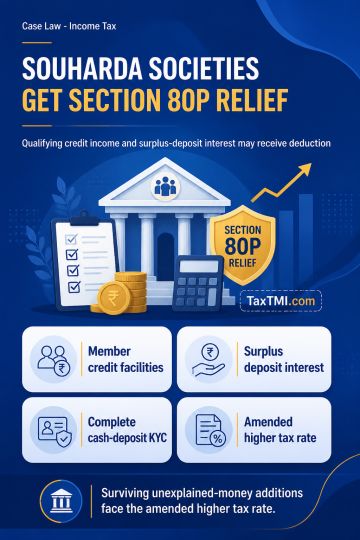
Section 80P deduction covers Souharda credit societies, including qualifying surplus-deposit interest, subject to member KYC verification for cash dep...
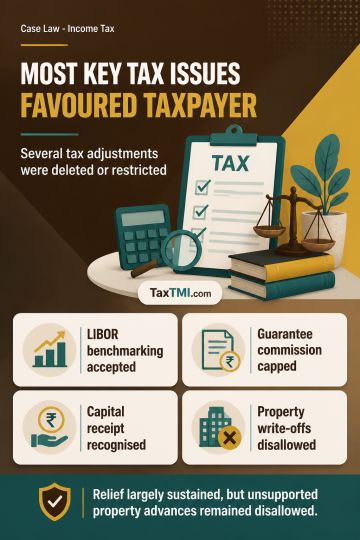
Transfer-pricing benchmarking and capital-receipt principles sustained taxpayer relief, while unsupported property-advance write-offs remained disallo...
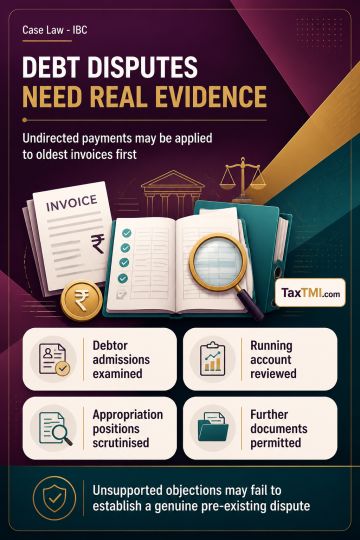
Pre-existing operational debt disputes require genuine evidence, while undirected running-account payments may be appropriated on a first-in-first-out...
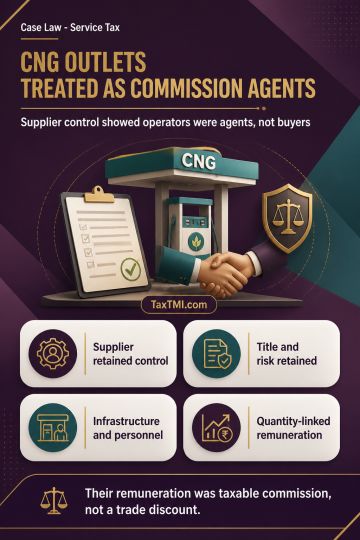
Agency in CNG distribution makes outlet operators commission agents, rendering taxable Business Auxiliary Service rather than purchasing goods for res...
The assessee received amounts from Indian customers for supplying software updates, patches, and on-call support services. The issue pertained to taxability of these receipts as Fee for Technical Services (FTS)/Fee for Included Services (FIS) under the Income Tax Act and India-USA Double Taxation Avoidance Agreement (DTAA). The assessee contended that on-call support services cannot be treated as FIS under Article 12(4)(a) of the DTAA, as it is not ancillary to royalty income, or under Article 12(4)(b), as no technical knowledge, know-how, or skill was made available to the service recipient. The Assessing Officer invoked Article 12(4)(b) to tax the receipts, but failed to establish the 'make available' condition through cogent evidence. The Tribunal held that for the 'make available' condition to be satisfied, the service recipient must be capable of performing such services independently without the service provider's aid. As the assessee continued providing on-call support services yearly, it proved that technical knowledge was not transferred to the recipients. Hence, the receipts were not taxable as FIS under Article 12(4)(b) of the DTAA. Regarding interest on refund u/s 244A, the Tribunal directed the Assessing Officer to verify the assessee's claim an.
The assessee received amounts from Indian customers for supplying software updates, patches, and on-call support services. The issue pertained to taxability of these receipts as Fee for Technical Services (FTS)/Fee for Included Services (FIS) under the Income Tax Act and India-USA Double Taxation Avoidance Agreement (DTAA). The assessee contended that on-call support services cannot be treated as FIS under Article 12(4)(a) of the DTAA, as it is not ancillary to royalty income, or under Article 12(4)(b), as no technical knowledge, know-how, or skill was made available to the service recipient. The Assessing Officer invoked Article 12(4)(b) to tax the receipts, but failed to establish the 'make available' condition through cogent evidence. The Tribunal held that for the 'make available' condition to be satisfied, the service recipient must be capable of performing such services independently without the service provider's aid. As the assessee continued providing on-call support services yearly, it proved that technical knowledge was not transferred to the recipients. Hence, the receipts were not taxable as FIS under Article 12(4)(b) of the DTAA. Regarding interest on refund u/s 244A, the Tribunal directed the Assessing Officer to verify the assessee's claim an.
Note: It is a system-generated summary and is for quick reference only.
 TaxTMI
 of 4805





 Join Channel


 TaxTMI