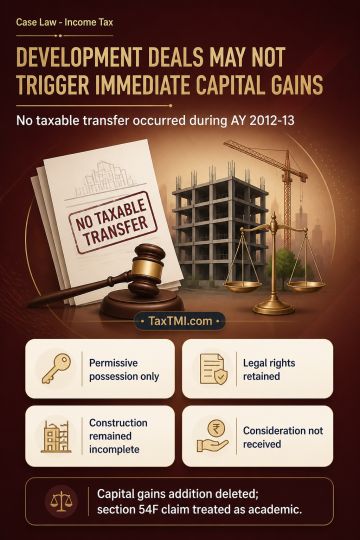
Development agreements require legal possession or effective enjoyment for capital gains transfer; permissive possession and deferred consideration de...
Prolonged sterilisation of development rights supports capital-gains treatment, while business-income disallowances cannot govern capital-gains comput...
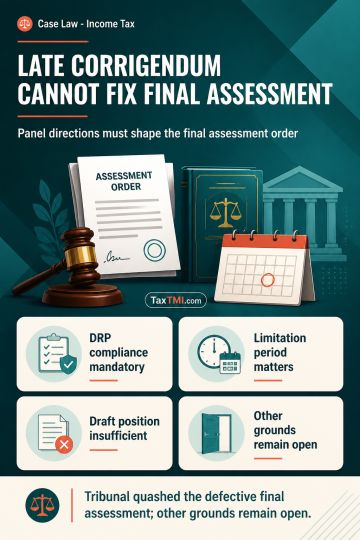
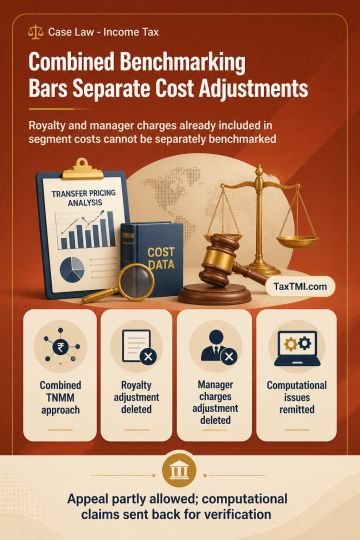
Additional evidence in transfer pricing dispute leads to fresh examination, while tax deductions, TDS credit, fee and refund interest require verifica...
Category II AIF pass-through taxation preserves non-business income character; investment receipts cannot be reclassified without applying recognised ...
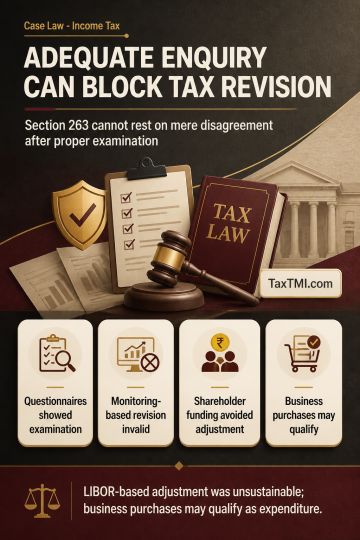
The crux of the case revolves around the applicability of Section 69A read with Section 115BBE of the Income Tax Act on the addition made by the Assessing Officer (AO) towards undisclosed cash sales. The Principal Commissioner of Income Tax (PCIT) invoked Section 263, deeming the AO's order erroneous for not taxing the addition as unexplained money u/s 69A at the higher rate prescribed in Section 115BBE. However, the Tribunal held that the PCIT erred in invoking Section 263 for the following reasons: 1) The AO made the addition after due inquiry and show-cause, considering it as unrecorded cash sales based on seized material, not unexplained money u/s 69A. 2) The source of the addition was explained by the assessee, and the AO took a plausible view on the matter. 3) The amount of addition was disputed, being a mathematical extrapolation challenged by the assessee. 4) The AO consciously did not invoke Section 69A or Section 115BBE while making the addition, aware of the provisions. 5) No corresponding assets were found during the search to treat the addition as unexplained money. 6) The PCIT merely intended to amend the tax rate without finding any error or prejudice in.
The crux of the case revolves around the applicability of Section 69A read with Section 115BBE of the Income Tax Act on the addition made by the Assessing Officer (AO) towards undisclosed cash sales. The Principal Commissioner of Income Tax (PCIT) invoked Section 263, deeming the AO's order erroneous for not taxing the addition as unexplained money u/s 69A at the higher rate prescribed in Section 115BBE. However, the Tribunal held that the PCIT erred in invoking Section 263 for the following reasons: 1) The AO made the addition after due inquiry and show-cause, considering it as unrecorded cash sales based on seized material, not unexplained money u/s 69A. 2) The source of the addition was explained by the assessee, and the AO took a plausible view on the matter. 3) The amount of addition was disputed, being a mathematical extrapolation challenged by the assessee. 4) The AO consciously did not invoke Section 69A or Section 115BBE while making the addition, aware of the provisions. 5) No corresponding assets were found during the search to treat the addition as unexplained money. 6) The PCIT merely intended to amend the tax rate without finding any error or prejudice in.
Note: It is a system-generated summary and is for quick reference only.
 TaxTMI
  TaxTMI
 of 4807










 Join Channel


