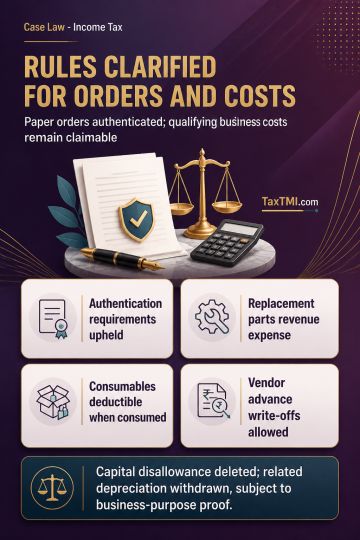
Authentication of paper assessment orders upheld, while qualifying repairs, consumables and vendor advance write-offs remain deductible business claim...
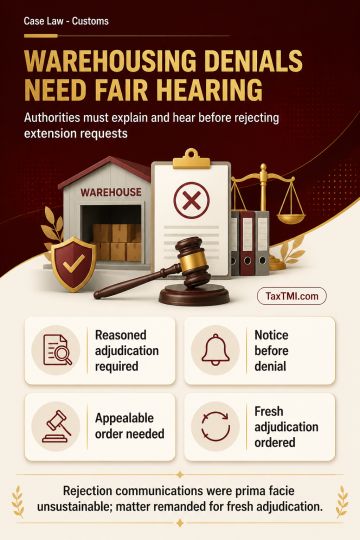
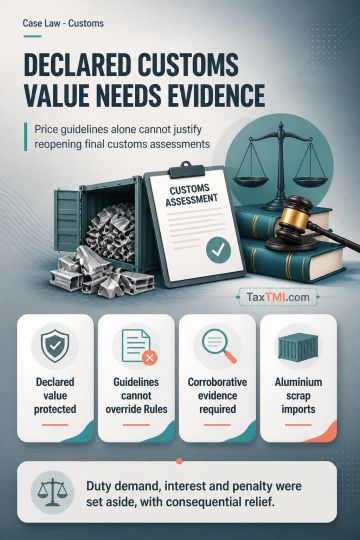
Transaction value cannot be rejected solely on non-statutory valuation guidelines without corroborative evidence supporting reassessment of final cust...
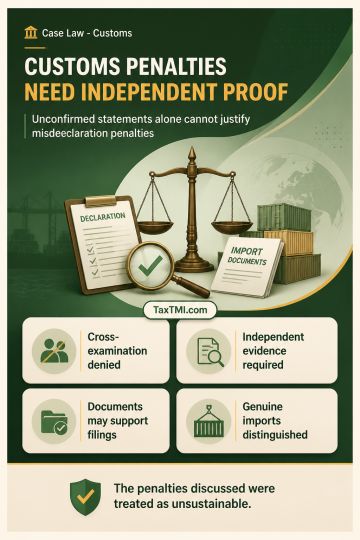
Cross-examination rights and corroborated evidence limit customs penalties for misdeclaration in genuine import transactions involving documented clea...
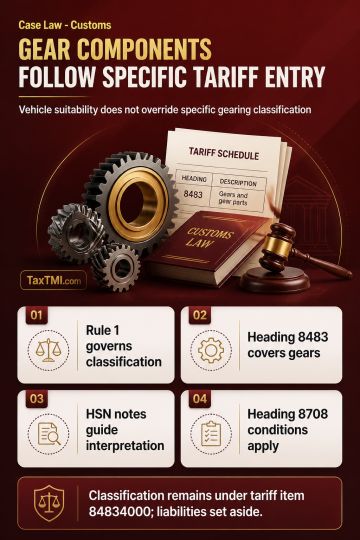
Tariff classification of vehicle gear components follows the specific gearing entry, displacing motor-vehicle parts classification and related liabili...
The crux of the case revolves around the applicability of Section 69A read with Section 115BBE of the Income Tax Act on the addition made by the Assessing Officer (AO) towards undisclosed cash sales. The Principal Commissioner of Income Tax (PCIT) invoked Section 263, deeming the AO's order erroneous for not taxing the addition as unexplained money u/s 69A at the higher rate prescribed in Section 115BBE. However, the Tribunal held that the PCIT erred in invoking Section 263 for the following reasons: 1) The AO made the addition after due inquiry and show-cause, considering it as unrecorded cash sales based on seized material, not unexplained money u/s 69A. 2) The source of the addition was explained by the assessee, and the AO took a plausible view on the matter. 3) The amount of addition was disputed, being a mathematical extrapolation challenged by the assessee. 4) The AO consciously did not invoke Section 69A or Section 115BBE while making the addition, aware of the provisions. 5) No corresponding assets were found during the search to treat the addition as unexplained money. 6) The PCIT merely intended to amend the tax rate without finding any error or prejudice in.
The crux of the case revolves around the applicability of Section 69A read with Section 115BBE of the Income Tax Act on the addition made by the Assessing Officer (AO) towards undisclosed cash sales. The Principal Commissioner of Income Tax (PCIT) invoked Section 263, deeming the AO's order erroneous for not taxing the addition as unexplained money u/s 69A at the higher rate prescribed in Section 115BBE. However, the Tribunal held that the PCIT erred in invoking Section 263 for the following reasons: 1) The AO made the addition after due inquiry and show-cause, considering it as unrecorded cash sales based on seized material, not unexplained money u/s 69A. 2) The source of the addition was explained by the assessee, and the AO took a plausible view on the matter. 3) The amount of addition was disputed, being a mathematical extrapolation challenged by the assessee. 4) The AO consciously did not invoke Section 69A or Section 115BBE while making the addition, aware of the provisions. 5) No corresponding assets were found during the search to treat the addition as unexplained money. 6) The PCIT merely intended to amend the tax rate without finding any error or prejudice in.
Note: It is a system-generated summary and is for quick reference only.
 TaxTMI
 of 4805







 Join Channel


 TaxTMI