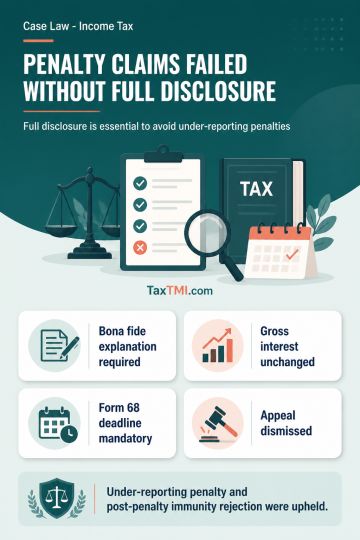
Bona fide disclosure requirements govern under-reporting penalties, and post-penalty immunity applications cannot secure available statutory protectio...
Certificate-of-origin verification procedure governs preferential customs benefits; denial without retroactive verification was set aside with consequ...
Disciplinary Committee jurisdiction and mandatory investigation requirements invalidated cancellation of an insolvency professional's registration and...
The court held that the gift deed executed by the defaulting brother in favor of the petitioner was a fraudulent attempt to obstruct the government from recovering legitimate dues. The timing of the gift deed, soon after the defaulter order, raised suspicion. The petitioner's conduct was questionable, including suppressing vital documents. The transaction appeared solely aimed at obstructing the sale of property to recover government dues. The court dismissed the petition with costs, stating that a petitioner with such conduct does not deserve extraordinary writ jurisdiction's assistance. The respondents were directed to initiate recovery proceedings against the petitioner for the defaulted dues.
The court held that the gift deed executed by the defaulting brother in favor of the petitioner was a fraudulent attempt to obstruct the government from recovering legitimate dues. The timing of the gift deed, soon after the defaulter order, raised suspicion. The petitioner's conduct was questionable, including suppressing vital documents. The transaction appeared solely aimed at obstructing the sale of property to recover government dues. The court dismissed the petition with costs, stating that a petitioner with such conduct does not deserve extraordinary writ jurisdiction's assistance. The respondents were directed to initiate recovery proceedings against the petitioner for the defaulted dues.
Note: It is a system-generated summary and is for quick reference only.
 TaxTMI
 of 4805
















 Join Channel


 TaxTMI
