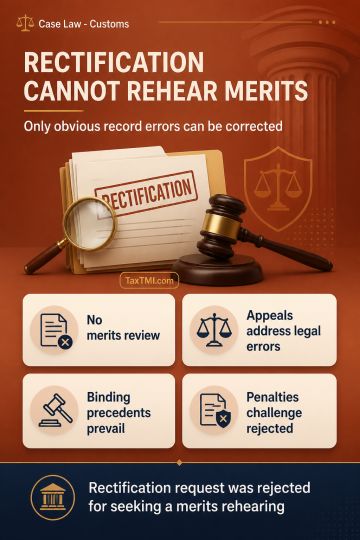
Rectification of mistake remains limited to self-evident record errors, preventing merits review through miscellaneous applications and preserving fin...
Tender creditworthiness conditions may extend to de facto Promoter Directors, with post-participation challenges generally barred absent arbitrariness...
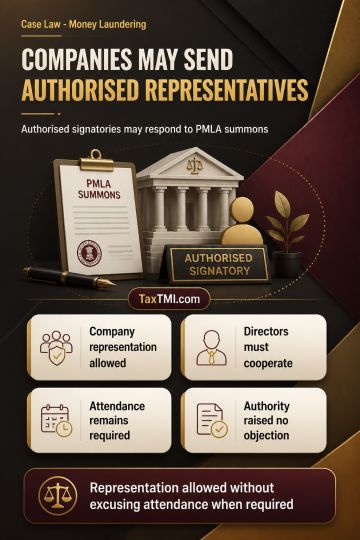
Corporate representation in PMLA summons proceedings permitted through an authorised signatory, subject to directors' continuing cooperation and atten...
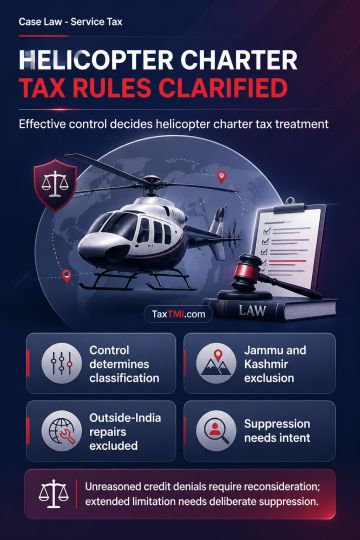
Helicopter charter classification requires effective control analysis, while territorial performance, reasoned credit orders and wilful suppression de...
Specified fund definition expands PAN exemption eligibility for registered alternative investment funds and qualifying International Financial Service...
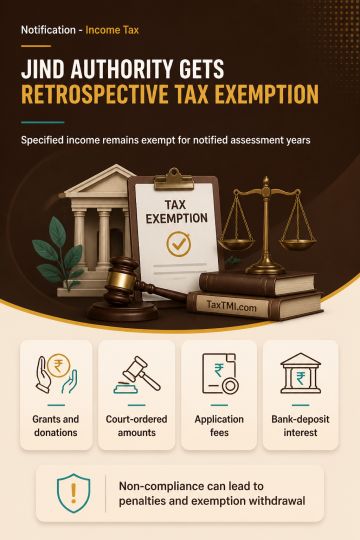
Tax exemption for specified legal-services authority income applies retrospectively, subject to non-commercial activity, unchanged income sources, and...
The court upheld the approval of the resolution plan, rejecting the wrongful allocation of Rs. 79 lakhs as the liquidation value. The Supreme Court's decision in Amit Metaliks Limited, considering Sections 30(4)(2) and 53, held that the NCLAT rightly observed that the amendment to Section 30(4) amplified the CoC's considerations for exercising commercial wisdom regarding the viability and feasibility of the resolution plan, ensuring fair distribution among similarly situated creditors. The court relied on Amit Metaliks and Paridhi Finvest Pvt. Ltd., where the dissenting financial creditor's claim for the liquidation value payment was rejected. Despite the pending larger bench interpretation of Section 30(2)(b)(ii), the Supreme Court's decision in Amit Metaliks is subsisting, leading to the dismissal of the appeal.
The court upheld the approval of the resolution plan, rejecting the wrongful allocation of Rs. 79 lakhs as the liquidation value. The Supreme Court's decision in Amit Metaliks Limited, considering Sections 30(4)(2) and 53, held that the NCLAT rightly observed that the amendment to Section 30(4) amplified the CoC's considerations for exercising commercial wisdom regarding the viability and feasibility of the resolution plan, ensuring fair distribution among similarly situated creditors. The court relied on Amit Metaliks and Paridhi Finvest Pvt. Ltd., where the dissenting financial creditor's claim for the liquidation value payment was rejected. Despite the pending larger bench interpretation of Section 30(2)(b)(ii), the Supreme Court's decision in Amit Metaliks is subsisting, leading to the dismissal of the appeal.
Note: It is a system-generated summary and is for quick reference only.
 TaxTMI
 of 4803










 Join Channel


 TaxTMI