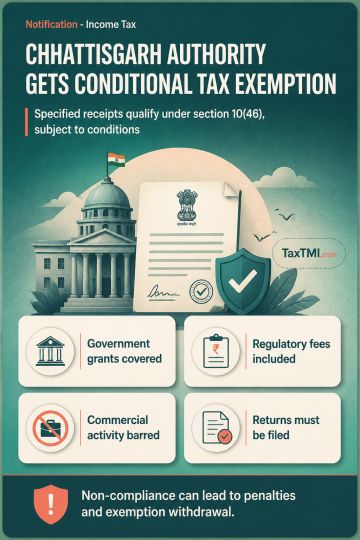
Specified regulatory authority income receives conditional tax exemption, subject to non-commercial activity, unchanged income character, and return f...
Tax exemption for regulatory authority income applies retrospectively, subject to non-commercial activity, unchanged income sources, and return-filing...
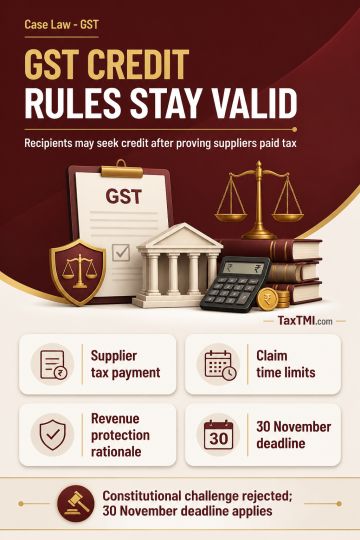
Input tax credit conditions remain constitutionally valid, with eligible recipient claims considered under GST circulars and retrospective filing dead...
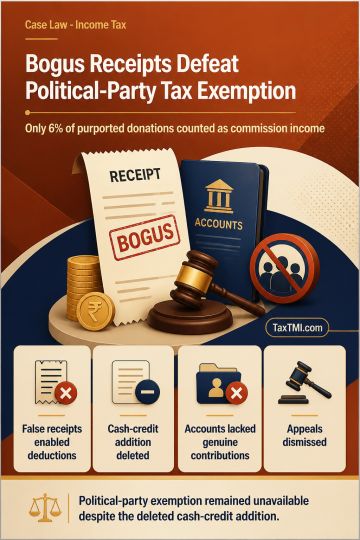
Bogus donation receipts justified commission income assessment and defeated political-party tax exemption for inaccurate accounts and reporting failur...
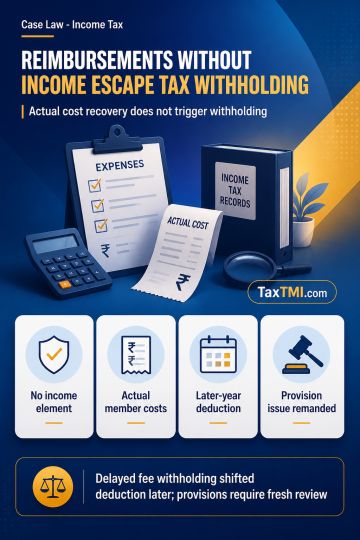
Pure reimbursement without income element escapes tax withholding, while delayed withholding and unsupported provisions face deferred or renewed scrut...
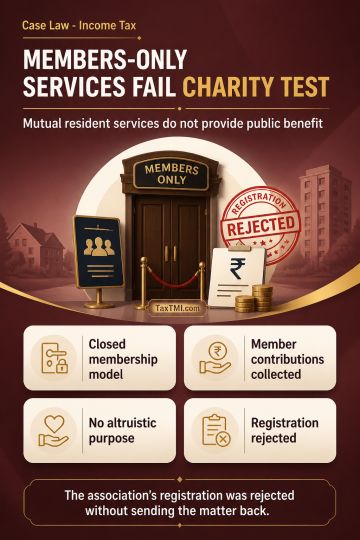
Public benefit requirement defeats charitable registration where residents' association services are reciprocal, member-only facilities governed by mu...
The court upheld the approval of the resolution plan, rejecting the wrongful allocation of Rs. 79 lakhs as the liquidation value. The Supreme Court's decision in Amit Metaliks Limited, considering Sections 30(4)(2) and 53, held that the NCLAT rightly observed that the amendment to Section 30(4) amplified the CoC's considerations for exercising commercial wisdom regarding the viability and feasibility of the resolution plan, ensuring fair distribution among similarly situated creditors. The court relied on Amit Metaliks and Paridhi Finvest Pvt. Ltd., where the dissenting financial creditor's claim for the liquidation value payment was rejected. Despite the pending larger bench interpretation of Section 30(2)(b)(ii), the Supreme Court's decision in Amit Metaliks is subsisting, leading to the dismissal of the appeal.
The court upheld the approval of the resolution plan, rejecting the wrongful allocation of Rs. 79 lakhs as the liquidation value. The Supreme Court's decision in Amit Metaliks Limited, considering Sections 30(4)(2) and 53, held that the NCLAT rightly observed that the amendment to Section 30(4) amplified the CoC's considerations for exercising commercial wisdom regarding the viability and feasibility of the resolution plan, ensuring fair distribution among similarly situated creditors. The court relied on Amit Metaliks and Paridhi Finvest Pvt. Ltd., where the dissenting financial creditor's claim for the liquidation value payment was rejected. Despite the pending larger bench interpretation of Section 30(2)(b)(ii), the Supreme Court's decision in Amit Metaliks is subsisting, leading to the dismissal of the appeal.
Note: It is a system-generated summary and is for quick reference only.
 TaxTMI
 of 4800






 Join Channel


 TaxTMI